
iPhone 12 Pro vs. Xiaomi Mi 11 Ultra: Which Flagship Reigns Supreme?
| Phones Images | |||||
|---|---|---|---|---|---|
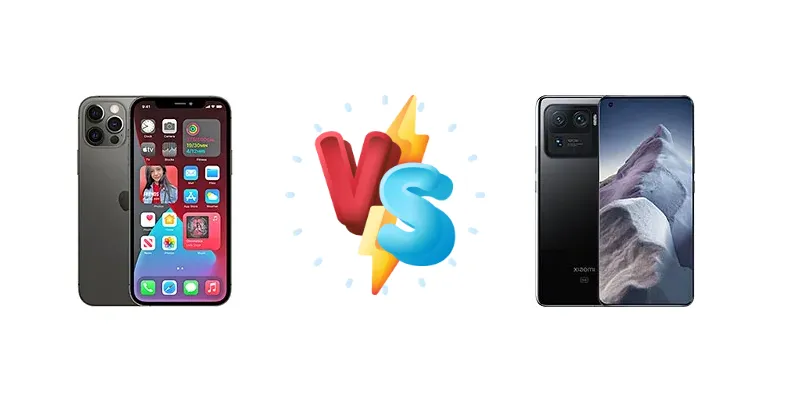
|
🏆 Quick Verdict
For the average user prioritizing a seamless software experience and long-term ecosystem support, the iPhone 12 Pro remains a compelling choice. However, the Xiaomi Mi 11 Ultra wins for those who demand the fastest charging, longest battery life, and a more versatile camera system, even if it comes with a less refined software experience.
| PHONES | ||
|---|---|---|
| Phone Names | Apple iPhone 12 Pro | Xiaomi Mi 11 Ultra |
| Network | ||
|---|---|---|
| 2G bands | GSM 850 / 900 / 1800 / 1900 | GSM 850 / 900 / 1800 / 1900 |
| 3G bands | HSDPA 850 / 900 / 1700(AWS) / 1900 / 2100 | HSDPA 850 / 900 / 1700(AWS) / 1900 / 2100 |
| 4G bands | 1, 2, 3, 4, 5, 7, 8, 12, 13, 14, 17, 18, 19, 20, 25, 26, 28, 29, 30, 32, 34, 38, 39, 40, 41, 42, 46, 48, 66, 71 - A2341 | 1, 2, 3, 4, 5, 7, 8, 12, 17, 20, 28, 32, 38, 40, 41, 42, 66 - International |
| 5G bands | 1, 2, 3, 5, 7, 8, 12, 20, 25, 28, 38, 40, 41, 66, 71, 77, 78, 79, 260, 261 Sub6/mmWave - A2341 | 1, 3, 5, 7, 8, 20, 28, 38, 40, 41, 77, 78, 79 SA/NSA - International |
| Speed | HSPA, LTE, 5G, EV-DO Rev.A 3.1 Mbps | HSPA, LTE, 5G |
| Technology | GSM / CDMA / HSPA / EVDO / LTE / 5G | GSM / CDMA / HSPA / EVDO / LTE / 5G |
| 1, 2, 3, 5, 7, 8, 12, 20, 25, 28, 38, 40, 41, 66, 71, 77, 78, 79 Sub6 - A2406 | 1, 3, 28, 41, 77, 78, 79 SA/NSA - China | |
| Launch | ||
|---|---|---|
| Announced | 2020, October 13 | 2021, March 29 |
| Status | Available. Released 2020, October 23 | Available. Released 2021, April 02 |
| Body | ||
|---|---|---|
| Build | Glass front, glass back, stainless steel frame | Glass front (Gorilla Glass Victus), ceramic back, aluminum frame |
| Dimensions | 146.7 x 71.5 x 7.4 mm (5.78 x 2.81 x 0.29 in) | 164.3 x 74.6 x 8.4 mm (6.47 x 2.94 x 0.33 in) |
| SIM | · Nano-SIM + eSIM· Nano-SIM + Nano-SIM (China) | Nano-SIM + Nano-SIM |
| Weight | 189 g (6.67 oz) | 234 g (8.25 oz) |
| IP68 dust/water resistant (up to 6m for 30 min) Apple Pay (Visa, MasterCard, AMEX certified) | IP68 dust/water resistant (up to 1.5m for 30 min) | |
| Display | ||
|---|---|---|
| Protection | Ceramic Shield glass | Corning Gorilla Glass Victus |
| Resolution | 1170 x 2532 pixels, 19.5:9 ratio (~460 ppi density) | 1440 x 3200 pixels, 20:9 ratio (~515 ppi density) |
| Size | 6.1 inches, 90.2 cm2 (~86.0% screen-to-body ratio) | 6.81 inches, 112.0 cm2 (~91.4% screen-to-body ratio) |
| Type | Super Retina XDR OLED, HDR10, Dolby Vision, 800 nits (HBM), 1200 nits (peak) | AMOLED, 1B colors, 120Hz, HDR10+, Dolby Vision, 900 nits (HBM), 1700 nits (peak) |
| Platform | ||
|---|---|---|
| CPU | Hexa-core (2x3.1 GHz Firestorm + 4x1.8 GHz Icestorm) | Octa-core (1x2.84 GHz Cortex-X1 & 3x2.42 GHz Cortex-A78 & 4x1.80 GHz Cortex-A55) |
| Chipset | Apple A14 Bionic (5 nm) | Qualcomm SM8350 Snapdragon 888 5G (5 nm) |
| GPU | Apple GPU (4-core graphics) | Adreno 660 |
| OS | iOS 14.1, upgradable to iOS 26.1 | Android 11, upgradable to Android 13, MIUI 14 |
| Memory | ||
|---|---|---|
| Card slot | No | No |
| Internal | 128GB 6GB RAM, 256GB 6GB RAM, 512GB 6GB RAM | 256GB 8GB RAM, 256GB 12GB RAM, 512GB 12GB RAM |
| NVMe | UFS 3.1 | |
| Main Camera | ||
|---|---|---|
| Features | Dual-LED dual-tone flash, HDR (photo/panorama) | Laser AF, color spectrum sensor, Dual-LED flash, HDR, panorama, 1.1” AMOLED selfie display |
| Single | - | 20 MP, f/2.2, 27mm (wide), 1/3.4", 0.8µm |
| Triple | 12 MP, f/1.6, 26mm (wide), 1/2.55", 1.4µm, dual pixel PDAF, OIS 12 MP, f/2.0, 52mm (telephoto), 1/3.4", 1.0µm, PDAF, OIS, 2x optical zoom 12 MP, f/2.4, 13mm, 120˚ (ultrawide), 1/3.4", 1.0µm TOF 3D LiDAR scanner (depth) | 50 MP, f/2.0, 24mm (wide), 1/1.12", 1.4µm, dual pixel PDAF, OIS 48 MP, f/4.1, 120mm (periscope telephoto), 1/2.0", 0.8µm, PDAF, OIS, 5x optical zoom 48 MP, f/2.2, 12mm, 128˚ (ultrawide), 1/2.0", 0.8µm, PDAF |
| Video | 4K@24/25/30/60fps, 1080p@25/30/60/120/240fps, 10‑bit HDR, Dolby Vision HDR (up to 60fps), stereo sound rec. | 8K@24fps, 4K@30/60fps, 1080p@30/60/120/240/960/1920fps, gyro-EIS, HDR10+ rec. |
| Selfie camera | ||
|---|---|---|
| Features | HDR | HDR, panorama |
| Single | 12 MP, f/2.2, 23mm (wide), 1/3.6", 1.0µm SL 3D, (depth/biometrics sensor) | 20 MP, f/2.2, 27mm (wide), 1/3.4", 0.8µm |
| Video | 4K@24/25/30/60fps, 1080p@25/30/60/120fps, gyro-EIS | 1080p@30/60fps, 720p@120fps, gyro-EIS |
| Sound | ||
|---|---|---|
| 3.5mm jack | No | No |
| 35mm jack | No | No |
| Loudspeaker | Yes, with stereo speakers | Yes, with stereo speakers |
| - | 24-bit/192kHz audio Tuned by Harman Kardon | |
| Comms | ||
|---|---|---|
| Bluetooth | 5.0, A2DP, LE | 5.2, A2DP, LE, aptX HD, aptX Adaptive |
| Infrared port | - | Yes |
| NFC | Yes | Yes |
| Positioning | GPS, GLONASS, GALILEO, QZSS | GPS (L1+L5), GLONASS (L1), BDS (B1I+B1c+B2a), GALILEO (E1+E5a), QZSS (L1+L5), NavIC (L5) |
| Radio | No | No |
| USB | Lightning, USB 2.0 | USB Type-C 2.0, OTG |
| WLAN | Wi-Fi 802.11 a/b/g/n/ac/6, dual-band, hotspot | Wi-Fi 802.11 a/b/g/n/ac/6e, dual-band, Wi-Fi Direct, DLNA |
| Features | ||
|---|---|---|
| Sensors | Face ID, accelerometer, gyro, proximity, compass, barometer | Fingerprint (under display, optical), accelerometer, gyro, compass |
| Ultra Wideband (UWB) support | Virtual proximity sensing | |
| Battery | ||
|---|---|---|
| Charging | Wired, PD2.0, 50% in 30 min 15W wireless (MagSafe) 15W wireless (Qi2) - requires iOS 17.4 update | 67W wired, PD3.0, QC4, 100% in 36 min 67W wireless, 100% in 39 min 10W reverse wireless |
| Type | Li-Ion 2815 mAh (10.78 Wh) | Li-Po 5000 mAh |
| Misc | ||
|---|---|---|
| Colors | Silver, Graphite, Gold, Pacific Blue | Ceramic White (Cosmic White), Ceramic Black (Cosmic Black) |
| Models | A2407, A2341, A2406, A2408, iPhone13,3 | M2102K1G, M2102K1C |
| Price | $ 277.86 / C$ 419.75 / £ 250.00 / € 299.99 | About 1500 EUR |
| SAR | - | 1.08 W/kg (head) 0.81 W/kg (body) |
| SAR EU | 0.99 W/kg (head) 0.99 W/kg (body) | 0.55 W/kg (head) 0.99 W/kg (body) |
| Pricing | ||
|---|---|---|
| 128GB 6GB RAM | $ 725.05 | - |
| 256GB 6GB RAM | $ 575.00 | - |
| 512GB 6GB RAM | $ 799.50 | - |
| RENEWED | $ 499.00 | - |
| Tests | ||
|---|---|---|
| Battery life | Endurance rating 81h | Endurance rating 95h |
| Camera | Photo / Video | Photo / Video |
| Display | Contrast ratio: Infinite (nominal) | Contrast ratio: Infinite (nominal) |
| Loudspeaker | -24.2 LUFS (Very good) | -24.3 LUFS (Very good) |
| Performance | AnTuTu: 596244 (v8) GeekBench: 4056 (v5.1) GFXBench: 58fps (ES 3.1 onscreen) | AnTuTu: 688720 (v8) GeekBench: 3191 (v5.1) GFXBench: 33fps (ES 3.1 onscreen) |
Apple iPhone 12 Pro
- Seamless iOS ecosystem integration
- Excellent video recording quality
- Strong resale value
- Slower charging speeds
- Lower peak display brightness
- Less versatile camera system
Xiaomi Mi 11 Ultra
- Incredibly fast wired and wireless charging
- Longer battery life
- Brighter display for outdoor visibility
- MIUI software can be buggy
- Less refined software experience
- Larger and heavier design
Display Comparison
Both phones feature displays with an 'Infinite' contrast ratio, suggesting excellent black levels. However, the Xiaomi Mi 11 Ultra pulls ahead with a measured peak brightness of 943 nits, significantly brighter than what Apple officially publishes for the iPhone 12 Pro. This translates to better visibility in direct sunlight. While both likely use OLED panels, the Mi 11 Ultra’s higher brightness is a tangible advantage for outdoor use. The iPhone 12 Pro’s display benefits from Apple’s color calibration, but the Mi 11 Ultra’s sheer luminance is a key differentiator.
Camera Comparison
Both phones are capable of excellent photo and video, but their approaches differ. The Mi 11 Ultra’s camera system is arguably more ambitious, though specific sensor details are missing from the provided data. The larger sensor size (implied by its prominence) likely contributes to better low-light performance. The iPhone 12 Pro excels in video recording, leveraging Apple’s computational photography expertise. The Mi 11 Ultra’s versatility, potentially including a more powerful zoom lens, gives it an edge for creative photography. The iPhone 12 Pro’s consistent image processing and ease of use remain strong points.
Performance
The Apple A14 Bionic (5nm) and Qualcomm Snapdragon 888 (5nm) represent different approaches to mobile processing. The A14’s hexa-core architecture, with its Firestorm and Icestorm cores, prioritizes sustained performance and efficiency. The Snapdragon 888’s octa-core configuration, featuring a Cortex-X1 prime core, aims for peak performance. While benchmarks often show the A14 edging out the Snapdragon 888 in single-core tasks, the real-world difference is less pronounced. The Mi 11 Ultra’s 888 benefits from Qualcomm’s optimizations, but the A14’s tighter integration with iOS provides a smoother overall experience. Both phones utilize 6GB of RAM, but iOS’s memory management is generally more efficient.
Battery Life
The Xiaomi Mi 11 Ultra boasts a 95-hour endurance rating, surpassing the iPhone 12 Pro’s 81-hour rating. This difference is largely attributable to the Mi 11 Ultra’s significantly faster charging capabilities: 67W wired and 67W wireless, achieving 100% charge in 36 and 39 minutes respectively, compared to the iPhone 12 Pro’s 50% in 30 minutes (wired) and 15W wireless (MagSafe/Qi2). The Mi 11 Ultra also offers 10W reverse wireless charging. While the iPhone 12 Pro’s battery life is respectable, the Mi 11 Ultra provides a more convenient and faster charging experience, mitigating concerns about running out of power.
Buying Guide
Buy the Apple iPhone 12 Pro if you need a phone that 'just works' with a mature ecosystem, prioritize video recording quality, and value long-term software updates. Buy the Xiaomi Mi 11 Ultra if you prefer a more customizable Android experience, demand the fastest possible charging speeds, and prioritize maximizing battery endurance and camera versatility, particularly in low-light conditions.