
iPhone 12 mini vs. Google Pixel 6a: A Deep Dive into Compact Phone Choices
| Phones Images | |||||
|---|---|---|---|---|---|
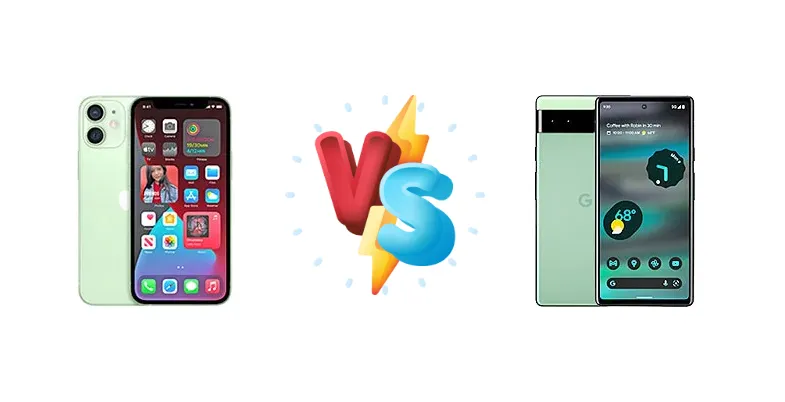
|
🏆 Quick Verdict
For most users, the Google Pixel 6a emerges as the stronger value. Its significantly superior battery life – boasting a 94-hour endurance rating versus the iPhone 12 mini’s 69 hours – and capable camera system outweigh the iPhone’s slightly brighter display and potentially smoother performance in specific tasks. However, the iPhone 12 mini remains a compelling option for those deeply embedded in the Apple ecosystem and prioritizing ultimate portability.
| PHONES | ||
|---|---|---|
| Phone Names | Apple iPhone 12 mini | Google Pixel 6a |
| Network | ||
|---|---|---|
| 2G bands | GSM 850 / 900 / 1800 / 1900 | GSM 850 / 900 / 1800 / 1900 |
| 3G bands | HSDPA 850 / 900 / 1700(AWS) / 1900 / 2100 | HSDPA 800 / 850 / 900 / 1700(AWS) / 1900 / 2100 |
| 4G bands | 1, 2, 3, 4, 5, 7, 8, 12, 13, 14, 17, 18, 19, 20, 25, 26, 28, 29, 30, 32, 34, 38, 39, 40, 41, 42, 46, 48, 66, 71 - A2176 | 1, 2, 3, 4, 5, 7, 8, 12, 13, 14, 17, 18, 19, 20, 25, 26, 28, 29, 30, 38, 39, 40, 41, 42, 48, 66, 71 - GX7AS, GB62Z (USA/Canada) |
| 5G bands | 1, 2, 3, 5, 7, 8, 12, 20, 25, 28, 38, 40, 41, 66, 71, 77, 78, 79, 260, 261 Sub6/mmWave - A2176 | 1, 2, 3, 5, 7, 8, 12, 20, 25, 28, 30, 38, 40, 41, 48, 66, 71, 77, 78 SA/NSA/Sub6 - GX7AS (USA/Canada) |
| Speed | HSPA, LTE, 5G, EV-DO Rev.A 3.1 Mbps | HSPA, LTE, 5G |
| Technology | GSM / CDMA / HSPA / EVDO / LTE / 5G | GSM / HSPA / LTE / 5G |
| 1, 2, 3, 5, 7, 8, 12, 20, 25, 28, 38, 40, 41, 66, 77, 78, 79 Sub6 - A2398, A2399, A2400 | 1, 2, 3, 5, 7, 8, 12, 20, 25, 28, 30, 40, 48, 66, 71, 77, 78 SA/NSA/Sub6 - G1AZG (International) | |
| Launch | ||
|---|---|---|
| Announced | 2020, October 13 | 2022, May 11 |
| Status | Available. Released 2020, November 13 | Available. Released 2022, July 21 |
| Body | ||
|---|---|---|
| Build | Glass front, glass back, aluminum frame | Glass front (Gorilla Glass 3), aluminum frame, plastic back |
| Dimensions | 131.5 x 64.2 x 7.4 mm (5.18 x 2.53 x 0.29 in) | 152.2 x 71.8 x 8.9 mm (5.99 x 2.83 x 0.35 in) |
| SIM | · Nano-SIM + eSIM· Nano-SIM + Nano-SIM | Nano-SIM + eSIM |
| Weight | 135 g (4.76 oz) | 178 g (6.28 oz) |
| IP68 dust/water resistant (up to 6m for 30 min) Apple Pay (Visa, MasterCard, AMEX certified) | IP67 dust/water resistant (up to 1m for 30 min) | |
| Display | ||
|---|---|---|
| Protection | Ceramic Shield glass | Corning Gorilla Glass 3 |
| Resolution | 1080 x 2340 pixels, 19.5:9 ratio (~476 ppi density) | 1080 x 2400 pixels, 20:9 ratio (~429 ppi density) |
| Size | 5.4 inches, 71.9 cm2 (~85.1% screen-to-body ratio) | 6.1 inches, 90.7 cm2 (~83.0% screen-to-body ratio) |
| Type | Super Retina XDR OLED, HDR10, Dolby Vision, 625 nits (HBM), 1200 nits (peak) | OLED, HDR |
| - | Always-on display | |
| Platform | ||
|---|---|---|
| CPU | Hexa-core (2x3.1 GHz Firestorm + 4x1.8 GHz Icestorm) | Octa-core (2x2.80 GHz Cortex-X1 & 2x2.25 GHz Cortex-A76 & 4x1.80 GHz Cortex-A55) |
| Chipset | Apple A14 Bionic (5 nm) | Google Tensor (5 nm) |
| GPU | Apple GPU (4-core graphics) | Mali-G78 MP20 |
| OS | iOS 14.1, upgradable to iOS 26.1 | Android 12, upgradable to Android 15, up to 5 major Android upgrades |
| Memory | ||
|---|---|---|
| Card slot | No | No |
| Internal | 64GB 4GB RAM, 128GB 4GB RAM, 256GB 4GB RAM | 128GB 6GB RAM |
| NVMe | UFS 3.1 | |
| Main Camera | ||
|---|---|---|
| Dual | 12 MP, f/1.6, 26mm (wide), 1.4µm, dual pixel PDAF, OIS 12 MP, f/2.4, 13mm, 120˚ (ultrawide), 1/3.6" | 12.2 MP, f/1.7, 27mm, (wide), 1/2.55", 1.4µm, dual pixel PDAF, OIS 12 MP, f/2.2, 17mm, 114˚ (ultrawide), 1.25µm |
| Features | Dual-LED dual-tone flash, HDR (photo/panorama) | Dual-LED flash, Pixel Shift, Auto-HDR, panorama |
| Single | - | 8 MP, f/2.0, 24mm (wide), 1.12µm |
| Video | 4K@24/25/30/60fps, 1080p@25/30/60/120/240fps, HDR, Dolby Vision HDR (up to 30fps), stereo sound rec. | 4K@30/60fps, 1080p@30/60/120/240fps; gyro-EIS, OIS |
| Selfie camera | ||
|---|---|---|
| Features | HDR | HDR, panorama |
| Single | 12 MP, f/2.2, 23mm (wide), 1/3.6", 1.0µm SL 3D, (depth/biometrics sensor) | 8 MP, f/2.0, 24mm (wide), 1.12µm |
| Video | 4K@24/25/30/60fps, 1080p@25/30/60/120fps, gyro-EIS | 1080p@30fps |
| Sound | ||
|---|---|---|
| 3.5mm jack | No | No |
| 35mm jack | No | No |
| Loudspeaker | Yes, with stereo speakers | Yes, with stereo speakers |
| Comms | ||
|---|---|---|
| Bluetooth | 5.0, A2DP, LE | 5.2, A2DP, LE |
| NFC | Yes | Yes |
| Positioning | GPS, GLONASS, GALILEO, QZSS | GPS, GLONASS, GALILEO, QZSS |
| Radio | No | No |
| USB | Lightning, USB 2.0 | USB Type-C 3.1 |
| WLAN | Wi-Fi 802.11 a/b/g/n/ac/6, dual-band, hotspot | Wi-Fi 802.11 a/b/g/n/ac/6e, dual-band, Wi-Fi Direct |
| Features | ||
|---|---|---|
| Sensors | Face ID, accelerometer, gyro, proximity, compass, barometer | Fingerprint (under display, optical), accelerometer, gyro, proximity, compass, barometer |
| Ultra Wideband (UWB) support | - | |
| Battery | ||
|---|---|---|
| Charging | Wired, PD2.0, 50% in 30 min 15W wireless (MagSafe) 15W wireless (Qi2) - requires iOS 17.4 update | 18W wired, PD3.0 |
| Type | Li-Ion 2227 mAh (8.57 Wh) | Li-Po 4410 mAh |
| Misc | ||
|---|---|---|
| Colors | Black, White, Red, Green, Blue, Purple | Chalk, Charcoal, Sage |
| Models | A2399, A2176, A2398, A2400, A2399, iPhone13,1 | GX7AS, GB62Z, G1AZG, GB17L |
| Price | $ 165.79 / C$ 268.99 / £ 155.00 / € 178.00 | $ 138.99 / C$ 228.74 / ₹ 23,999 |
| SAR EU | 0.99 W/kg (head) 0.99 W/kg (body) | - |
| Tests | ||
|---|---|---|
| Battery life | Endurance rating 69h | Endurance rating 94h |
| Camera | Photo / Video | - |
| Display | Contrast ratio: Infinite (nominal) | Contrast ratio: Infinite (nominal) |
| Loudspeaker | -24.6 LUFS (Very good) | - |
| Performance | AnTuTu: 589616 (v8) GeekBench: 4174 (v5.1) GFXBench: 60fps (ES 3.1 onscreen) | - |
Apple iPhone 12 mini
- Extremely compact and pocketable design
- Powerful A14 Bionic chip for demanding tasks
- Excellent video recording quality
- Seamless integration with Apple ecosystem
- Significantly shorter battery life compared to Pixel 6a
- Lower peak display brightness
- Higher price point for older hardware
Google Pixel 6a
- Exceptional battery life
- Google’s excellent computational photography
- More affordable price
- Faster wired charging
- Larger footprint than the iPhone 12 mini
- Performance may not match the A14 Bionic in all scenarios
- Less polished software experience compared to iOS
Display Comparison
The Pixel 6a’s 6.1-inch display significantly outshines the iPhone 12 mini’s in peak brightness, reaching 876 nits compared to the iPhone’s 627 nits. This translates to better outdoor visibility for the Pixel 6a. Both displays share an infinite (nominal) contrast ratio, typical of OLED panels. While the iPhone 12 mini benefits from Apple’s color calibration, the Pixel 6a’s higher brightness provides a more usable experience in bright sunlight. The lack of high refresh rate panels on either device is a notable omission, but not uncommon in this price bracket.
Camera Comparison
Both phones offer capable camera systems, but approach image processing differently. The Pixel 6a leverages Google’s renowned computational photography, excelling in dynamic range and low-light performance. While specific sensor details are not provided, the Pixel 6a’s image processing pipeline is a key differentiator. The iPhone 12 mini, known for its natural color reproduction and excellent video recording capabilities, provides a more traditional photographic experience. The absence of a dedicated telephoto lens on either device limits optical zoom capabilities, relying instead on digital zoom.
Performance
Both the Apple A14 Bionic (5nm) and Google Tensor (5nm) are built on a 5nm process, but their architectures differ significantly. The A14 Bionic’s hexa-core CPU (2x3.1 GHz Firestorm + 4x1.8 GHz Icestorm) prioritizes peak performance, while the Tensor’s octa-core configuration (2x2.80 GHz Cortex-X1 & 2x2.25 GHz Cortex-A76 & 4x1.80 GHz Cortex-A55) aims for a balance of performance and efficiency. In real-world use, the iPhone 12 mini will likely feel snappier in demanding tasks, but the Tensor chip excels in AI-driven features like voice recognition and image processing. The Pixel 6a’s Tensor chip also benefits from Google’s software optimizations, potentially closing the performance gap in everyday scenarios.
Battery Life
Battery life is where the Pixel 6a truly shines. Its endurance rating of 94 hours dramatically surpasses the iPhone 12 mini’s 69 hours. This translates to a full day of moderate to heavy use on the Pixel 6a, while the iPhone 12 mini may require a midday top-up for power users. The Pixel 6a supports 18W wired charging with PD3.0, while the iPhone 12 mini offers 15W wired charging with PD2.0 and 15W wireless charging via MagSafe and Qi2 (with iOS 17.4). The Pixel 6a’s faster wired charging and superior battery endurance provide a more convenient user experience.
Buying Guide
Buy the Apple iPhone 12 mini if you absolutely require the smallest possible high-end smartphone and are already invested in the Apple ecosystem, valuing seamless integration with other Apple devices and services. Buy the Google Pixel 6a if you prioritize battery life, Google’s excellent camera software, and a more affordable price point, even if it means sacrificing some of the iPhone’s premium polish and ecosystem lock-in.