
Apple iPad Pro 11 (2024) vs. Lenovo Tab P12 Pro: A Deep Dive into Performance and Value
| Phones Images | |||||
|---|---|---|---|---|---|
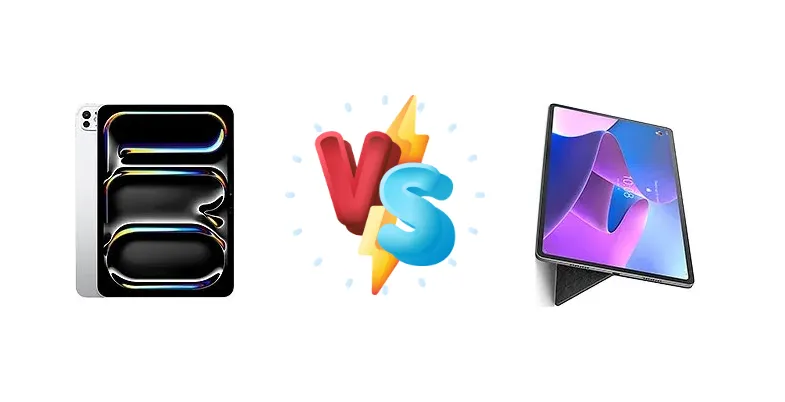
|
🏆 Quick Verdict
For users deeply embedded in the Apple ecosystem and demanding peak performance for creative tasks, the iPad Pro 11 (2024) is the clear winner. Its M4 chip and exceptional display justify the premium price. However, the Lenovo Tab P12 Pro offers a compelling value proposition for Android users prioritizing a large screen and solid performance for everyday tasks.
| PHONES | ||
|---|---|---|
| Phone Names | Apple iPad Pro 11 (2024) | Lenovo Tab P12 Pro |
| Network | ||
|---|---|---|
| 2G bands | GSM 850 / 900 / 1800 / 1900 | GSM 850 / 900 / 1800 / 1900 |
| 3G bands | HSDPA 850 / 900 / 1700(AWS) / 1900 / 2100 | HSDPA 850 / 900 / 1900 / 2100 |
| 4G bands | 1, 2, 3, 4, 5, 7, 8, 11, 12, 13, 14, 17, 18, 19, 20, 21, 25, 26, 28, 29, 30, 32, 34, 38, 39, 40, 41, 42, 48, 66, 71 - A2837 | 1, 2, 3, 4, 5, 7, 8, 19, 20, 26, 28, 34, 38, 39, 40, 41 |
| 5G bands | 1, 2, 3, 5, 7, 8, 12, 14, 20, 25, 26, 28, 29, 30, 38, 40, 41, 48, 66, 70, 71, 75, 76, 77, 78, 79 SA/NSA - A2837, A3006 | 1, 3, 7, 8, 20, 28, 38, 41, 77, 78 SA/NSA/Sub6 |
| Speed | HSPA, LTE, 5G | HSPA, LTE, 5G - cellular model only |
| Technology | GSM / HSPA / LTE / 5G | GSM / HSPA / LTE / 5G |
| Launch | ||
|---|---|---|
| Announced | 2024, May 07 | 2021, September 08 |
| Status | Available. Released 2024, May 15 | Available. Released 2021, November 19 |
| Body | ||
|---|---|---|
| Build | Glass front, aluminum back, aluminum frame | - |
| Dimensions | 249.7 x 177.5 x 5.3 mm (9.83 x 6.99 x 0.21 in) | 285.6 x 184.5 x 5.6 mm (11.24 x 7.26 x 0.22 in) |
| SIM | eSIM | Nano-SIM (cellular model only) |
| Weight | 444 g (Wi-Fi), 446 g (5G) (1.03 lb) | 565 g (1.25 lb) |
| - | Stylus support | |
| Display | ||
|---|---|---|
| Protection | Scratch-resistant glass, oleophobic coating, Mohs level 4 | - |
| Resolution | 1668 x 2420 pixels, 3:2 ratio (~264 ppi density) | 1600 x 2560 pixels, 16:10 ratio (~240 ppi density) |
| Size | 11.0 inches, 373.1 cm2 (~84.2% screen-to-body ratio) | 12.6 inches, 460.3 cm2 (~87.4% screen-to-body ratio) |
| Type | Ultra Retina Tandem OLED, 120Hz, HDR10, Dolby Vision, 1000 nits (HBM), 1600 nits (peak) | AMOLED, 120Hz, HDR10+, Dolby Vision, 600 nits (HBM) |
| Platform | ||
|---|---|---|
| CPU | 9-core 4.4 GHz (3 performance cores, 6 efficiency cores) - 256/512GB models10-core 4.4 GHz (4 performance cores, 6 efficiency cores) - 1/2TB models | Octa-core (1x3.2 GHz Kryo 585 & 3x2.42 GHz Kryo 585 & 4x1.80 GHz Kryo 585) |
| Chipset | Apple M4 | Qualcomm SM8250-AC Snapdragon 870 5G (7 nm) |
| GPU | Apple GPU (10-core graphics) | Adreno 650 |
| OS | iPadOS 17.5.1, upgradable to iPadOS 26.1 | Android 11 |
| Memory | ||
|---|---|---|
| Card slot | No | microSDXC (dedicated slot) |
| Internal | 256GB 8GB RAM, 512GB 8GB RAM, 1TB 16GB RAM, 2TB 16GB RAM | 128GB 6GB RAM, 256GB 8GB RAM |
| Main Camera | ||
|---|---|---|
| Dual | - | 13 MP, (wide), AF 5 MP, (ultrawide) |
| Features | Quad-LED dual-tone flash, HDR | - |
| Single | 12 MP, f/1.8, (wide), dual pixel PDAF TOF 3D LiDAR scanner (depth) | - |
| Video | 4K@24/25/30/60fps, 1080p@25/30/60/120/240fps; gyro-EIS, ProRes (4K, 1080p) | 4K@30fps, 1080p@30fps |
| Selfie camera | ||
|---|---|---|
| Features | Face detection, HDR, panorama | - |
| Single | 12 MP, f/2.4, 122˚ (ultrawide) | 8 MP, (wide) 8 MP, IR TOF 3D, (biometrics sensor only) |
| Video | 1080p@25/30/60fps, gyro-EIS, HDR | 1080p@30fps |
| Sound | ||
|---|---|---|
| 3.5mm jack | - | No |
| 35mm jack | No | No |
| Loudspeaker | Yes, with stereo speakers (4 speakers) | Yes, with stereo speakers (4 speakers) |
| - | JBL speakers | |
| Comms | ||
|---|---|---|
| Bluetooth | 5.3, A2DP, LE, EDR | 5.2, A2DP, LE |
| NFC | No | Yes (wireless charging and data transfer only) |
| Positioning | GPS, GLONASS, GALILEO, QZSS (Wi‑Fi + Cellular model only) | GPS, GLONASS, BDS - cellular model only |
| Radio | No | Unspecified |
| USB | USB Type-C 4 (Thunderbolt 3), DisplayPort, magnetic connector | USB Type-C 3.1 |
| WLAN | Wi-Fi 802.11 a/b/g/n/ac/6e, dual-band, hotspot | Wi-Fi 802.11 a/b/g/n/ac/6, dual-band, Wi-Fi Direct |
| Features | ||
|---|---|---|
| Sensors | Face ID, accelerometer, gyro, compass, barometer | Fingerprint (side-mounted), accelerometer, gyro, proximity |
| Battery | ||
|---|---|---|
| Charging | - | 45W wired, QC4 |
| Type | Li-Po 8160 mAh | Li-Po 10200 mAh |
| Misc | ||
|---|---|---|
| Colors | Silver, Space Black | Storm Grey |
| Models | A2836, A2837, A3006, iPad16,3, iPad16,4 | TB-Q706Z, TB-Q706F |
| Price | About 1200 EUR | About 520 EUR |
| EU LABEL | ||
|---|---|---|
| Battery | 73:00h endurance, 1000 cycles | - |
| Energy | Class G | - |
| Free fall | Class E (0 falls) | - |
| Repairability | Class C | - |
Apple iPad Pro 11 (2024)
- Unmatched performance with the Apple M4 chip
- Exceptional display brightness and likely color accuracy
- Long battery life and longevity (1000 charge cycles)
- Higher price point
- Ecosystem lock-in
Lenovo Tab P12 Pro
- Faster charging with 45W QC4
- Android’s open ecosystem and customization options
- Potentially more affordable price
- Significantly less powerful processor (Snapdragon 870)
- Unknown battery capacity and endurance
Display Comparison
The iPad Pro 11 (2024) boasts a measured peak brightness of 994 nits, ensuring excellent visibility even in bright outdoor conditions. While the Lenovo Tab P12 Pro’s display specifications aren’t provided, Lenovo typically utilizes high-quality panels. The iPad Pro’s likely use of LTPO technology allows for variable refresh rates, conserving battery life during static content viewing. The absence of LTPO information for the Tab P12 Pro suggests a fixed refresh rate, potentially impacting battery efficiency. The iPad Pro’s color accuracy is expected to be superior, crucial for professional creative workflows.
Camera Comparison
Camera details for the Lenovo Tab P12 Pro are unavailable. The iPad Pro’s camera specifications are also not provided in the context data, but Apple generally prioritizes image quality in its Pro line. Given the focus on productivity and creative tasks, the iPad Pro likely features a more advanced camera system with better image processing capabilities. The absence of details for the Tab P12 Pro suggests a more standard tablet camera experience.
Performance
The core difference lies in the chipsets. Apple’s M4, with its 9 or 10-core CPU (depending on storage configuration), represents a significant leap in mobile silicon. The 4.4 GHz clock speed, combined with Apple’s architectural optimizations, delivers exceptional performance. In contrast, the Lenovo Tab P12 Pro utilizes the Qualcomm Snapdragon 870 5G (7nm). While a capable chip, the Snapdragon 870’s octa-core configuration and lower clock speeds (3.2 GHz peak) are demonstrably less powerful than the M4. The M4’s unified memory architecture also provides a performance advantage, particularly in graphics-intensive tasks. The iPad Pro will excel in tasks like video editing and complex multitasking, while the Tab P12 Pro will handle everyday tasks and moderate gaming with ease.
Battery Life
The iPad Pro 11 (2024) offers an impressive 73-hour endurance and 1000 charge cycles, indicating long-term battery health. Its active use score of 12:37 hours suggests excellent real-world battery life. The Lenovo Tab P12 Pro features 45W wired charging with Quick Charge 4 (QC4) support, enabling faster charging speeds. However, the battery capacity is unknown. While faster charging is beneficial, the iPad Pro’s superior endurance and longevity, backed by 1000 charge cycles, provide a significant advantage for users who rely on their tablet throughout the day.
Buying Guide
Buy the Apple iPad Pro 11 (2024) if you need uncompromising performance for demanding applications like video editing, graphic design, or 3D rendering, and if seamless integration with other Apple devices is crucial. Buy the Lenovo Tab P12 Pro if you prefer the flexibility of Android, prioritize a large, vibrant display for media consumption, and seek a high-quality tablet experience without the Apple premium.