
iPad mini (2021) vs. Lenovo Tab P11 Plus: A Detailed Comparison
| Phones Images | |||||
|---|---|---|---|---|---|
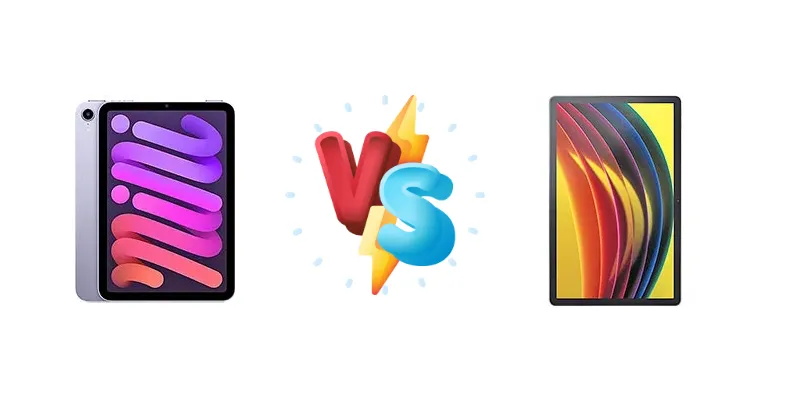
|
🏆 Quick Verdict
For users prioritizing raw performance and a superior display, the Apple iPad mini (2021) is the clear winner. However, the Lenovo Tab P11 Plus delivers a compelling experience for the price, making it ideal for casual users and those seeking a larger screen on a tighter budget.
| PHONES | ||
|---|---|---|
| Phone Names | Apple iPad mini (2021) | Lenovo Tab P11 Plus |
| Network | ||
|---|---|---|
| 2G bands | GSM 850 / 900 / 1800 / 1900 | GSM 850 / 900 / 1800 / 1900 |
| 3G bands | HSDPA 850 / 900 / 1700(AWS) / 1900 / 2100 | HSDPA 850 / 900 / 1900 / 2100 |
| 4G bands | 1, 2, 3, 4, 5, 7, 8, 11, 12, 13, 14, 17, 18, 19, 20, 21, 25, 26, 28, 29, 30, 32, 34, 38, 39, 40, 41, 46, 48, 66, 71 | 1, 2, 3, 4, 5, 7, 8, 20, 28, 38, 40, 41 |
| 5G bands | 1, 2, 3, 5, 7, 8, 12, 20, 25, 28, 29, 30, 38, 40, 41, 48, 66, 71, 77, 78, 79 SA/NSA | - |
| Speed | HSPA, LTE, 5G - cellular model only | HSPA, LTE - cellular model only |
| Technology | GSM / HSPA / LTE / 5G | GSM / HSPA / LTE |
| Launch | ||
|---|---|---|
| Announced | 2021, September 14 | 2021, June 28 |
| Status | Available. Released 2021, September 24 | Available. Released 2021, July 29 |
| Body | ||
|---|---|---|
| Build | Glass front, aluminum back, aluminum frame | - |
| Dimensions | 195.4 x 134.8 x 6.3 mm (7.69 x 5.31 x 0.25 in) | 258.4 x 163 x 7.5 mm (10.17 x 6.42 x 0.30 in) |
| SIM | Nano-SIM + eSIM (cellular model only) | Nano-SIM (cellular model only) |
| Weight | 293 g (Wi-Fi) / 297 g (Wi-Fi + Cellular) (10.34 oz) | 490 g (1.08 lb) |
| Stylus support (2nd gen only) | Stylus support | |
| Display | ||
|---|---|---|
| Protection | Scratch-resistant glass, oleophobic coating | - |
| Resolution | 1488 x 2266 pixels, 3:2 ratio (~327 ppi density) | 1200 x 2000 pixels, 5:3 ratio (~212 ppi density) |
| Size | 8.3 inches, 203.9 cm2 (~77.4% screen-to-body ratio) | 11.0 inches, 344.4 cm2 (~81.8% screen-to-body ratio) |
| Type | Liquid Retina IPS LCD, 500 nits (typ) | IPS LCD, 400 nits (typ) |
| Platform | ||
|---|---|---|
| CPU | Hexa-core (2x2.93 GHz + 4xX.X GHz) | Octa-core (2x2.05 GHz Cortex-A76 & 6x2.0 GHz Cortex-A55) |
| Chipset | Apple A15 Bionic (5 nm) | Mediatek MT6785 Helio G90T (12 nm) |
| GPU | Apple GPU (5-core) | Mali-G76 MC4 |
| OS | iPadOS 15, upgradable to iPadOS 26.1 | Android 11 |
| Memory | ||
|---|---|---|
| Card slot | No | microSDXC (dedicated slot) |
| Internal | 64GB 4GB RAM, 256GB 4GB RAM | 64GB 4GB RAM, 128GB 4GB RAM, 128GB 6GB RAM |
| Main Camera | ||
|---|---|---|
| Features | Quad-LED dual-tone flash, HDR, panorama | LED flash |
| Single | 12 MP, f/1.8, (wide), AF | 13 MP, (wide), AF |
| Video | 4K@24/25/30/60fps, 1080p@25/30/60/120/240fps; gyro-EIS | 1080p@30fps |
| Selfie camera | ||
|---|---|---|
| Features | HDR | - |
| Single | 12 MP, f/2.4, 122˚ (ultrawide) | 8 MP, (wide) |
| Video | 1080p@25/30/60fps, gyro-EIS | 1080p@30fps |
| Sound | ||
|---|---|---|
| 3.5mm jack | No | No |
| 35mm jack | No | No |
| Loudspeaker | Yes, with stereo speakers | Yes, with stereo speakers (4 speakers) |
| Comms | ||
|---|---|---|
| Bluetooth | 5.0, A2DP | 5.1, A2DP, LE |
| NFC | No | No |
| Positioning | GPS, GLONASS - cellular model only | GPS, GLONASS, BDS - cellular model only |
| Radio | No | FM radio |
| USB | USB Type-C 3.1, DisplayPort | USB Type-C 2.0 |
| WLAN | Wi-Fi 802.11 a/b/g/n/ac/6, dual-band, hotspot | Wi-Fi 802.11 a/b/g/n/ac, dual-band, Wi-Fi Direct |
| Features | ||
|---|---|---|
| Sensors | Fingerprint (side-mounted), accelerometer, gyro, compass, barometer | Accelerometer, gyro, proximity |
| Battery | ||
|---|---|---|
| Charging | - | 20W wired |
| Type | Li-Ion 5078 mAh (19.3 Wh) | Li-Po 7700 mAh |
| Misc | ||
|---|---|---|
| Colors | Space Gray, Pink, Purple, Starlight | Slate Grey, Platinum Grey, Modernist teal |
| Models | A2568, iPad14,1, iPad14,2 | ZA940124SE |
| Price | About 550 EUR | About 300 EUR |
| Tests | ||
|---|---|---|
| Loudspeaker | -29.7 LUFS (Average) | - |
Apple iPad mini (2021)
- Significantly faster performance with the A15 Bionic chip
- Brighter and higher contrast display for superior viewing
- Premium build quality and Apple ecosystem integration
- Higher price point
- Smaller screen size compared to the P11 Plus
Lenovo Tab P11 Plus
- More affordable price
- Larger display for enhanced media consumption
- 20W fast charging support
- Noticeably slower performance compared to the A15 Bionic
- Lower display brightness and contrast
- Less refined software experience
Display Comparison
The iPad mini (2021) boasts a significantly brighter display, reaching a measured 518 nits, compared to an expected lower brightness on the P11 Plus (typical for this price segment). This makes the iPad mini more usable outdoors. While the P11 Plus likely has a larger screen size, the iPad mini’s 1325:1 contrast ratio suggests deeper blacks and a more vibrant image. The absence of LTPO technology on either device means neither offers adaptive refresh rates, but the iPad mini’s superior brightness and contrast give it a clear edge for visual tasks.
Camera Comparison
Camera details are limited, but given the market positioning, the iPad mini likely features a more sophisticated camera system. The P11 Plus’s camera is likely focused on video conferencing and basic snapshots. The A15 Bionic’s image signal processor (ISP) will provide superior image processing capabilities, resulting in better dynamic range and low-light performance on the iPad mini. Without specific sensor sizes, it’s difficult to make a definitive statement, but Apple typically prioritizes camera quality even in its smaller devices.
Performance
The core difference lies in the chipsets. Apple’s A15 Bionic, fabricated on a 5nm process, is in a different league than the Lenovo’s MediaTek Helio G90T (12nm). The A15’s hexa-core CPU, with its 2.93 GHz performance cores, will deliver substantially faster processing speeds and smoother multitasking. The G90T’s octa-core configuration (2x2.05 GHz Cortex-A76 & 6x2.0 GHz Cortex-A55) is competent for everyday tasks, but will struggle with demanding applications. The 5nm process of the A15 also translates to better thermal efficiency, minimizing throttling during sustained workloads. While RAM specifics aren't provided, the A15's architecture is optimized for memory bandwidth, further enhancing performance.
Battery Life
Battery life will depend heavily on usage patterns. The Lenovo Tab P11 Plus benefits from 20W wired charging, offering a relatively quick top-up. The iPad mini’s charging speed is likely similar, but its smaller battery capacity may necessitate more frequent charging. The A15 Bionic’s power efficiency could partially offset the smaller battery, but the P11 Plus’s larger battery size will likely provide longer screen-on time for less demanding tasks like video streaming.
Buying Guide
Buy the Apple iPad mini (2021) if you need a supremely portable tablet for demanding tasks like photo editing, gaming, or note-taking, and are willing to pay a premium for Apple’s ecosystem and performance. Buy the Lenovo Tab P11 Plus if you prefer a larger screen for media consumption, light productivity, and casual gaming, and prioritize affordability and value for money.