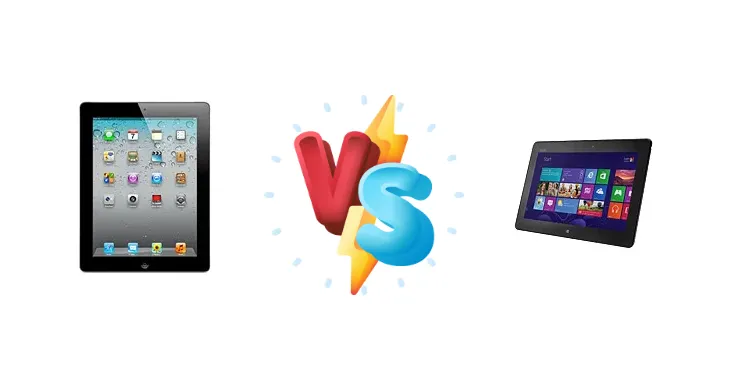
The Apple iPad 2 and Asus VivoTab RT represent pivotal moments in tablet history. Released within a year of each other, they showcased competing visions for the future of mobile computing. Today, we revisit these devices, not as current contenders, but as fascinating case studies in architectural trade-offs and the evolution of the tablet landscape. This comparison focuses on how their core specifications translate to usable performance in a modern context.
🏆 Quick Verdict
For the average user seeking a functional, albeit aged, tablet experience, the Asus VivoTab RT TF600T offers a slight edge. Its Nvidia Tegra 3 processor provides a noticeable performance boost over the iPad 2’s A5, making it more capable with modern, lightweight tasks. However, software support and app availability are significant considerations.
| Network |
|---|
| 2G bands | GSM 850 / 900 / 1800 / 1900 | N/A |
| 3G bands | HSDPA 850 / 900 / 1900 / 2100 | - |
| EDGE | - | No |
| GPRS | - | No |
| Speed | HSPA 14.4/2 Mbps | - |
| Technology | GSM / HSPA | No cellular connectivity |
| Launch |
|---|
| Announced | 2011, March. Released 2011, March | 2012, October. Released 2012, November |
| Status | Discontinued | Discontinued |
| Body |
|---|
| Dimensions | 241.2 x 185.7 x 8.8 mm (9.50 x 7.31 x 0.35 in) | 262.5 x 170.9 x 8.3 mm (10.33 x 6.73 x 0.33 in) |
| SIM | Micro-SIM | No |
| Weight | 607 g (1.34 lb) | 525 g (1.16 lb) |
| Display |
|---|
| Protection | Scratch-resistant glass, oleophobic coating | Corning Gorilla Glass |
| Resolution | 768 x 1024 pixels, 4:3 ratio (~132 ppi density) | 1366 x 768 pixels, 16:9 ratio (~155 ppi density) |
| Size | 9.7 inches, 291.4 cm2 (~65.1% screen-to-body ratio) | 10.1 inches, 281.1 cm2 (~62.7% screen-to-body ratio) |
| Type | IPS LCD | Super IPS+ LCD |
| | - | TruVivid technology |
| Platform |
|---|
| CPU | Dual-core 1.0 GHz Cortex-A9 | Quad-core 1.3 GHz Cortex-A9 |
| Chipset | Apple A5 (45 nm) | Nvidia Tegra 3 T30 |
| GPU | PowerVR SGX543MP2 | ULP GeForce |
| OS | iOS 4, upgradable to iOS 9.3.5 | Microsoft Windows RT |
| Memory |
|---|
| Card slot | No | microSDXC (dedicated slot) |
| Internal | 16GB 512MB RAM, 32GB 512MB RAM, 64GB 512MB RAM | 32GB 2GB RAM, 64GB 2GB RAM |
| Main Camera |
|---|
| Features | - | LED flash |
| Single | 0.7 MP | 8 MP, AF |
| Video | 720p@30fps | 1080p@30fps |
| Selfie camera |
|---|
| Single | VGA | 2 MP |
| Sound |
|---|
| 3.5mm jack | - | Yes |
| 35mm jack | Yes | Yes |
| Loudspeaker | Yes | Yes, with quad speakers |
| | - | SonicMaster sound technology |
| Comms |
|---|
| Bluetooth | 2.1, A2DP, EDR | 4.0, A2DP |
| NFC | - | Yes |
| Positioning | GPS, A-GPS | No |
| Radio | No | No |
| USB | 2.0 | 2.0, OTG |
| WLAN | Wi-Fi 802.11 a/b/g/n, dual-band | Wi-Fi 802.11 b/g/n |
| Features |
|---|
| Browser | HTML (Safari) | - |
| Sensors | Accelerometer, gyro, compass | Accelerometer, gyro, compass |
| | - | Asus WebStorage (32 GB)
HDMI port
MP4/DivX/Xvid/H.264 player
MP3/WAV/eAAC+ player
Photo viewer/editor
Document editor/viewer |
| Battery |
|---|
| Stand-by | Up to 720 h | - |
| Talk time | Up to 9 h | Up to 9 h |
| Type | Non-removable Li-Po 6930 mAh battery (25 Wh) | Li-Po (25 Wh) |
| Misc |
|---|
| Colors | Black, White | Gray |
| Models | A1396, A1397, iPad2,2 | - |
| Price | About 370 EUR | About 420 EUR |
| SAR EU | 1.19 W/kg (body) | - |
Apple iPad 2 Wi-Fi + 3G
- Simpler, more intuitive iOS ecosystem (at the time)
- Strong brand recognition and resale value (even today)
- Optimized for media consumption
- Significantly slower processor compared to the VivoTab RT
- Limited multitasking capabilities
- Outdated software and app support
Asus VivoTab RT TF600T
- More powerful Nvidia Tegra 3 processor
- Full Windows RT operating system (offers more flexibility)
- Potential for better thermal management
- Windows RT’s limited app compatibility
- Less polished user experience compared to iOS
- Potential software update issues
Display Comparison
The iPad 2 boasts a contrast ratio of 775:1, a respectable figure for its time, but lacking specifics on resolution or panel technology. The VivoTab RT’s display specifications are unavailable, but given its release timeframe, it likely utilized a similar LCD technology. The key difference lies in the intended use case; the iPad 2’s display was optimized for media consumption, while the VivoTab RT aimed for a more desktop-like experience. Without detailed specs on the VivoTab RT, it’s difficult to definitively declare a winner, but the iPad 2’s contrast ratio suggests a potentially more visually appealing image for video playback.
Camera Comparison
Both tablets feature cameras, but the iPad 2’s camera is only specified as capable of video recording. The VivoTab RT’s camera specifications are also unavailable. Given the era, neither device is expected to deliver exceptional image quality. The focus was more on video conferencing than photography. Without further details, it’s impossible to compare their camera capabilities meaningfully. The absence of detailed camera specs highlights their secondary role in the overall user experience.
Performance
The Asus VivoTab RT’s Nvidia Tegra 3 T30, with its quad-core 1.3 GHz Cortex-A9 processors, represents a significant architectural leap over the iPad 2’s dual-core 1.0 GHz Apple A5. The Tegra 3’s architecture included a fifth ‘companion’ core for low-power tasks, potentially improving battery life during less demanding operations. While both utilize the Cortex-A9 architecture, the increased core count and clock speed of the Tegra 3 translate to demonstrably faster performance in multi-threaded applications and a smoother experience with more demanding software. The A5, fabricated on a 45nm process, is less efficient than the Tegra 3, which was built on a smaller node, contributing to potential thermal advantages for the VivoTab RT.
Battery Life
Battery life is difficult to assess without real-world testing data. The iPad 2’s battery capacity is unknown, but Apple historically prioritized battery optimization. The VivoTab RT’s battery capacity is also unspecified. However, the Tegra 3’s power-saving companion core could potentially offer better efficiency during light usage. The lack of charging wattage specifications for both devices makes it impossible to compare charging speeds. Ultimately, battery life would depend heavily on usage patterns and the age of the battery itself.
Buying Guide
Buy the Apple iPad 2 Wi-Fi + 3G if you prioritize simplicity, a mature (though outdated) iOS ecosystem, and a device primarily for media consumption and basic tasks. Buy the Asus VivoTab RT TF600T if you prefer the flexibility of a full Windows RT operating system, need more processing power for light productivity, and are comfortable with potential software limitations and the need for workarounds.
Frequently Asked Questions
❓ Can the Asus VivoTab RT run modern Android apps?
No, the VivoTab RT runs Windows RT, a version of Windows 8 designed for ARM processors. It is not compatible with standard Windows applications, nor can it natively run Android apps. Emulation is possible, but performance will be significantly degraded.
❓ Is it possible to upgrade the iPad 2 to a newer version of iOS?
No, the iPad 2 is limited to iOS 9.3.5, the last version of iOS it supports. This means you will not have access to the latest features, security updates, or app compatibility.
❓ Which tablet is better for playing older games?
The Asus VivoTab RT likely offers a better gaming experience for older titles due to its more powerful Nvidia Tegra 3 processor and GPU. The A5 in the iPad 2 may struggle with more demanding games from that era.
❓ What is the biggest limitation of the Windows RT operating system?
The primary limitation of Windows RT is its app compatibility. It can only run apps specifically designed for the ARM architecture and Windows RT, significantly restricting the software available compared to standard Windows or iOS.