
iPad 10.2 (2021) vs Samsung Galaxy Tab A8: A Deep Dive into Budget Tablet Performance
| Phones Images | |||||
|---|---|---|---|---|---|
|
🏆 Quick Verdict
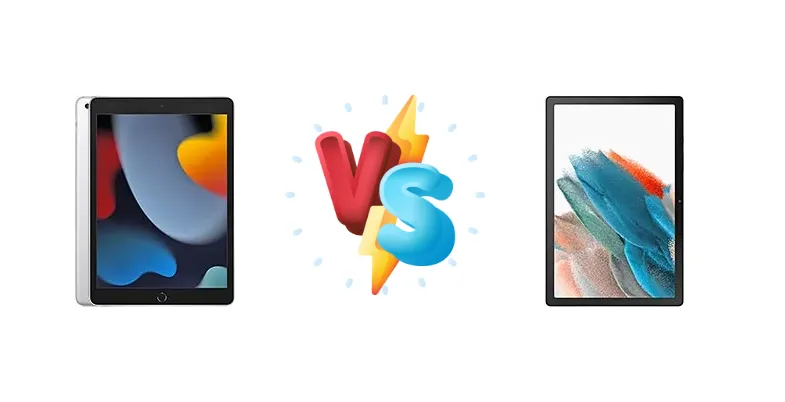
For most users, the Apple iPad 10.2 (2021) is the superior choice. Its A13 Bionic chip delivers significantly faster performance, ensuring smoother multitasking and a longer software support lifespan. While the Tab A8 offers a slightly larger display, the iPad’s overall refinement and processing power justify the price difference.
| PHONES | ||
|---|---|---|
| Phone Names | Apple iPad 10.2 (2021) | Samsung Galaxy Tab A8 10.5 (2021) |
| Network | ||
|---|---|---|
| 2G bands | GSM 850 / 900 / 1800 / 1900 | GSM 850 / 900 / 1800 / 1900 |
| 3G bands | HSDPA 800 / 850 / 900 / 1700(AWS) / 1900 / 2100 | HSDPA 850 / 900 / 1700(AWS) / 1900 / 2100 |
| 4G bands | 1, 2, 3, 4, 5, 7, 8, 11, 12, 13, 14, 17, 18, 19, 20, 21, 25, 26, 29, 30, 34, 38, 39, 40, 41, 66, 71 - A2603 | 1, 2, 3, 4, 5, 7, 8, 12, 17, 20, 28, 38, 40, 41, 66 |
| Speed | HSPA, LTE - cellular model only | HSPA, LTE - cellular model only |
| Technology | GSM / HSPA / LTE | GSM / HSPA / LTE |
| 1, 2, 3, 4, 5, 7, 8, 11, 12, 13, 14, 17, 18, 19, 20, 21, 25, 26, 28, 29, 30, 34, 38, 39, 40, 41, 66 - A2604 | - | |
| Launch | ||
|---|---|---|
| Announced | 2021, September 14 | 2021, December 15 |
| Status | Available. Released 2021, September 24 | Available. Released 2022, January 17 |
| Body | ||
|---|---|---|
| Build | Glass front, aluminum back, aluminum frame | - |
| Dimensions | 250.6 x 174.1 x 7.5 mm (9.87 x 6.85 x 0.30 in) | 246.8 x 161.9 x 6.9 mm (9.72 x 6.37 x 0.27 in) |
| SIM | Nano-SIM + eSIM (cellular model only) | Nano-SIM (cellular model only) |
| Weight | 487 g (Wi-Fi) / 498 g (LTE) (1.07 lb) | 508 g (1.12 lb) |
| Stylus support (1st gen only) | - | |
| Display | ||
|---|---|---|
| Protection | Scratch-resistant glass, oleophobic coating | - |
| Resolution | 1620 x 2160 pixels, 4:3 ratio (~265 ppi density) | 1200 x 1920 pixels, 16:10 ratio (~216 ppi density) |
| Size | 10.2 inches, 322.2 cm2 (~73.8% screen-to-body ratio) | 10.5 inches, 319.7 cm2 (~80.0% screen-to-body ratio) |
| Type | Retina IPS LCD, 500 nits (typ) | TFT LCD |
| Platform | ||
|---|---|---|
| CPU | Hexa-core (2x2.65 GHz Lightning + 4x1.8 GHz Thunder) | Octa-core (2x2.0 GHz Cortex-A75 & 6x2.0 GHz Cortex-A55) |
| Chipset | Apple A13 Bionic (7 nm+) | Unisoc Tiger T618 (12 nm) |
| GPU | Apple GPU (4-core graphics) | Mali G52 MP2 |
| OS | iPadOS 15, upgradable to iPadOS 26.1 | Android 11, upgradable to Android 14, One UI 6 |
| Memory | ||
|---|---|---|
| Card slot | No | microSDXC (dedicated slot) |
| Internal | 64GB 3GB RAM, 256GB 3GB RAM | 32GB 2GB RAM, 32GB 3GB RAM, 64GB 2GB RAM, 64GB 3GB RAM, 64GB 4GB RAM, 128GB 3GB RAM, 128GB 4GB RAM |
| Main Camera | ||
|---|---|---|
| Features | HDR, panorama | - |
| Single | 8 MP, f/2.4, 31mm (standard), 1.12µm, AF | 8 MP, AF |
| Video | 1080p@25/30fps, 720p@120fps; gyro-EIS | 1080p@30fps |
| Selfie camera | ||
|---|---|---|
| Features | HDR | - |
| Single | 12 MP, f/2.4, 122˚ (ultrawide) | 5 MP |
| Video | 1080p@25/30/60fps, gyro-EIS | 1080p@30fps |
| Sound | ||
|---|---|---|
| 3.5mm jack | Yes | Yes |
| 35mm jack | Yes | Yes |
| Loudspeaker | Yes, with stereo speakers | Yes, with stereo speakers (4 speakers) |
| Comms | ||
|---|---|---|
| Bluetooth | 4.2, A2DP, EDR, LE | 5.0, A2DP, LE |
| NFC | No | No |
| Positioning | GPS, GLONASS - cellular model only | GPS, GLONASS, BDS, GALILEO, QZSS - cellular model only |
| Radio | No | No |
| USB | Lightning, USB 2.0; magnetic connector | USB Type-C 2.0 |
| WLAN | Wi-Fi 802.11 a/b/g/n/ac, dual-band, hotspot | Wi-Fi 802.11 a/b/g/n/ac, dual-band, Wi-Fi Direct |
| Features | ||
|---|---|---|
| Sensors | Fingerprint (front-mounted), accelerometer, gyro, compass, barometer | Accelerometer, gyro, proximity, compass |
| Battery | ||
|---|---|---|
| Charging | - | 15W wired |
| Type | Li-Ion 8557 mAh (32.4 Wh) | Li-Po 7040 mAh |
| Misc | ||
|---|---|---|
| Colors | Silver, Space Gray | Gray, Silver, Pink Gold |
| Models | A2603, A2604, iPad12,1, iPad12,2 | SM-X200, SM-X205 |
| Price | About 430 EUR | About 230 EUR |
| SAR EU | - | 0.92 W/kg (body) |
| Tests | ||
|---|---|---|
| Camera | Photo / Video | - |
| Display | Contrast ratio: 1123:1 (nominal) | - |
| Loudspeaker | -29.4 LUFS (Average) | - |
| Performance | AnTuTu: 617292(v9) GeekBench: 3124 (v5.1) GFXBench: 44fps (ES 3.1 onscreen) | - |
Apple iPad 10.2 (2021)
- Significantly faster A13 Bionic processor
- Superior display brightness and contrast
- Long-term software support from Apple
- Slightly smaller display than the Tab A8
- Higher price point
Samsung Galaxy Tab A8 10.5 (2021)
- Larger 10.5-inch display
- More affordable price
- Android ecosystem flexibility
- Slower Unisoc Tiger T618 processor
- Slower 15W charging
- Potentially shorter software support lifespan
Display Comparison
The Samsung Galaxy Tab A8 boasts a 10.5-inch display, marginally larger than the iPad 10.2’s 10.2-inch screen. However, Apple’s iPad delivers a measured peak brightness of 513 nits, suggesting a more vibrant and visible experience in bright environments. While both lack advanced features like high refresh rates, the iPad’s 1123:1 contrast ratio indicates deeper blacks and a more dynamic image compared to the Tab A8, which lacks published contrast data. The lack of detailed display specs for the Tab A8 suggests a more basic panel.
Camera Comparison
Both tablets feature basic photo and video capabilities, but neither are intended for serious photography. The lack of detailed camera specifications for both devices suggests they are adequate for video calls and casual snapshots, but not much more. The iPad’s camera is likely to benefit from Apple’s image signal processing, but without specific sensor details, it’s difficult to quantify the difference. The Tab A8’s camera is likely to be a step down in image quality.
Performance
The core difference lies in the chipsets. Apple’s A13 Bionic, built on a 7nm+ process, is a six-core powerhouse with two high-performance Lightning cores clocked at 2.65 GHz and four efficiency Thunder cores. This architecture provides a substantial performance advantage over the Samsung Galaxy Tab A8’s Unisoc Tiger T618 (12nm). The T618’s octa-core configuration (2x2.0 GHz Cortex-A75 & 6x2.0 GHz Cortex-A55) is less efficient and delivers significantly lower processing power. This translates to noticeably slower app loading times, less responsive multitasking, and a less enjoyable gaming experience on the Tab A8. The A13 Bionic’s superior architecture also benefits from Apple’s tight software integration.
Battery Life
Battery life will largely depend on usage patterns. The Galaxy Tab A8 supports 15W wired charging, which is relatively slow compared to modern standards. While the iPad’s charging speed isn’t explicitly stated, Apple typically prioritizes optimized charging over raw speed. The A13 Bionic’s efficiency, combined with Apple’s software optimization, likely results in comparable or even better real-world battery life on the iPad despite potentially having a smaller battery capacity. The slower charging on the Tab A8 could be a drawback for users who need a quick top-up.
Buying Guide
Buy the Apple iPad 10.2 (2021) if you prioritize performance, long-term software updates, and a refined user experience, even if it means spending a bit more. It’s ideal for students, creative tasks, and users who want a tablet that will last for years. Buy the Samsung Galaxy Tab A8 10.5 (2021) if you prefer the Android ecosystem, value a slightly larger screen for media consumption, and are on a very tight budget.