
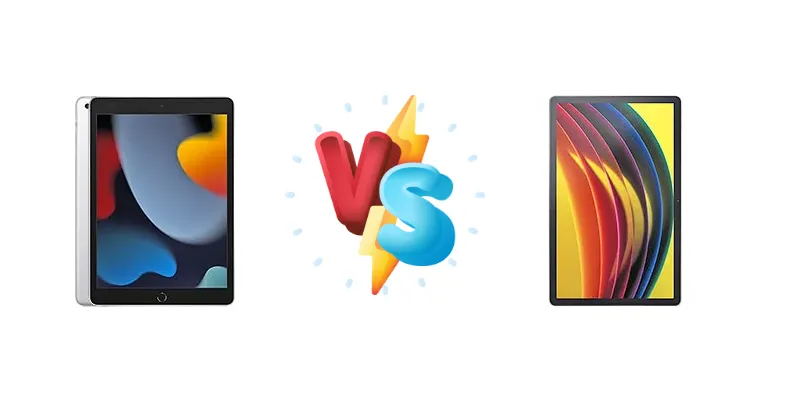
iPad 10.2 (2021) vs. Lenovo Tab P11 Plus: A Detailed Comparison
| Phones Images | |||||
|---|---|---|---|---|---|
|
🏆 Quick Verdict
For most users, the Apple iPad 10.2 (2021) is the superior choice due to its significantly more powerful A13 Bionic chip and brighter display. However, the Lenovo Tab P11 Plus offers a compelling value proposition for budget-conscious buyers who prioritize affordability over raw performance.
| PHONES | ||
|---|---|---|
| Phone Names | Apple iPad 10.2 (2021) | Lenovo Tab P11 Plus |
| Network | ||
|---|---|---|
| 2G bands | GSM 850 / 900 / 1800 / 1900 | GSM 850 / 900 / 1800 / 1900 |
| 3G bands | HSDPA 800 / 850 / 900 / 1700(AWS) / 1900 / 2100 | HSDPA 850 / 900 / 1900 / 2100 |
| 4G bands | 1, 2, 3, 4, 5, 7, 8, 11, 12, 13, 14, 17, 18, 19, 20, 21, 25, 26, 29, 30, 34, 38, 39, 40, 41, 66, 71 - A2603 | 1, 2, 3, 4, 5, 7, 8, 20, 28, 38, 40, 41 |
| Speed | HSPA, LTE - cellular model only | HSPA, LTE - cellular model only |
| Technology | GSM / HSPA / LTE | GSM / HSPA / LTE |
| 1, 2, 3, 4, 5, 7, 8, 11, 12, 13, 14, 17, 18, 19, 20, 21, 25, 26, 28, 29, 30, 34, 38, 39, 40, 41, 66 - A2604 | - | |
| Launch | ||
|---|---|---|
| Announced | 2021, September 14 | 2021, June 28 |
| Status | Available. Released 2021, September 24 | Available. Released 2021, July 29 |
| Body | ||
|---|---|---|
| Build | Glass front, aluminum back, aluminum frame | - |
| Dimensions | 250.6 x 174.1 x 7.5 mm (9.87 x 6.85 x 0.30 in) | 258.4 x 163 x 7.5 mm (10.17 x 6.42 x 0.30 in) |
| SIM | Nano-SIM + eSIM (cellular model only) | Nano-SIM (cellular model only) |
| Weight | 487 g (Wi-Fi) / 498 g (LTE) (1.07 lb) | 490 g (1.08 lb) |
| Stylus support (1st gen only) | Stylus support | |
| Display | ||
|---|---|---|
| Protection | Scratch-resistant glass, oleophobic coating | - |
| Resolution | 1620 x 2160 pixels, 4:3 ratio (~265 ppi density) | 1200 x 2000 pixels, 5:3 ratio (~212 ppi density) |
| Size | 10.2 inches, 322.2 cm2 (~73.8% screen-to-body ratio) | 11.0 inches, 344.4 cm2 (~81.8% screen-to-body ratio) |
| Type | Retina IPS LCD, 500 nits (typ) | IPS LCD, 400 nits (typ) |
| Platform | ||
|---|---|---|
| CPU | Hexa-core (2x2.65 GHz Lightning + 4x1.8 GHz Thunder) | Octa-core (2x2.05 GHz Cortex-A76 & 6x2.0 GHz Cortex-A55) |
| Chipset | Apple A13 Bionic (7 nm+) | Mediatek MT6785 Helio G90T (12 nm) |
| GPU | Apple GPU (4-core graphics) | Mali-G76 MC4 |
| OS | iPadOS 15, upgradable to iPadOS 26.1 | Android 11 |
| Memory | ||
|---|---|---|
| Card slot | No | microSDXC (dedicated slot) |
| Internal | 64GB 3GB RAM, 256GB 3GB RAM | 64GB 4GB RAM, 128GB 4GB RAM, 128GB 6GB RAM |
| Main Camera | ||
|---|---|---|
| Features | HDR, panorama | LED flash |
| Single | 8 MP, f/2.4, 31mm (standard), 1.12µm, AF | 13 MP, (wide), AF |
| Video | 1080p@25/30fps, 720p@120fps; gyro-EIS | 1080p@30fps |
| Selfie camera | ||
|---|---|---|
| Features | HDR | - |
| Single | 12 MP, f/2.4, 122˚ (ultrawide) | 8 MP, (wide) |
| Video | 1080p@25/30/60fps, gyro-EIS | 1080p@30fps |
| Sound | ||
|---|---|---|
| 3.5mm jack | Yes | No |
| 35mm jack | Yes | No |
| Loudspeaker | Yes, with stereo speakers | Yes, with stereo speakers (4 speakers) |
| Comms | ||
|---|---|---|
| Bluetooth | 4.2, A2DP, EDR, LE | 5.1, A2DP, LE |
| NFC | No | No |
| Positioning | GPS, GLONASS - cellular model only | GPS, GLONASS, BDS - cellular model only |
| Radio | No | FM radio |
| USB | Lightning, USB 2.0; magnetic connector | USB Type-C 2.0 |
| WLAN | Wi-Fi 802.11 a/b/g/n/ac, dual-band, hotspot | Wi-Fi 802.11 a/b/g/n/ac, dual-band, Wi-Fi Direct |
| Features | ||
|---|---|---|
| Sensors | Fingerprint (front-mounted), accelerometer, gyro, compass, barometer | Accelerometer, gyro, proximity |
| Battery | ||
|---|---|---|
| Charging | - | 20W wired |
| Type | Li-Ion 8557 mAh (32.4 Wh) | Li-Po 7700 mAh |
| Misc | ||
|---|---|---|
| Colors | Silver, Space Gray | Slate Grey, Platinum Grey, Modernist teal |
| Models | A2603, A2604, iPad12,1, iPad12,2 | ZA940124SE |
| Price | About 430 EUR | About 300 EUR |
| Tests | ||
|---|---|---|
| Camera | Photo / Video | - |
| Display | Contrast ratio: 1123:1 (nominal) | - |
| Loudspeaker | -29.4 LUFS (Average) | - |
| Performance | AnTuTu: 617292(v9) GeekBench: 3124 (v5.1) GFXBench: 44fps (ES 3.1 onscreen) | - |
Apple iPad 10.2 (2021)
- Significantly more powerful A13 Bionic chip
- Brighter and higher contrast display
- Long-term software support from Apple
- Higher price point
- Limited storage options at base price
Lenovo Tab P11 Plus
- More affordable price
- Faster 20W charging
- Android ecosystem flexibility
- Less powerful MediaTek Helio G90T chip
- Likely lower display quality
- Shorter software update lifespan
Display Comparison
The iPad 10.2 (2021) boasts a measured peak brightness of 513 nits and a 1123:1 contrast ratio, providing a vibrant and clear viewing experience. While the Lenovo Tab P11 Plus’s display specifications aren’t provided, it’s likely to offer lower brightness and contrast. This difference is crucial for outdoor visibility and overall image quality. The iPad’s display is also likely to have superior color accuracy, benefiting content creators and those who appreciate accurate color reproduction. The lack of LTPO technology in either device means refresh rates are standard 60Hz, but the iPad’s superior panel quality makes a noticeable difference.
Camera Comparison
Both tablets feature photo and video capabilities, but detailed camera specifications are limited. Given Apple’s history, the iPad’s camera is likely to offer superior image processing and video quality. The Lenovo Tab P11 Plus’s camera is likely to be a more basic offering, suitable for casual snapshots and video calls. Without specific sensor size or aperture information, it’s difficult to make a precise comparison, but Apple generally prioritizes camera performance even in its entry-level iPads.
Performance
The core difference lies in the chipsets. Apple’s A13 Bionic (7nm+) is a hexa-core processor built for efficiency and power. Its two high-performance Lightning cores clocked at 2.65 GHz, paired with four Thunder cores, deliver significantly faster processing speeds than the Lenovo’s MediaTek Helio G90T (12nm). The G90T is an octa-core processor, but its Cortex-A76 and A55 cores are less efficient and powerful than Apple’s custom cores. This translates to smoother multitasking, faster app loading times, and better gaming performance on the iPad. The A13 Bionic’s Neural Engine also provides advantages in machine learning tasks. While the Tab P11 Plus is adequate for everyday tasks, the iPad excels in demanding applications.
Battery Life
Battery life will depend heavily on usage patterns. The Lenovo Tab P11 Plus benefits from 20W wired charging, which will allow for faster top-ups. However, the A13 Bionic’s efficiency in the iPad 10.2 (2021) could offset a potentially smaller battery capacity, resulting in comparable real-world battery life. Without knowing the iPad’s battery capacity, it’s difficult to definitively say which tablet offers better endurance, but the faster charging on the Lenovo is a clear advantage for users who need quick power boosts.
Buying Guide
Buy the Apple iPad 10.2 (2021) if you need a tablet with long-term software support, a smoother user experience, and the ability to handle demanding tasks like video editing or gaming. Buy the Lenovo Tab P11 Plus if you prefer the Android ecosystem, prioritize a lower price point, and primarily intend to use the tablet for media consumption and light productivity.