
iPad 10.2 (2020) vs Lenovo Tab P11 Gen 2: A Deep Dive into Performance and Value
| Phones Images | |||||
|---|---|---|---|---|---|
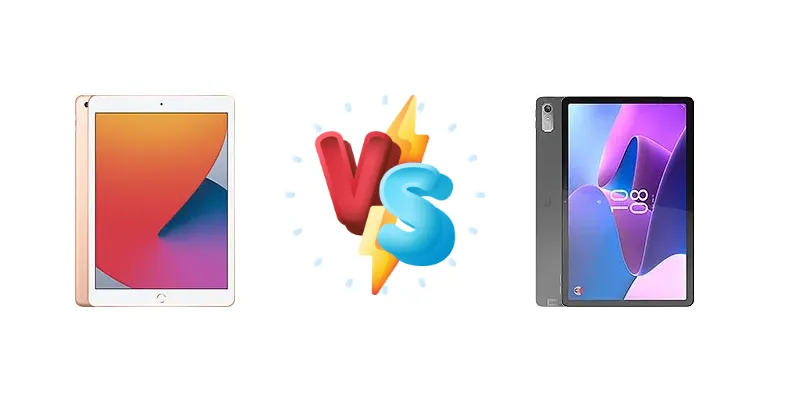
|
🏆 Quick Verdict
For most users, the Apple iPad 10.2 (2020) remains the superior choice. While the Lenovo Tab P11 Gen 2 offers a newer 6nm process, the A12 Bionic’s architectural advantages and optimized software ecosystem provide a smoother, more responsive experience, particularly for demanding tasks and long-term software support.
| PHONES | ||
|---|---|---|
| Phone Names | Apple iPad 10.2 (2020) | Lenovo Tab P11 Gen 2 |
| Network | ||
|---|---|---|
| 2G bands | GSM 850 / 900 / 1800 / 1900 | GSM 850 / 900 / 1800 / 1900 |
| 3G bands | HSDPA 800 / 850 / 900 / 1700(AWS) / 1900 / 2100 | HSDPA 800 / 850 / 900 / 1700(AWS) / 1900 / 2100 |
| 4G bands | 1, 2, 3, 4, 5, 7, 8, 11, 12, 13, 14, 17, 18, 19, 20, 21, 25, 26, 29, 30, 34, 38, 39, 40, 41, 66, 71 - A2428 | 1, 2, 3, 4, 5, 7, 8, 12, 13, 18, 19, 20, 25, 26, 28, 38, 40, 41, 66 |
| Speed | HSPA, LTE | HSPA, LTE - cellular model only |
| Technology | GSM / HSPA / LTE | GSM / HSPA / LTE |
| 1, 2, 3, 4, 5, 7, 8, 11, 12, 13, 14, 17, 18, 19, 20, 21, 25, 26, 28, 29, 30, 32, 34, 38, 39, 40, 41, 66 - A2429 | - | |
| Launch | ||
|---|---|---|
| Announced | 2020, September 15 | 2022, September 01 |
| Status | Available. Released 2020, September 18 | Available. Released 2023, January |
| Body | ||
|---|---|---|
| Build | Glass front, aluminum back, aluminum frame | - |
| Dimensions | 250.6 x 174.1 x 7.5 mm (9.87 x 6.85 x 0.30 in) | 269.1 x 169.4 x 7.4 mm (10.59 x 6.67 x 0.29 in) |
| SIM | Nano-SIM + eSIM | Nano-SIM (cellular model only) |
| Weight | 490 g (Wi-Fi) / 495 g (LTE) (1.08 lb) | 520 g (1.15 lb) |
| Stylus support (1st gen only) | Stylus support | |
| Display | ||
|---|---|---|
| Protection | Scratch-resistant glass, oleophobic coating | - |
| Resolution | 1620 x 2160 pixels, 4:3 ratio (~264 ppi density) | 1200 x 2000 pixels, 5:3 ratio (~203 ppi density) |
| Size | 10.2 inches, 324.6 cm2 (~74.4% screen-to-body ratio) | 11.5 inches, 376.4 cm2 (~82.6% screen-to-body ratio) |
| Type | Retina IPS LCD, 500 nits (typ) | IPS LCD, 120Hz, 400 nits (typ) |
| Platform | ||
|---|---|---|
| CPU | Hexa-core (2x2.5 GHz Vortex + 4x1.6 GHz Tempest) | Octa-core (2x2.2 GHz Cortex-A76 & 6x2.0 GHz Cortex-A55) |
| Chipset | Apple A12 Bionic (7 nm) | Mediatek Helio G99 (6 nm) |
| GPU | Apple GPU (4-core graphics) | Mali-G57 MC2 |
| OS | iPadOS 14, upgradable to iPadOS 26.1 | Android 12L |
| Memory | ||
|---|---|---|
| Card slot | No | microSDXC (dedicated slot) |
| Internal | 32GB 3GB RAM, 128GB 3GB RAM | 64GB 4GB RAM, 128GB 4GB RAM, 128GB 6GB RAM |
| Main Camera | ||
|---|---|---|
| Features | HDR, panorama | LED flash |
| Single | 8 MP, f/2.4, 31mm (standard), 1.12µm, AF | 13 MP, f/2.4, (wide), AF |
| Video | 1080p@30fps, 720p@120fps, HDR | 1080p@30fps |
| Selfie camera | ||
|---|---|---|
| Features | HDR | - |
| Single | 1.2 MP, f/2.2, 31mm (standard) | 8 MP, f/2.0 |
| Video | 720p@30fps | 1080p@30fps |
| Sound | ||
|---|---|---|
| 3.5mm jack | Yes | Yes |
| 35mm jack | Yes | Yes |
| Loudspeaker | Yes, with stereo speakers | Yes, with stereo speakers (4 speakers) |
| Comms | ||
|---|---|---|
| Bluetooth | 4.2, A2DP, EDR, LE | 5.2, A2DP, LE |
| NFC | No | No |
| Positioning | GPS, GLONASS (Wi‑Fi + Cellular model only) | GPS, GLONASS, BDS - cellular model only |
| Radio | No | No |
| USB | Lightning, USB 2.0; magnetic connector | USB Type-C 2.0, OTG, magnetic connector |
| WLAN | Wi-Fi 802.11 a/b/g/n/ac, dual-band, hotspot | Wi-Fi 802.11 a/b/g/n/ac/6e, dual-band, Wi-Fi Direct |
| Features | ||
|---|---|---|
| Sensors | Fingerprint (front-mounted), accelerometer, gyro, compass, barometer | Accelerometer, gyro, proximity |
| Battery | ||
|---|---|---|
| Type | Li-Ion 8827 mAh (32.4 Wh) | Li-Po 7700 mAh |
| Misc | ||
|---|---|---|
| Colors | Silver, Gold, Space Gray | Storm Grey, Sage |
| Models | A2428, A2429, A2270, A2430, iPad11,6, iPad11,7 | TB350FU |
| Price | About 370 EUR | About 350 EUR |
Apple iPad 10.2 (2020)
- Superior CPU and GPU performance with the A12 Bionic.
- Long-term software support from Apple.
- Strong resale value.
- Higher price point.
- Limited storage options without cloud reliance.
Lenovo Tab P11 Gen 2
- More affordable price.
- Expandable storage via microSD card.
- Open Android operating system.
- Lower overall performance compared to the A12 Bionic.
- Potentially shorter software update lifespan.
Display Comparison
Neither device boasts a cutting-edge display. The iPad 10.2 (2020) utilizes a standard LCD panel, while the Lenovo Tab P11 Gen 2 also features an LCD. Without specific nit brightness data for the Lenovo, we can assume the iPad likely has a brighter panel, typical of Apple’s displays. The Helio G99’s graphics capabilities are more than sufficient to drive a high-refresh-rate display, but the Tab P11 Gen 2 remains locked at 60Hz. The A12 Bionic could also handle higher refresh rates, but Apple has not implemented it on this model. Both likely have similar color accuracy, adequate for general use.
Camera Comparison
Neither tablet excels in photography. Both are equipped with basic camera setups suitable for video calls and casual snapshots. Without detailed camera specs for the Lenovo Tab P11 Gen 2, it’s safe to assume the iPad 10.2 (2020) offers slightly better image quality due to Apple’s image signal processing. Focusing on sensor size and aperture would be crucial for a more definitive comparison, but these are typically not highlighted in marketing materials for these devices.
Performance
The core difference lies in the chipsets. Apple’s A12 Bionic, built on a 7nm process, features a hexa-core CPU with a focus on performance with its Vortex cores. The Lenovo Tab P11 Gen 2’s Mediatek Helio G99, fabricated on a more efficient 6nm process, employs an octa-core configuration with Cortex-A76 and A55 cores. While the G99 has more cores, the A12 Bionic’s architecture and Apple’s software optimization give it a significant edge in single-core performance and overall system responsiveness. The A12 Bionic’s GPU also outperforms the G99’s Mali-G57 MC2, resulting in smoother gaming and faster graphics processing. The 6nm process of the G99 *should* offer better thermal efficiency, potentially reducing throttling during sustained loads, but the A12 Bionic’s overall power is still higher.
Battery Life
Battery life will depend heavily on usage patterns. The iPad 10.2 (2020) typically delivers around 10 hours of web browsing or video playback. The Lenovo Tab P11 Gen 2’s battery capacity and charging wattage are unknown, but the more efficient Helio G99 *could* translate to comparable or slightly better battery life under similar workloads. However, the A12 Bionic’s power efficiency optimizations are also significant. Without specific charging data, it’s difficult to determine which tablet charges faster.
Buying Guide
Buy the Apple iPad 10.2 (2020) if you prioritize long-term software updates, a refined user experience, and seamless integration with the Apple ecosystem. It’s ideal for students, creative professionals using Apple Pencil (sold separately), and those who value resale value. Buy the Lenovo Tab P11 Gen 2 if you prefer a more open Android experience, need expandable storage, and are looking for a capable tablet at a significantly lower price point, primarily for media consumption and light productivity.