
iPad Air (2020) vs iPad 10.2 (2020): A Deep Dive into Apple's Tablet Lineup
| Phones Images | |||||
|---|---|---|---|---|---|
|
🏆 Quick Verdict
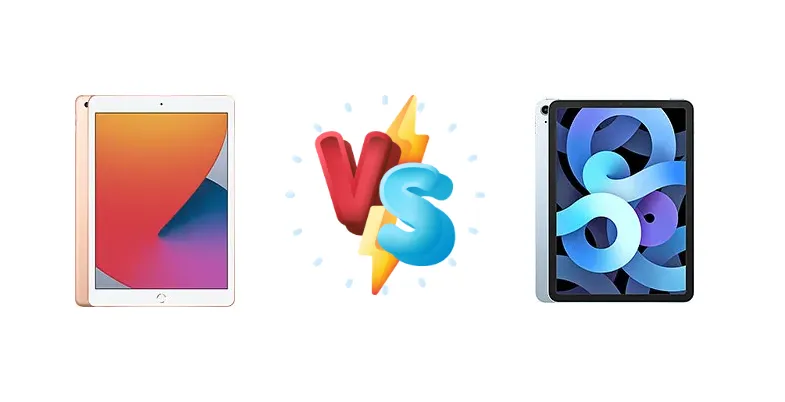
For most users, the iPad Air (2020) is the superior choice. Its A14 Bionic chip delivers a substantial performance boost over the iPad 10.2’s A12 Bionic, making it better suited for demanding tasks like video editing, gaming, and multitasking. While the iPad 10.2 remains a capable device, the Air’s added power justifies the price difference for all but the most budget-conscious buyers.
| PHONES | ||
|---|---|---|
| Phone Names | Apple iPad 10.2 (2020) | Apple iPad Air (2020) |
| Network | ||
|---|---|---|
| 2G bands | GSM 850 / 900 / 1800 / 1900 | GSM 850 / 900 / 1800 / 1900 |
| 3G bands | HSDPA 800 / 850 / 900 / 1700(AWS) / 1900 / 2100 | HSDPA 850 / 900 / 1700(AWS) / 1900 / 2100 |
| 4G bands | 1, 2, 3, 4, 5, 7, 8, 11, 12, 13, 14, 17, 18, 19, 20, 21, 25, 26, 29, 30, 34, 38, 39, 40, 41, 66, 71 - A2428 | 1, 2, 3, 4, 5, 7, 8, 11, 12, 13, 14, 17, 18, 19, 20, 21, 25, 26, 29, 30, 34, 38, 39, 40, 41, 46, 48, 66, 71 - A2324 |
| Speed | HSPA, LTE | HSPA, LTE |
| Technology | GSM / HSPA / LTE | GSM / HSPA / LTE |
| 1, 2, 3, 4, 5, 7, 8, 11, 12, 13, 14, 17, 18, 19, 20, 21, 25, 26, 28, 29, 30, 32, 34, 38, 39, 40, 41, 66 - A2429 | 1, 2, 3, 4, 5, 7, 8, 11, 12, 13, 14, 17, 18, 19, 20, 21, 25, 26, 28, 29, 30, 32, 34, 38, 39, 40, 41, 42, 46, 48, 66 - A2072 | |
| Launch | ||
|---|---|---|
| Announced | 2020, September 15 | 2020, September 15 |
| Status | Available. Released 2020, September 18 | Available. Released 2020, October 23 |
| Body | ||
|---|---|---|
| Build | Glass front, aluminum back, aluminum frame | Glass front, aluminum back, aluminum frame |
| Dimensions | 250.6 x 174.1 x 7.5 mm (9.87 x 6.85 x 0.30 in) | 247.6 x 178.5 x 6.1 mm (9.75 x 7.03 x 0.24 in) |
| SIM | Nano-SIM + eSIM | Nano-SIM + eSIM |
| Weight | 490 g (Wi-Fi) / 495 g (LTE) (1.08 lb) | 458 g (Wi-Fi) / 460 g (3G/LTE) (1.01 lb) |
| Stylus support (1st gen only) | Stylus support | |
| Display | ||
|---|---|---|
| Protection | Scratch-resistant glass, oleophobic coating | Scratch-resistant glass, oleophobic coating |
| Resolution | 1620 x 2160 pixels, 4:3 ratio (~264 ppi density) | 1640 x 2360 pixels (~264 ppi density) |
| Size | 10.2 inches, 324.6 cm2 (~74.4% screen-to-body ratio) | 10.9 inches, 359.2 cm2 (~81.3% screen-to-body ratio) |
| Type | Retina IPS LCD, 500 nits (typ) | Liquid Retina IPS LCD, 500 nits (typ) |
| Platform | ||
|---|---|---|
| CPU | Hexa-core (2x2.5 GHz Vortex + 4x1.6 GHz Tempest) | Hexa-core (2x3.0 GHz Firestorm + 4x1.8 GHz Icestorm) |
| Chipset | Apple A12 Bionic (7 nm) | Apple A14 Bionic (5 nm) |
| GPU | Apple GPU (4-core graphics) | Apple GPU (4-core graphics) |
| OS | iPadOS 14, upgradable to iPadOS 26.1 | iPadOS 14.1, upgradable to iPadOS 26.1 |
| Memory | ||
|---|---|---|
| Card slot | No | No |
| Internal | 32GB 3GB RAM, 128GB 3GB RAM | 64GB 4GB RAM, 256GB 4GB RAM |
| Main Camera | ||
|---|---|---|
| Features | HDR, panorama | HDR |
| Single | 8 MP, f/2.4, 31mm (standard), 1.12µm, AF | 12 MP, f/1.8, (wide), 1/3.0", 1.22µm, dual pixel PDAF |
| Video | 1080p@30fps, 720p@120fps, HDR | 4K@24/30/60fps, 1080p@30/60/120/240fps; gyro-EIS |
| Selfie camera | ||
|---|---|---|
| Features | HDR | HDR |
| Single | 1.2 MP, f/2.2, 31mm (standard) | 7 MP, f/2.0, 31mm (standard) |
| Video | 720p@30fps | 1080p@30/60fps |
| Sound | ||
|---|---|---|
| 3.5mm jack | Yes | No |
| 35mm jack | Yes | No |
| Loudspeaker | Yes, with stereo speakers | Yes, with stereo speakers |
| Comms | ||
|---|---|---|
| Bluetooth | 4.2, A2DP, EDR, LE | 5.0, A2DP, EDR |
| NFC | No | No |
| Positioning | GPS, GLONASS (Wi‑Fi + Cellular model only) | GPS, GLONASS (LTE model only) |
| Radio | No | No |
| USB | Lightning, USB 2.0; magnetic connector | USB Type-C, magnetic connector |
| WLAN | Wi-Fi 802.11 a/b/g/n/ac, dual-band, hotspot | Wi-Fi 802.11 a/b/g/n/ac/6, dual-band, hotspot |
| Features | ||
|---|---|---|
| Sensors | Fingerprint (front-mounted), accelerometer, gyro, compass, barometer | Fingerprint (top-mounted), accelerometer, gyro, compass, barometer |
| Battery | ||
|---|---|---|
| Type | Li-Ion 8827 mAh (32.4 Wh) | Li-Ion 7606 mAh (28.93 Wh) |
| Misc | ||
|---|---|---|
| Colors | Silver, Gold, Space Gray | Space Gray, Silver, Rose Gold, Green, Sky Blue |
| Models | A2428, A2429, A2270, A2430, iPad11,6, iPad11,7 | A2324, A2072, A2325, A2316, iPad13,1, iPad13,2 |
| Price | About 370 EUR | About 640 EUR |
Apple iPad 10.2 (2020)
- More affordable price point
- Slightly longer battery life (on paper)
- Familiar and robust design
- Older A12 Bionic chip limits performance
- Non-laminated display with noticeable bezels
- Less capable camera system
Apple iPad Air (2020)
- Significantly faster A14 Bionic chip
- Fully laminated display with anti-reflective coating
- Sleek and modern design
- Faster charging with USB-C Power Delivery
- Higher price tag
- Slightly smaller battery capacity
Display Comparison
While both iPads feature a 10.2-inch display, the Air benefits from a fully laminated display and anti-reflective coating, resulting in improved clarity and reduced glare compared to the iPad 10.2. Although neither device boasts a high refresh rate, the Air’s wider color gamut and superior panel quality make it noticeably better for content creation and consumption. The iPad 10.2’s display, while functional, appears comparatively dated.
Camera Comparison
Both iPads feature an 8MP rear camera, but the Air’s image signal processor (ISP), integrated within the A14 Bionic, provides superior image processing capabilities. This results in better dynamic range and more accurate color reproduction in photos and videos. While neither device is intended for professional photography, the Air’s camera offers a noticeable improvement in image quality. The front-facing cameras are both 1.2MP, adequate for FaceTime calls but lacking in detail.
Performance
The core differentiator between these iPads is their chipsets. The iPad Air (2020) is powered by the Apple A14 Bionic, fabricated on a 5nm process, featuring a hexa-core CPU with 2x3.0 GHz Firestorm and 4x1.8 GHz Icestorm cores. This represents a significant leap over the iPad 10.2’s A12 Bionic (7nm), with its 2x2.5 GHz Vortex and 4x1.6 GHz Tempest cores. The A14’s architectural improvements and smaller process node translate to approximately 40% faster CPU performance and a 30% boost in GPU performance, making the Air far more capable in graphically intensive applications and multitasking scenarios. The A14 also benefits from a more efficient Neural Engine for machine learning tasks.
Battery Life
The iPad 10.2 (2020) has a slightly larger battery capacity (32.4 Wh) than the iPad Air (2020) (28.6 Wh). However, the A14 Bionic’s improved power efficiency largely offsets this difference. In real-world usage, both iPads offer approximately 10 hours of web browsing or video playback. The Air supports 20W USB-C Power Delivery, enabling faster charging compared to the iPad 10.2’s 10W charging, reducing the time to reach a full charge.
Buying Guide
Buy the Apple iPad 10.2 (2020) if you need a reliable tablet for basic tasks like web browsing, email, and light media consumption, and prioritize affordability above all else. Buy the Apple iPad Air (2020) if you prefer a more responsive experience, plan to use demanding apps, or value a more modern design and improved display quality for creative work or gaming.