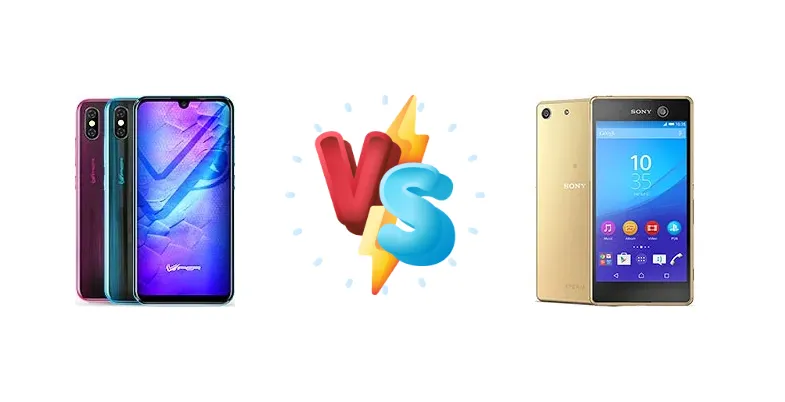
The Sony Xperia M5, released in 2015, represents a mid-range offering from a major manufacturer, while the Allview V4 Viper is a more recent, budget-focused device. This comparison examines whether the Xperia M5’s older, but more powerful, chipset still holds up against the Allview V4 Viper’s newer, efficiency-focused processor, and who benefits from each phone’s strengths.
🏆 Quick Verdict
For users prioritizing performance and a potentially better camera experience, the Sony Xperia M5 is the clear winner. Its Helio X10 chipset offers a substantial advantage over the Allview V4 Viper’s Helio A22. However, the V4 Viper may appeal to those seeking a very affordable device for basic tasks.
| Network |
|---|
| 2G bands | GSM 850 / 900 / 1800 / 1900 | GSM 850 / 900 / 1800 / 1900 |
| 3G bands | HSDPA 900 / 2100 | HSDPA 850 / 900 / 1900 / 2100 - E5603, E5653 |
| 4G bands | 1, 3, 7, 8, 20, 38 | 1, 3, 5, 7, 8, 20 - E5603 |
| Speed | HSPA 42.2/11.5 Mbps, LTE Cat4 150/50 Mbps | HSPA 42.2/5.76 Mbps, LTE Cat4 150/50 Mbps |
| Technology | GSM / HSPA / LTE | GSM / HSPA / LTE |
| | - | 1, 3, 5, 7, 8, 28, 40 - E5653 |
| Launch |
|---|
| Announced | 2019, September. Released 2019, September | 2015, August. Released 2015, September |
| Status | Discontinued | Discontinued |
| Body |
|---|
| Dimensions | 145.8 x 70.9 x 8.5 mm (5.74 x 2.79 x 0.33 in) | 145 x 72 x 7.6 mm (5.71 x 2.83 x 0.30 in) |
| SIM | Nano-SIM + Nano-SIM | Nano-SIM |
| Weight | 138 g (4.87 oz) | 142.5 g (5.04 oz) |
| | - | IP68 dust/water resistant (up to 1.5m for 30 min) |
| Display |
|---|
| Protection | - | Scratch-resistant glass |
| Resolution | 720 x 1520 pixels, 19:9 ratio (~295 ppi density) | 1080 x 1920 pixels, 16:9 ratio (~441 ppi density) |
| Size | 5.7 inches, 81.1 cm2 (~78.4% screen-to-body ratio) | 5.0 inches, 68.9 cm2 (~66.0% screen-to-body ratio) |
| Type | IPS LCD | IPS LCD |
| Platform |
|---|
| CPU | Quad-core 2.0 GHz Cortex-A53 | Octa-core 2.0 GHz Cortex-A53 |
| Chipset | Mediatek MT6761 Helio A22 (12 nm) | Mediatek MT6795 Helio X10 (28 nm) |
| GPU | PowerVR GE8320 | PowerVR G6200 |
| OS | Android 9.0 (Pie) | Android 5.0.1 (Lollipop), upgradable to 6.0.1 (Marshmallow) |
| Memory |
|---|
| Card slot | microSDXC (uses shared SIM slot) | microSDXC (dedicated slot) |
| Internal | 16GB 2GB RAM | 16GB 3GB RAM |
| | eMMC 5.1 | eMMC 5.0 |
| Main Camera |
|---|
| Dual | 8 MP, AF
Auxiliary lens | - |
| Features | LED flash | LED flash, HDR, panorama |
| Single | - | 21.2 MP, f/2.2, PDAF |
| Video | 1080p@30fps | 4K@30fps, HDR |
| Selfie camera |
|---|
| Single | 5 MP | 13 MP, f/2.0, AF |
| Video | - | 1080p@30fps |
| Sound |
|---|
| 3.5mm jack | Yes | Yes |
| 35mm jack | Yes | Yes |
| Loudspeaker | Yes | Yes |
| Comms |
|---|
| Bluetooth | 4.1, A2DP, LE | 4.1, A2DP, LE, aptX |
| NFC | No | Yes |
| Positioning | GPS, GLONASS | GPS, GLONASS |
| Radio | FM radio | FM radio, RDS |
| USB | microUSB 2.0 | microUSB 2.0 |
| WLAN | Wi-Fi 802.11 b/g/n | Wi-Fi 802.11 a/b/g/n, dual-band, Wi-Fi Direct, DLNA, hotspot |
| Features |
|---|
| Sensors | Fingerprint (rear-mounted), accelerometer, proximity | Accelerometer, proximity, compass |
| Battery |
|---|
| Music play | - | Up to 62 h 30 min |
| Stand-by | - | Up to 671 h (2G) / Up to 656 h (3G) |
| Talk time | - | Up to 11 h 49 min (2G) / Up to 12 h 11 min (3G) |
| Type | Li-Po 2700 mAh, non-removable | Li-Ion 2600 mAh, non-removable |
| Misc |
|---|
| Colors | Blue, Red | Black, White, Gold |
| Models | - | E5603, E5606, E5653 |
| Price | About 100 EUR | About 110 EUR |
| SAR | - | 0.32 W/kg (head) 1.39 W/kg (body) |
| SAR EU | 1.13 W/kg (head) | 0.19 W/kg (head) 0.40 W/kg (body) |
| Tests |
|---|
| Audio quality | - |
Noise -94.1dB / Crosstalk -93.4dB |
| Camera | - |
Photo / Video |
| Display | - |
Contrast ratio: 839 (nominal), 2.69(sunlight) |
| Loudspeaker | - |
Voice 65dB / Noise 64dB / Ring 68dB
|
| Performance | - |
Basemark OS II 2.0: 860Basemark X: 7780 |
Allview V4 Viper
- More power-efficient processor (Helio A22, 12nm)
- Potentially lower price point
- Likely longer battery life for basic usage
- Significantly weaker performance compared to the Xperia M5
- Limited camera capabilities
- Lack of detailed specifications
Sony Xperia M5
- More powerful processor (Helio X10, octa-core)
- Potentially better camera quality (Sony expertise)
- Smoother multitasking and gaming experience
- Less power-efficient processor (Helio X10, 28nm)
- Older device, no longer receiving software updates
- Potentially shorter battery life
Display Comparison
Both devices share a contrast ratio of 839 (nominal) and 2.69 (sunlight), suggesting similar outdoor visibility. However, the lack of detailed display specifications for the Allview V4 Viper – resolution, panel type – makes a direct comparison difficult. The Xperia M5’s contrast ratio, while not exceptional by modern standards, was respectable for its time, indicating a decent viewing experience. The absence of information regarding the V4 Viper’s panel technology suggests it likely utilizes a lower-cost IPS panel, potentially impacting color accuracy and viewing angles.
Camera Comparison
Both devices are listed as having Photo/Video capabilities, but detailed camera specifications are absent for both. Given Sony’s camera expertise, the Xperia M5 likely boasts a superior camera system, potentially including features like faster autofocus and better image stabilization. The Helio X10 also includes an image signal processor (ISP) capable of handling more complex image processing algorithms. The Allview V4 Viper, being a budget device, likely features a simpler camera setup with lower-quality sensors and limited image processing capabilities. Without specific sensor details, it’s difficult to assess the image quality gap, but Sony’s brand reputation suggests a clear advantage for the Xperia M5.
Performance
The Sony Xperia M5’s Mediatek Helio X10 (MT6795) is a significant step up from the Allview V4 Viper’s Helio A22 (MT6761). The X10 is an octa-core processor, while the A22 is quad-core. Crucially, the X10 is built on a 28nm process, while the A22 uses a more efficient 12nm process. While the A22’s smaller node improves power efficiency, the X10’s eight cores and higher clock speed (both at 2.0 GHz Cortex-A53) deliver substantially better multi-core performance. This translates to faster app loading times, smoother multitasking, and a more responsive user experience on the Xperia M5. Gamers will find the Xperia M5 far more capable of handling demanding titles.
Battery Life
Battery capacity data is missing for both devices. However, the Allview V4 Viper’s Helio A22 chipset, built on a 12nm process, is inherently more power-efficient than the Xperia M5’s 28nm Helio X10. This suggests the V4 Viper could potentially offer longer battery life despite potentially having a smaller battery capacity. The Xperia M5’s more powerful processor will consume more power during intensive tasks, leading to faster battery drain. Charging wattage information is also unavailable, making it impossible to compare charging speeds.
Buying Guide
Buy the Allview V4 Viper if you need a highly affordable smartphone for essential tasks like calling, texting, and light social media use, and battery life is paramount. Buy the Sony Xperia M5 if you prioritize smoother multitasking, gaming, and a more capable camera, and are willing to accept a potentially shorter battery life and a device that is no longer receiving software updates.
Frequently Asked Questions
❓ Is the Sony Xperia M5 still a viable option in 2024, considering its age?
While the Xperia M5 is an older device, its Helio X10 processor still offers a significant performance advantage over the Allview V4 Viper’s Helio A22. However, it’s important to note that the M5 will no longer receive software updates, potentially posing security risks and limiting access to newer apps. It's best suited for users who prioritize performance over the latest features and security patches.
❓ How much of a difference will the processor make in everyday use between the Xperia M5 and V4 Viper?
The difference will be noticeable. The Xperia M5’s octa-core Helio X10 will handle multitasking, app loading, and web browsing much more smoothly than the V4 Viper’s quad-core Helio A22. Expect stutters and delays on the V4 Viper when running multiple apps or demanding websites. Gaming performance will also be significantly better on the Xperia M5.
❓ Given the lack of detailed camera specs, what can I realistically expect from the camera on each phone?
Realistically, the Sony Xperia M5 will likely produce better photos and videos due to Sony’s camera technology and the Helio X10’s image processing capabilities. Expect sharper images, better dynamic range, and more accurate colors. The Allview V4 Viper’s camera will likely be adequate for basic snapshots, but will struggle in low-light conditions and lack the detail and clarity of the Xperia M5.