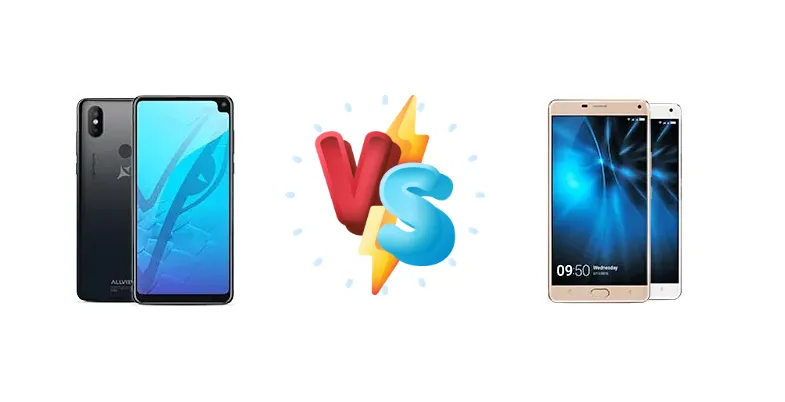
Allview targets the value-conscious smartphone user, and the V4 Viper Pro and P8 Energy Pro represent two distinct approaches within that segment. The V4 Viper Pro aims for affordability, while the P8 Energy Pro attempts to deliver a more robust experience. This comparison dissects their core components to determine which device offers the best bang for your buck.
🏆 Quick Verdict
For most users, the Allview P8 Energy Pro is the superior choice. Its octa-core MT6753 chipset provides a noticeable performance boost over the V4 Viper Pro’s quad-core MT6739, making it better suited for multitasking and demanding applications. While both share a similar charging speed, the P8’s processing power justifies the potential price difference.
| Network |
|---|
| 2G bands | GSM 850 / 900 / 1800 / 1900 | GSM 850 / 900 / 1800 / 1900 - SIM 1 & SIM 2 |
| 3G bands | HSDPA 900 / 2100 | HSDPA 900 / 1900 / 2100 |
| 4G bands | 1, 3, 7, 20, 38 | 1, 3, 7, 38, 39, 40 |
| Speed | HSPA 21.1/5.76 Mbps, LTE Cat4 150/50 Mbps | HSPA 21.1/5.76 Mbps, LTE Cat4 150/50 Mbps |
| Technology | GSM / HSPA / LTE | GSM / HSPA / LTE |
| Launch |
|---|
| Announced | 2020, January. Released 2020, January | 2016, February. Released 2016, February |
| Status | Discontinued | Discontinued |
| Body |
|---|
| Dimensions | 171 x 82 x 8.8 mm (6.73 x 3.23 x 0.35 in) | 160.9 x 81.2 x 8.4 mm (6.33 x 3.20 x 0.33 in) |
| SIM | Nano-SIM + Nano-SIM | Dual SIM (Micro-SIM, dual stand-by) |
| Weight | 191.6 g (6.77 oz) | 209.8 g (7.37 oz) |
| Display |
|---|
| Protection | - | Corning Gorilla Glass 3 |
| Resolution | 640 x 1352 pixels, 19:9 ratio (~220 ppi density) | 1080 x 1920 pixels, 16:9 ratio (~367 ppi density) |
| Size | 6.8 inches, 115.4 cm2 (~82.3% screen-to-body ratio) | 6.0 inches, 99.2 cm2 (~76.0% screen-to-body ratio) |
| Type | IPS LCD | AMOLED |
| Platform |
|---|
| CPU | Quad-core 1.3 GHz Cortex-A53 | Octa-core 1.3 GHz Cortex-A53 |
| Chipset | Mediatek MT6739 (28 nm) | Mediatek MT6753 (28 nm) |
| GPU | PowerVR GE8100 | Mali-T720MP2 |
| OS | Android 9.0 (Pie) | Android 5.1 (Lollipop) |
| Memory |
|---|
| Card slot | microSDXC (uses shared SIM slot) | microSDXC |
| Internal | 32GB 2GB RAM | 64GB 3GB RAM |
| | eMMC 5.1 | - |
| Main Camera |
|---|
| Dual | 13 MP, AF
Auxiliary lens | - |
| Features | LED flash | LED flash, HDR, panorama |
| Single | - | 13 MP, f/2.0, AF |
| Video | 1080p@30fps | 1080p@30fps |
| Selfie camera |
|---|
| Single | 8 MP | 5 MP |
| Video | 1080p@30fps | - |
| Sound |
|---|
| 3.5mm jack | Yes | Yes |
| 35mm jack | Yes | Yes |
| Loudspeaker | Yes | Yes |
| Comms |
|---|
| Bluetooth | 4.0, A2DP | 4.0, A2DP, EDR |
| NFC | No | No |
| Positioning | GPS, GLONASS | GPS |
| Radio | FM radio | FM radio |
| USB | microUSB 2.0 | USB Type-C 3.0 |
| WLAN | Wi-Fi 802.11 b/g/n | Wi-Fi 802.11 b/g/n |
| Features |
|---|
| Sensors | Fingerprint (rear-mounted), accelerometer, proximity | Fingerprint (front-mounted), accelerometer, proximity, compass |
| Battery |
|---|
| Charging | 10W wired | - |
| Stand-by | - | Up to 450 h |
| Talk time | - | Up to 22 h 30 min |
| Type | Li-Po 3500 mAh | Li-Po 5020 mAh, non-removable |
| Misc |
|---|
| Colors | Dark Grey | Gold/Silver |
| Price | About 170 EUR | About 420 EUR |
| SAR EU | 1.20 W/kg (head) | 0.40 W/kg (head) |
Allview V4 Viper Pro
- Lowest possible price point
- Functional for basic tasks
- Simple and straightforward user experience
- Slow performance with multitasking
- Limited gaming capabilities
- Likely subpar camera quality
Allview P8 Energy Pro
- Noticeably faster performance
- Better multitasking capabilities
- More responsive user experience
- Slightly higher price
- Still limited by chipset age
- Camera quality likely remains basic
Display Comparison
Neither Allview provides display specifications beyond resolution, so a direct comparison is limited. However, given their market positioning, both likely utilize IPS LCD panels. The absence of details like peak brightness or color gamut suggests neither prioritizes display quality. Bezels are likely substantial on both, typical for this price bracket. The user experience will likely be similar in terms of visual fidelity.
Camera Comparison
Without detailed camera specifications, assessing image quality is difficult. Both phones likely feature basic camera setups geared towards casual photography. The absence of information regarding sensor size or aperture suggests neither will excel in low-light conditions. Any 2MP or lower resolution secondary cameras are likely present for marketing purposes only and will produce images of limited quality. The P8 Energy Pro *may* have a slightly better image signal processor (ISP) integrated into the MT6753, potentially leading to marginally improved image processing.
Performance
The core difference lies in the chipsets. The Allview P8 Energy Pro’s Mediatek MT6753, with its octa-core Cortex-A53 configuration, significantly outperforms the V4 Viper Pro’s quad-core MT6739. While both are based on the 28nm process, the increased core count of the MT6753 translates to better multi-tasking and smoother performance in applications. The MT6753’s GPU will also offer a more capable gaming experience, though neither phone is designed for graphically intensive titles. The V4 Viper Pro will struggle with multiple apps open simultaneously, while the P8 Energy Pro will handle them more gracefully.
Battery Life
Both devices feature 10W wired charging, indicating similar charging speeds. While battery capacity isn’t specified, the P8 Energy Pro’s more efficient chipset could translate to slightly better battery life despite potentially having a similar capacity. The MT6753’s octa-core architecture, while more powerful, is also designed for power efficiency, potentially offsetting the increased processing load. Expect both phones to require daily charging with moderate use.
Buying Guide
Buy the Allview V4 Viper Pro if you prioritize absolute minimum cost and only need a phone for basic tasks like calls, texts, and light social media. It’s a functional device for those on the tightest of budgets. Buy the Allview P8 Energy Pro if you value smoother performance, better multitasking capabilities, and a more responsive user experience, even if it means spending a little more. It’s the better option for anyone who uses their phone beyond the most essential functions.
Frequently Asked Questions
❓ Will the Allview P8 Energy Pro handle popular social media apps like Facebook and Instagram smoothly?
Yes, the P8 Energy Pro’s octa-core MT6753 chipset is significantly better equipped to handle the demands of social media apps compared to the V4 Viper Pro’s quad-core processor. You should experience smoother scrolling and faster loading times within these applications.
❓ Is the Allview V4 Viper Pro suitable for playing mobile games?
The V4 Viper Pro is only suitable for very basic, less demanding mobile games. The quad-core MT6739 chipset will struggle with most modern titles, resulting in low frame rates and lag. The P8 Energy Pro offers a slightly better gaming experience, but neither phone is a gaming powerhouse.
❓ How long will it take to fully charge both phones from 0%?
With both phones utilizing 10W charging, expect a full charge to take approximately 2.5 to 3.5 hours. The actual charging time will depend on the battery capacity (which is not specified) and whether the phone is being used during charging.
❓ Which phone is better for someone who frequently uses multiple apps at the same time?
The Allview P8 Energy Pro is the clear winner for multitasking. Its octa-core processor and likely increased RAM capacity (though not specified) will allow you to switch between apps more smoothly and keep more applications running in the background without significant performance slowdown.