
Alcatel V3 Ultra vs. Nokia 4.2: A Deep Dive into Budget Smartphone Performance
| Phones Images | |||||
|---|---|---|---|---|---|
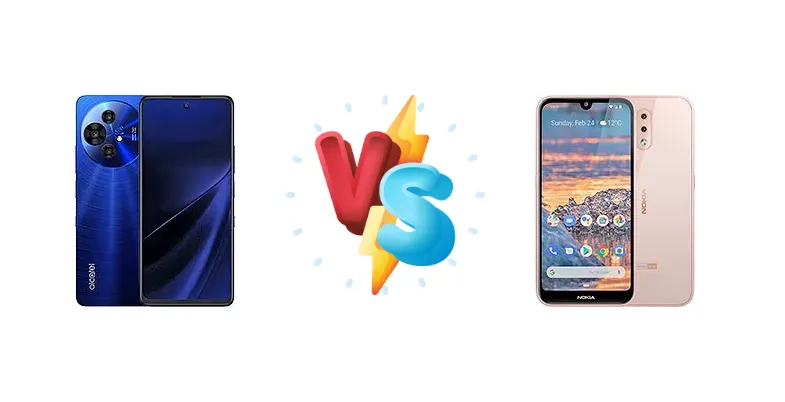
|
🏆 Quick Verdict
For users prioritizing performance and future-proofing, the Alcatel V3 Ultra is the clear winner. Its Mediatek Dimensity 6300 chipset offers a significant leap in processing capability over the Nokia 4.2’s Snapdragon 439. However, the Nokia 4.2 remains a viable option for those seeking a reliable, basic smartphone experience.
| PHONES | ||
|---|---|---|
| Phone Names | alcatel V3 Ultra | Nokia 4.2 |
| Network | ||
|---|---|---|
| 2G bands | GSM 850 / 900 / 1800 / 1900 | GSM 850 / 900 / 1800 / 1900 |
| 3G bands | HSDPA 850 / 900 / 1700(AWS) / 1900 / 2100 | HSDPA 850 / 900 / 2100 - Global |
| 4G bands | 1, 2, 3, 4, 5, 7, 8, 17, 20, 26, 28, 32, 38, 40, 41, 42 | 1, 3, 5, 7, 8, 20, 28, 38, 40, 41 - EMEA, APAC, MENA |
| 5G bands | 1, 3, 5, 7, 8, 20, 26, 28, 38, 40, 41, 48, 77, 78 SA/NSA | - |
| Speed | HSPA, LTE, 5G | HSPA 42.2/5.76 Mbps, LTE Cat4 150/50 Mbps |
| Technology | GSM / HSPA / LTE / 5G | GSM / HSPA / LTE |
| - | 1, 3, 5, 8, 40, 41 - India | |
| Launch | ||
|---|---|---|
| Announced | 2025, May 27 | 2019, February 24. Released 2019, May 07 |
| Status | Available. Released 2025, June 02 | Discontinued |
| Body | ||
|---|---|---|
| Build | - | Glass front, glass back, plastic frame |
| Dimensions | 167.6 x 75.5 x 8 mm (6.60 x 2.97 x 0.31 in) | 149 x 71.3 x 8.4 mm (5.87 x 2.81 x 0.33 in) |
| SIM | Nano-SIM + eSIM | Nano-SIM + Nano-SIM |
| Weight | 196 g (6.91 oz) | 161 g (5.68 oz) |
| Display | ||
|---|---|---|
| Protection | Mohs level 7 | - |
| Resolution | 1080 x 2460 pixels (~395 ppi density) | 720 x 1520 pixels, 19:9 ratio (~295 ppi density) |
| Size | 6.8 inches, 109.8 cm2 (~86.8% screen-to-body ratio) | 5.71 inches, 81.4 cm2 (~76.6% screen-to-body ratio) |
| Type | IPS LCD, 120Hz, 650 nits | IPS LCD |
| Platform | ||
|---|---|---|
| CPU | Octa-core (2x2.4 GHz Cortex-A76 & 6x2.0 GHz Cortex-A55) | Octa-core (4x1.95 GHz Cortex-A53 & 4x1.45 GHz Cortex A53) |
| Chipset | Mediatek Dimensity 6300 (6 nm) | Qualcomm SDM439 Snapdragon 439 (12 nm) |
| GPU | Mali-G57 MC2 | Adreno 505 |
| OS | Android 14, up to 3 major Android upgrades | Android 9.0 (Pie), upgradable to Android 11, Android One |
| Memory | ||
|---|---|---|
| Card slot | microSDXC (dedicated slot) | microSDXC (dedicated slot) |
| Internal | 128GB 6GB RAM, 128GB 8GB RAM | 16GB 2GB RAM, 32GB 3GB RAM |
| - | eMMC 5.1 | |
| Main Camera | ||
|---|---|---|
| Dual | - | 13 MP, f/2.2, 1/3.1", 1.12µm, PDAF Auxiliary lens |
| Features | LED flash, HDR | LED flash |
| Triple | 108 MP, f/1.8, (wide), 1/1.67", 0.64µm, PDAF 8 MP, f/2.2, 120˚ (ultrawide), 1/4.0", 1.12µm 2 MP (macro) | - |
| Video | 1080p@30fps | 1080p@30fps |
| Selfie camera | ||
|---|---|---|
| Features | HDR | - |
| Single | 32 MP, f/2.0, (wide), 1/3.45", 0.64µm | 8 MP, f/2.0, 1/4.0", 1.12µm |
| Video | 1080p@30fps | 1080p@30fps |
| Sound | ||
|---|---|---|
| 3.5mm jack | - | Yes |
| 35mm jack | Yes | Yes |
| Loudspeaker | Yes, with stereo speakers | Yes |
| Comms | ||
|---|---|---|
| Bluetooth | 5.3, A2DP, LE | 4.2, A2DP, LE, aptX |
| NFC | Yes | Yes (market dependent) |
| Positioning | GPS, GLONASS, BDS, GALILEO | GPS, GLONASS, BDS |
| Radio | FM radio | FM radio |
| USB | USB Type-C 2.0 | microUSB 2.0, OTG |
| WLAN | Wi-Fi 802.11 a/b/g/n/ac, dual-band, Wi-Fi Direct | Wi-Fi 802.11 b/g/n |
| Features | ||
|---|---|---|
| Sensors | Fingerprint (side-mounted), accelerometer, gyro, proximity, compass, barometer | Fingerprint (rear-mounted), accelerometer, proximity |
| Battery | ||
|---|---|---|
| Charging | 33W wired | - |
| Type | 5010 mAh | Li-Ion 3000 mAh, non-removable |
| Misc | ||
|---|---|---|
| Colors | Hyper Blue, Champagne Gold, Ocean Grey | Black, Pink Sand |
| Models | T803D | TA-1184, TA-1133, TA-1149, TA-1150, TA-1157, TA-1152 |
| Price | About 210 EUR | About 130 EUR |
| SAR | - | 0.43 W/kg (head) 1.08 W/kg (body) |
| SAR EU | - | 0.45 W/kg (head) 1.53 W/kg (body) |
| EU LABEL | ||
|---|---|---|
| Battery | 44:33h endurance, 1000 cycles | - |
| Energy | Class B | - |
| Free fall | Class B (180 falls) | - |
| Repairability | Class B | - |
alcatel V3 Ultra
- Significantly faster processor for smoother performance
- Faster 33W charging for quicker top-ups
- Longer battery endurance (44:33h)
- Potential for higher price point
- Software support may be less consistent than Nokia
Nokia 4.2
- Lower initial cost
- Reliable Qualcomm Snapdragon platform
- Nokia’s reputation for software updates (though potentially end-of-life)
- Outdated processor struggles with demanding tasks
- Slower charging speeds
- Lower battery endurance
Display Comparison
Display specifications are absent from the provided data, but considering the market positioning, both devices likely feature LCD panels. The Nokia 4.2, given its age, may have wider bezels. The V3 Ultra, benefiting from newer manufacturing techniques, likely has a higher screen-to-body ratio. Without specific brightness or color gamut data, it's difficult to assess visual quality, but the V3 Ultra's newer design suggests a more modern display experience.
Camera Comparison
Camera details are limited, but the absence of any mention of advanced features like OIS or large sensors on either device suggests a focus on affordability. The V3 Ultra’s potential for better image processing, stemming from its more powerful chipset, could give it an edge in dynamic range and noise reduction. However, without sensor size or aperture information, a definitive assessment is impossible. The presence of a 2MP macro camera on either device is likely a marketing gimmick, offering limited practical benefit.
Performance
The performance gap between these two devices is substantial. The Alcatel V3 Ultra’s Mediatek Dimensity 6300 (6nm) utilizes Cortex-A76 and A55 cores, representing a significant architectural upgrade over the Nokia 4.2’s Snapdragon 439 (12nm) and its Cortex-A53 cores. The 6nm process node of the Dimensity 6300 also translates to improved power efficiency and reduced thermal throttling compared to the older 12nm Snapdragon. This means the V3 Ultra will handle demanding tasks like video editing and gaming with greater ease and sustained performance. The Snapdragon 439 is adequate for basic tasks, but will struggle with more intensive applications.
Battery Life
The Alcatel V3 Ultra boasts a remarkable 44:33h endurance rating, suggesting excellent battery life. While the Nokia 4.2’s battery capacity is unknown, the less efficient Snapdragon 439 likely requires more power for similar tasks. The V3 Ultra’s 33W wired charging is a significant advantage, allowing for much faster top-ups compared to the Nokia 4.2, which likely supports slower charging speeds. The V3 Ultra’s 1000 cycle battery lifespan also indicates a higher quality battery cell.
Buying Guide
Buy the Alcatel V3 Ultra if you need a phone capable of handling demanding apps, multitasking, and occasional gaming. Its modern chipset and fast charging are ideal for power users. Buy the Nokia 4.2 if you prioritize simplicity, reliability, and a lower initial cost, and your smartphone usage is primarily focused on calls, texts, and light social media.