
Alcatel V3 Ultra vs. Motorola Moto G Power (2021): A Performance and Battery Showdown
| Phones Images | |||||
|---|---|---|---|---|---|
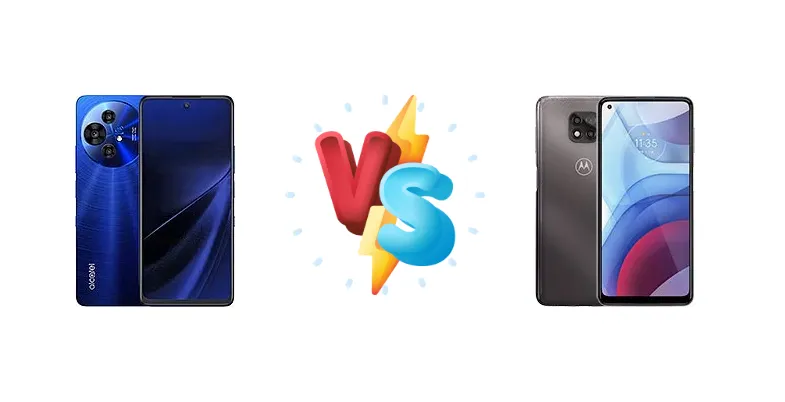
|
🏆 Quick Verdict
For the average user prioritizing responsiveness and future-proofing, the Alcatel V3 Ultra is the clear winner. Its Mediatek Dimensity 6300 chipset, built on a 6nm process, delivers significantly better performance than the Motorola’s Snapdragon 662. While the Moto G Power boasts respectable battery endurance, the V3 Ultra’s faster charging and superior processing power offer a more compelling overall package.
| PHONES | ||
|---|---|---|
| Phone Names | alcatel V3 Ultra | Motorola Moto G Power (2021) |
| Network | ||
|---|---|---|
| 2G bands | GSM 850 / 900 / 1800 / 1900 | GSM 850 / 900 / 1800 / 1900 |
| 3G bands | HSDPA 850 / 900 / 1700(AWS) / 1900 / 2100 | HSDPA 850 / 900 / 1700(AWS) / 1900 / 2100 |
| 4G bands | 1, 2, 3, 4, 5, 7, 8, 17, 20, 26, 28, 32, 38, 40, 41, 42 | 1, 2, 3, 4, 5, 7, 8, 12, 13, 14, 17, 25, 26, 29, 30, 38, 41, 66, 71 |
| 5G bands | 1, 3, 5, 7, 8, 20, 26, 28, 38, 40, 41, 48, 77, 78 SA/NSA | - |
| Speed | HSPA, LTE, 5G | HSPA, LTE |
| Technology | GSM / HSPA / LTE / 5G | GSM / CDMA / HSPA / EVDO / LTE |
| - | CDMA2000 1xEV-DO | |
| Launch | ||
|---|---|---|
| Announced | 2025, May 27 | 2021, January 08 |
| Status | Available. Released 2025, June 02 | Available. Released 2021, January 14 |
| Body | ||
|---|---|---|
| Build | - | Glass front, plastic back, plastic frame |
| Dimensions | 167.6 x 75.5 x 8 mm (6.60 x 2.97 x 0.31 in) | 165.3 x 75.9 x 9.5 mm (6.51 x 2.99 x 0.37 in) |
| SIM | Nano-SIM + eSIM | Nano-SIM |
| Weight | 196 g (6.91 oz) | 206.5 g (7.30 oz) |
| - | Water-repellent coating | |
| Display | ||
|---|---|---|
| Protection | Mohs level 7 | - |
| Resolution | 1080 x 2460 pixels (~395 ppi density) | 720 x 1600 pixels, 20:9 ratio (~266 ppi density) |
| Size | 6.8 inches, 109.8 cm2 (~86.8% screen-to-body ratio) | 6.6 inches, 105.2 cm2 (~83.8% screen-to-body ratio) |
| Type | IPS LCD, 120Hz, 650 nits | IPS LCD |
| Platform | ||
|---|---|---|
| CPU | Octa-core (2x2.4 GHz Cortex-A76 & 6x2.0 GHz Cortex-A55) | Octa-core (4x2.0 GHz Kryo 260 Gold & 4x1.8 GHz Kryo 260 Silver) |
| Chipset | Mediatek Dimensity 6300 (6 nm) | Qualcomm SM6115 Snapdragon 662 (11 nm) |
| GPU | Mali-G57 MC2 | Adreno 610 |
| OS | Android 14, up to 3 major Android upgrades | Android 10 |
| Memory | ||
|---|---|---|
| Card slot | microSDXC (dedicated slot) | microSDXC (dedicated slot) |
| Internal | 128GB 6GB RAM, 128GB 8GB RAM | 32GB 3GB RAM, 64GB 4GB RAM |
| - | eMMC 5.1 | |
| Main Camera | ||
|---|---|---|
| Features | LED flash, HDR | LED flash, HDR, panorama |
| Triple | 108 MP, f/1.8, (wide), 1/1.67", 0.64µm, PDAF 8 MP, f/2.2, 120˚ (ultrawide), 1/4.0", 1.12µm 2 MP (macro) | 48 MP, f/1.7, (wide), 1/2.0", 0.8µm, PDAF 2 MP (macro) Auxiliary lens |
| Video | 1080p@30fps | 1080p@30/60fps, gyro-EIS |
| Selfie camera | ||
|---|---|---|
| Features | HDR | HDR |
| Single | 32 MP, f/2.0, (wide), 1/3.45", 0.64µm | 8 MP, f/2.0, 1.12µm |
| Video | 1080p@30fps | 1080p@30fps, gyro-EIS |
| Sound | ||
|---|---|---|
| 3.5mm jack | - | Yes |
| 35mm jack | Yes | Yes |
| Loudspeaker | Yes, with stereo speakers | Yes |
| Comms | ||
|---|---|---|
| Bluetooth | 5.3, A2DP, LE | 5.0, A2DP, LE |
| NFC | Yes | No |
| Positioning | GPS, GLONASS, BDS, GALILEO | GPS, GLONASS, GALILEO |
| Radio | FM radio | FM radio |
| USB | USB Type-C 2.0 | USB Type-C 2.0 |
| WLAN | Wi-Fi 802.11 a/b/g/n/ac, dual-band, Wi-Fi Direct | Wi-Fi 802.11 a/b/g/n/ac, dual-band, Wi-Fi Direct |
| Features | ||
|---|---|---|
| Sensors | Fingerprint (side-mounted), accelerometer, gyro, proximity, compass, barometer | Fingerprint (side-mounted), accelerometer, gyro, proximity, compass, barometer |
| Battery | ||
|---|---|---|
| Charging | 33W wired | 15W wired |
| Type | 5010 mAh | Li-Po 5000 mAh |
| Misc | ||
|---|---|---|
| Colors | Hyper Blue, Champagne Gold, Ocean Grey | Flash Gray, Polar Silver |
| Models | T803D | - |
| Price | About 210 EUR | About 60 EUR |
| EU LABEL | ||
|---|---|---|
| Battery | 44:33h endurance, 1000 cycles | - |
| Energy | Class B | - |
| Free fall | Class B (180 falls) | - |
| Repairability | Class B | - |
alcatel V3 Ultra
- Significantly faster processor for smoother performance
- Faster 33W charging for quicker top-ups
- Potentially better image processing due to the more powerful chipset
- Battery endurance, while excellent, may not *quite* match the Moto G Power's absolute maximum runtime
- Display specifications are unknown, potentially lacking features found on competitors
Motorola Moto G Power (2021)
- Excellent battery life, ideal for users who prioritize longevity
- Reliable and proven Snapdragon chipset
- Generally more affordable than the Alcatel V3 Ultra
- Slower processor, leading to potential lag and slowdowns
- Significantly slower 15W charging
- Less future-proof due to the older chipset
Display Comparison
Display specifications are not provided, so a direct comparison is limited. However, given the market positioning, both likely feature LCD panels. The V3 Ultra’s chipset could potentially support higher refresh rates, though this isn’t confirmed. The Moto G Power’s display is likely tuned for power efficiency, prioritizing battery life over vibrant colors or high brightness. Bezels are expected to be similar on both devices, reflecting their budget nature.
Camera Comparison
Camera details are limited. Assuming typical budget phone configurations, the V3 Ultra’s chipset likely offers more advanced image signal processing (ISP) capabilities, potentially leading to better image quality, especially in low-light conditions. The Snapdragon 662’s ISP is adequate but less sophisticated. Without knowing sensor sizes or lens apertures, it’s difficult to make definitive claims, but the V3 Ultra’s processing power gives it an edge. The prevalence of 2MP macro lenses on both devices suggests they are largely marketing features and offer limited practical benefit.
Performance
The core difference lies in the chipsets. The Alcatel V3 Ultra’s Mediatek Dimensity 6300 (6nm) is a substantial upgrade over the Motorola Moto G Power’s Qualcomm Snapdragon 662 (11nm). The 6nm process node allows for greater transistor density and improved power efficiency, translating to better performance and reduced heat generation. The Dimensity 6300’s octa-core configuration (2x2.4 GHz Cortex-A76 & 6x2.0 GHz Cortex-A55) offers a more powerful CPU architecture than the Snapdragon 662’s (4x2.0 GHz Kryo 260 Gold & 4x1.8 GHz Kryo 260 Silver). This means faster app loading times, smoother multitasking, and a more responsive overall experience on the V3 Ultra. The Snapdragon 662, while capable, will likely exhibit more noticeable slowdowns under heavy load.
Battery Life
The Alcatel V3 Ultra boasts a remarkable 44:33h endurance rating, indicating exceptional battery life. While the Moto G Power is known for its longevity, the V3 Ultra appears to surpass it. The V3 Ultra’s 33W wired charging is a significant advantage over the Moto G Power’s 15W charging. This translates to substantially faster charging times – a full charge on the V3 Ultra will take considerably less time than on the Moto G Power, minimizing downtime.
Buying Guide
Buy the Alcatel V3 Ultra if you need a phone capable of handling demanding apps, multitasking, and occasional gaming without significant slowdown. It’s ideal for users who value a smooth user experience and faster charging. Buy the Motorola Moto G Power (2021) if your primary concern is maximizing battery life and you primarily use your phone for basic tasks like calls, texts, and light social media browsing. It’s a solid choice for those who prioritize longevity over raw power.