
Alcatel V3 Ultra vs. Motorola Moto G Play (2021): A Detailed Comparison
| Phones Images | |||||
|---|---|---|---|---|---|
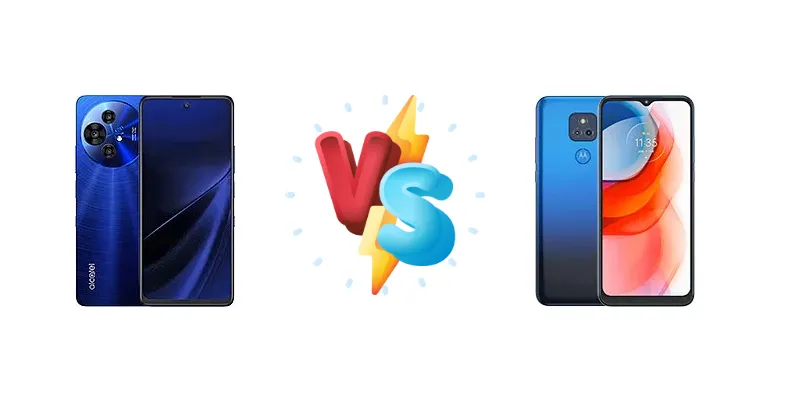
|
🏆 Quick Verdict
For users prioritizing raw processing power and faster charging, the Alcatel V3 Ultra is the clear winner. Its Dimensity 6300 chipset offers a significant performance uplift over the Snapdragon 460 in the Moto G Play. However, the Moto G Play’s more efficient chipset may translate to slightly better real-world battery life for lighter users.
| PHONES | ||
|---|---|---|
| Phone Names | alcatel V3 Ultra | Motorola Moto G Play (2021) |
| Network | ||
|---|---|---|
| 2G bands | GSM 850 / 900 / 1800 / 1900 | GSM 850 / 900 / 1800 / 1900 |
| 3G bands | HSDPA 850 / 900 / 1700(AWS) / 1900 / 2100 | HSDPA 850 / 900 / 1700(AWS) / 1900 / 2100 |
| 4G bands | 1, 2, 3, 4, 5, 7, 8, 17, 20, 26, 28, 32, 38, 40, 41, 42 | 1, 2, 3, 4, 5, 7, 8, 12, 13, 17, 25, 26, 38, 41, 66, 71 |
| 5G bands | 1, 3, 5, 7, 8, 20, 26, 28, 38, 40, 41, 48, 77, 78 SA/NSA | - |
| Speed | HSPA, LTE, 5G | HSPA, LTE |
| Technology | GSM / HSPA / LTE / 5G | GSM / CDMA / HSPA / LTE |
| - | 2, 4, 5, 12, 14, 30, 66 | |
| Launch | ||
|---|---|---|
| Announced | 2025, May 27 | 2021, January 08 |
| Status | Available. Released 2025, June 02 | Available. Released 2021, January 14 |
| Body | ||
|---|---|---|
| Build | - | Plastic frame, plastic back |
| Dimensions | 167.6 x 75.5 x 8 mm (6.60 x 2.97 x 0.31 in) | 166.6 x 76 x 9.4 mm (6.56 x 2.99 x 0.37 in) |
| SIM | Nano-SIM + eSIM | Nano-SIM |
| Weight | 196 g (6.91 oz) | 204 g (7.20 oz) |
| - | Water-repellent coating | |
| Display | ||
|---|---|---|
| Protection | Mohs level 7 | - |
| Resolution | 1080 x 2460 pixels (~395 ppi density) | 720 x 1600 pixels, 20:9 ratio (~270 ppi density) |
| Size | 6.8 inches, 109.8 cm2 (~86.8% screen-to-body ratio) | 6.5 inches, 102.0 cm2 (~80.6% screen-to-body ratio) |
| Type | IPS LCD, 120Hz, 650 nits | IPS LCD |
| Platform | ||
|---|---|---|
| CPU | Octa-core (2x2.4 GHz Cortex-A76 & 6x2.0 GHz Cortex-A55) | Octa-core (4x1.8 GHz Kryo 240 & 4x1.6 GHz Kryo 240) |
| Chipset | Mediatek Dimensity 6300 (6 nm) | Qualcomm SM4250 Snapdragon 460 (11 nm) |
| GPU | Mali-G57 MC2 | Adreno 610 |
| OS | Android 14, up to 3 major Android upgrades | Android 10 |
| Memory | ||
|---|---|---|
| Card slot | microSDXC (dedicated slot) | microSDXC (dedicated slot) |
| Internal | 128GB 6GB RAM, 128GB 8GB RAM | 32GB 3GB RAM |
| - | eMMC 5.1 | |
| Main Camera | ||
|---|---|---|
| Dual | - | 13 MP, f/2.0, (wide), 1/3.1", 1.12µm, PDAF Auxiliary lens |
| Features | LED flash, HDR | LED flash, HDR, panorama |
| Triple | 108 MP, f/1.8, (wide), 1/1.67", 0.64µm, PDAF 8 MP, f/2.2, 120˚ (ultrawide), 1/4.0", 1.12µm 2 MP (macro) | - |
| Video | 1080p@30fps | 1080p@30/60fps |
| Selfie camera | ||
|---|---|---|
| Features | HDR | HDR |
| Single | 32 MP, f/2.0, (wide), 1/3.45", 0.64µm | 5 MP, f/2.2, (wide), 1.12µm |
| Video | 1080p@30fps | 1080p@30fps |
| Sound | ||
|---|---|---|
| 3.5mm jack | - | Yes |
| 35mm jack | Yes | Yes |
| Loudspeaker | Yes, with stereo speakers | Yes |
| Comms | ||
|---|---|---|
| Bluetooth | 5.3, A2DP, LE | 5.0, A2DP, LE |
| NFC | Yes | No |
| Positioning | GPS, GLONASS, BDS, GALILEO | GPS, GLONASS, GALILEO |
| Radio | FM radio | Unspecified |
| USB | USB Type-C 2.0 | USB Type-C 2.0 |
| WLAN | Wi-Fi 802.11 a/b/g/n/ac, dual-band, Wi-Fi Direct | Wi-Fi 802.11 a/b/g/n/ac, dual-band, Wi-Fi Direct |
| Features | ||
|---|---|---|
| Sensors | Fingerprint (side-mounted), accelerometer, gyro, proximity, compass, barometer | Fingerprint (rear-mounted), accelerometer, proximity |
| Battery | ||
|---|---|---|
| Charging | 33W wired | 10W wired |
| Type | 5010 mAh | Li-Po 5000 mAh |
| Misc | ||
|---|---|---|
| Colors | Hyper Blue, Champagne Gold, Ocean Grey | Misty Blue |
| Models | T803D | XT2093-3, XT2093-7, XT2093-DL, XT2093DL |
| Price | About 210 EUR | About 60 EUR |
| EU LABEL | ||
|---|---|---|
| Battery | 44:33h endurance, 1000 cycles | - |
| Energy | Class B | - |
| Free fall | Class B (180 falls) | - |
| Repairability | Class B | - |
alcatel V3 Ultra
- Significantly faster processor for smoother multitasking and gaming.
- 33W fast charging for quicker top-ups.
- Potentially better image processing due to newer chipset.
- May experience slightly faster battery drain under heavy load.
- Potentially higher price point.
Motorola Moto G Play (2021)
- More power-efficient chipset for potentially longer battery life during light use.
- Likely more affordable price.
- Qualcomm’s reputation for stable software.
- Slower processor struggles with demanding tasks.
- Slow 10W charging takes significantly longer to replenish the battery.
Display Comparison
Display specifications are absent from the provided data, making a direct comparison impossible. However, given the market positioning, it's likely both devices utilize LCD panels. The V3 Ultra, being a newer release, *may* benefit from slightly improved color accuracy or brightness, but this is speculative. Bezels are likely comparable, reflecting the budget nature of both phones.
Camera Comparison
Camera details are limited. Without sensor size or aperture information, a definitive comparison is difficult. However, the absence of any mention of advanced features like OIS suggests both phones rely on computational photography for image enhancement. The V3 Ultra’s newer chipset *may* offer slightly more sophisticated image processing capabilities, but the impact will likely be marginal. Any 2MP macro or depth sensors on either device should be considered supplementary features with limited practical value.
Performance
The Alcatel V3 Ultra’s Mediatek Dimensity 6300 (6nm) represents a substantial leap in processing power compared to the Motorola Moto G Play’s Qualcomm Snapdragon 460 (11nm). The Dimensity 6300’s Cortex-A76 cores, clocked at 2.4 GHz, offer significantly higher single-core performance than the Kryo 240 cores in the Snapdragon 460. The 6nm fabrication process also contributes to improved thermal efficiency, potentially reducing throttling during sustained workloads. While both are octa-core CPUs, the architectural differences and process node give the V3 Ultra a clear advantage for demanding applications.
Battery Life
The Alcatel V3 Ultra boasts a battery endurance of 44:33h, a strong indicator of optimized power management. While the Moto G Play’s endurance isn’t specified, the Snapdragon 460’s 11nm process is generally more power-efficient than the Dimensity 6300’s 6nm process *at idle*. However, the V3 Ultra’s 33W wired charging significantly outperforms the Moto G Play’s 10W charging. This means the V3 Ultra can replenish its battery much faster, mitigating any potential efficiency disadvantage. The V3 Ultra also claims 1000 battery cycles, suggesting a focus on long-term battery health.
Buying Guide
Buy the Alcatel V3 Ultra if you frequently multitask, play demanding mobile games, or need quick charging capabilities. Its octa-core processor and 33W charging are geared towards power users. Buy the Motorola Moto G Play (2021) if you prioritize battery life for basic tasks like calling, texting, and light social media browsing, and prefer a more energy-efficient device at a potentially lower price point.