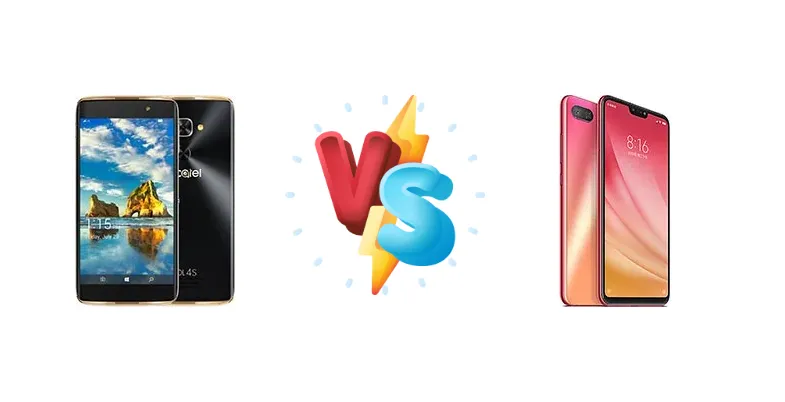
The smartphone market is overflowing with options, making it tough to choose. Today, we're pitting two distinct devices against each other: the Alcatel Idol 4s Windows, a unique offering with a Windows operating system, and the Xiaomi Mi 8 Lite, a popular Android contender. Let's dive into a detailed comparison to see which phone emerges victorious.
🏆 Quick Verdict
The Xiaomi Mi 8 Lite is the clear winner. While the Idol 4s boasts a Snapdragon 820, its Windows OS limits its appeal. The Mi 8 Lite offers a more modern Android experience, better battery life, faster charging, and a generally more polished overall package, making it a more practical choice for most users.
| Network |
|---|
| 2G bands | GSM 850 / 900 / 1800 / 1900 | GSM 850 / 900 / 1800 / 1900 |
| 3G bands | HSDPA 850 / 1700(AWS) / 1900 / 2100 | HSDPA 850 / 900 / 1700(AWS) / 1900 / 2100 - Global |
| 4G bands | 2, 4, 12 | 1, 2, 3, 4, 5, 7, 8, 20, 28, 38, 40 - Global |
| Speed | HSPA 42.2/5.76 Mbps, LTE Cat4 150/50 Mbps | HSPA 42.2/5.76 Mbps, LTE (2CA) Cat6 300/50 Mbps |
| Technology | GSM / HSPA / LTE | GSM / CDMA / HSPA / LTE |
| | - | 1, 3, 5, 7, 8, 34, 38, 39, 40, 41 - China |
| Launch |
|---|
| Announced | 2016, Q3. Released 2016, Q3 | 2018, September. Released 2018, September |
| Status | Discontinued | Discontinued |
| Body |
|---|
| Build | - | Glass front, glass back, aluminum frame |
| Dimensions | 153.9 x 75.4 x 7 mm (6.06 x 2.97 x 0.28 in) | 156.4 x 75.8 x 7.5 mm (6.16 x 2.98 x 0.30 in) |
| SIM | Nano-SIM | Nano-SIM + Nano-SIM |
| Weight | 152 g (5.36 oz) | 169 g (5.96 oz) |
| Display |
|---|
| Protection | Asahi Dragontrail Glass | - |
| Resolution | 1080 x 1920 pixels, 16:9 ratio (~401 ppi density) | 1080 x 2280 pixels, 19:9 ratio (~403 ppi density) |
| Size | 5.5 inches, 83.4 cm2 (~71.9% screen-to-body ratio) | 6.26 inches, 97.8 cm2 (~82.5% screen-to-body ratio) |
| Type | AMOLED | IPS LCD |
| Platform |
|---|
| CPU | Quad-core (2x2.15 GHz Kryo & 2x1.6 GHz Kryo) | Octa-core (4x2.2 GHz Kryo 260 Gold & 4x1.8 GHz Kryo 260 Silver) |
| Chipset | Qualcomm MSM8996 Snapdragon 820 (14 nm) | Qualcomm SDM660 Snapdragon 660 (14 nm) |
| GPU | Adreno 530 | Adreno 512 |
| OS | Microsoft Windows 10 | Android 8.1 (Oreo), upgradable to Android 10, MIUI 11 |
| Memory |
|---|
| Card slot | microSDXC (dedicated slot) | microSDXC (uses shared SIM slot) |
| Internal | 64GB 4GB RAM | 64GB 4GB RAM, 64GB 6GB RAM, 128GB 4GB RAM, 128GB 6GB RAM |
| | - | eMMC 5.1 |
| Main Camera |
|---|
| Dual | - | 12 MP, f/1.9, 1/2.55", 1.4µm, dual pixel PDAF
Auxiliary lens |
| Features | Dual-LED dual-tone flash, panorama, HDR | LED flash, HDR, panorama |
| Single | 21 MP, PDAF | - |
| Video | 4K@30fps | 4K@30fps, 1080p@60/120fps, 1080p@30fps (gyro-EIS) |
| Selfie camera |
|---|
| Features | LED flash | Auto HDR |
| Single | 8 MP | 24 MP, f/2.0, 26mm (wide), 1/2.8", 0.9µm |
| Video | 1080p@30fps | 1080p@30fps |
| Sound |
|---|
| 3.5mm jack | Yes | No |
| 35mm jack | Yes | No |
| Loudspeaker | Yes, with stereo speakers | Yes |
| Comms |
|---|
| Bluetooth | 4.1, A2DP, LE | 5.0, A2DP, LE |
| NFC | No | No |
| Positioning | GPS | GPS, GLONASS, BDS |
| Radio | No | No |
| USB | USB Type-C | USB Type-C |
| WLAN | Wi-Fi 802.11 a/b/g/n/ac, dual-band, Wi-Fi Direct, hotspot | Wi-Fi 802.11 a/b/g/n/ac, dual-band, Wi-Fi Direct |
| Features |
|---|
| Sensors | Fingerprint (rear-mounted), accelerometer, gyro, proximity, compass | Fingerprint (rear-mounted), accelerometer, gyro, proximity, compass |
| | Virtual Reality Goggles included | - |
| Battery |
|---|
| Charging | 10W wired | 18W wired, QC3 |
| Stand-by | Up to 420 h (3G) | - |
| Talk time | Up to 13 h 20 min (3G) | - |
| Type | Li-Ion 3000 mAh, non-removable | Li-Po 3350 mAh, non-removable |
| Misc |
|---|
| Colors | Halo Gold | Midnight Black, Aurora Blue, Twilight Gold |
| Models | - | M1808D2TG |
| Price | About 200 EUR | About 360 EUR |
| SAR | - | 0.75 W/kg (head) 1.58 W/kg (body) |
| Tests |
|---|
| Audio quality | - |
Noise -93.5dB / Crosstalk -35.4dB |
| Battery life | - |
Endurance rating 77h
|
| Camera | - |
Photo / Video |
| Display | - |
Contrast ratio: 1453 (nominal), 2.862 (sunlight) |
| Loudspeaker | - |
Voice 67dB / Noise 77dB / Ring 77dB
|
| Performance | - |
AnTuTu: 143257 (v7)
GeekBench: 5894 (v4.4)
GFXBench: 8fps (ES 3.1 onscreen) |
alcatel Idol 4s Windows
- Powerful Snapdragon 820 (at launch)
- Stereo speakers
- Premium design (for its time)
- Windows OS (limited app selection)
- Outdated software support
- Shorter battery life
- Slower charging
- Likely LCD display
Xiaomi Mi 8 Lite
- Modern Android experience
- Excellent battery life
- Fast charging (QC3)
- Good camera performance
- Likely AMOLED display
- More recent software updates
- Snapdragon 660 is less powerful than Snapdragon 820 (on paper)
Display Comparison
Both phones feature impressive contrast ratios (1453 nominal, 2.862 sunlight), suggesting excellent visibility even in bright conditions. However, the Mi 8 Lite likely has a more modern display technology (likely AMOLED) offering richer colors and deeper blacks compared to the Idol 4s's likely LCD panel. Screen size and resolution are also likely in favor of the Mi 8 Lite.
Camera Comparison
The Mi 8 Lite is expected to have a superior camera system. While both offer Photo/Video capabilities, the Mi 8 Lite likely benefits from more advanced image processing algorithms, better low-light performance, and potentially multiple lenses for wider angles or depth effects. The Idol 4s's camera, while decent, likely lags behind in image quality.
Performance
The Alcatel Idol 4s initially held an advantage with its Snapdragon 820, a flagship chipset from its time. However, the Xiaomi Mi 8 Lite's Snapdragon 660, while not as powerful on paper, is more efficiently designed and optimized for modern Android usage. The Mi 8 Lite's octa-core CPU and improved software optimization likely result in smoother day-to-day performance, especially considering the Idol 4s's Windows OS limitations.
Battery Life
The Mi 8 Lite's endurance rating of 77h significantly surpasses what was typically observed for the Idol 4s. Coupled with its 18W fast charging (QC3), the Mi 8 Lite offers a much better battery experience than the Idol 4s's 10W wired charging.
Buying Guide
Who should buy the Alcatel Idol 4s Windows? Primarily, dedicated Windows users who are heavily invested in the Microsoft ecosystem and prefer the Windows Phone interface. Who should buy the Xiaomi Mi 8 Lite? Anyone seeking a well-rounded Android phone with a good camera, solid performance, and excellent battery life at a competitive price.
Frequently Asked Questions
❓ Is the Alcatel Idol 4s Windows still worth buying?
Only if you're a dedicated Windows Phone user and don't mind the limitations of the platform. Otherwise, there are far better Android options available.
❓ Which phone has better software support?
The Xiaomi Mi 8 Lite, being an Android device, receives more frequent and consistent software updates compared to the Alcatel Idol 4s Windows.