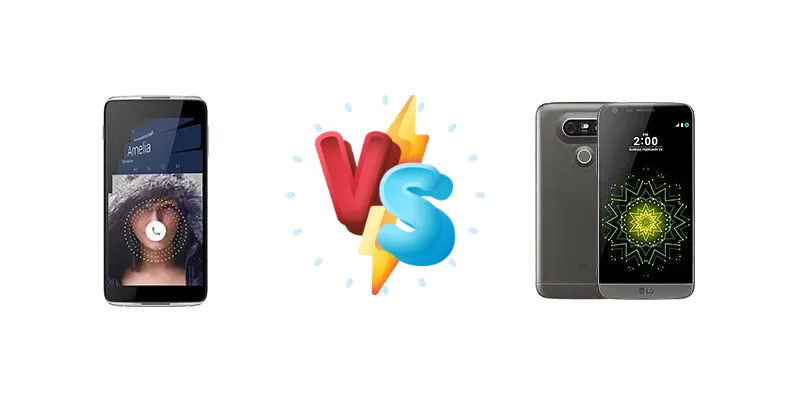
Released in 2016, the Alcatel Idol 4 and LG G5 SE represent different approaches to the mid-range smartphone market. The Idol 4 aimed for affordability with a focus on audio, while the G5 SE was a slightly stripped-down version of LG’s flagship, prioritizing performance. Both devices utilize Qualcomm’s Snapdragon 600 series, but the specific chips – the 617 and 652 respectively – dictate a noticeable difference in capabilities.
🏆 Quick Verdict
For the average user prioritizing responsiveness and multitasking, the LG G5 SE is the better choice. Its Snapdragon 652, featuring Cortex-A72 cores, delivers a tangible performance boost over the Idol 4’s 617. However, the Idol 4 remains a viable option for users on a tighter budget who prioritize basic functionality.
| Network |
|---|
| 2G bands | GSM 850 / 900 / 1800 / 1900 - SIM 1 & SIM 2 (optional) | GSM 850 / 900 / 1800 / 1900 - SIM 1 & SIM 2 (dual-SIM model only) |
| 3G bands | HSDPA 850 / 900 / 1900 / 2100 - 6055Y, 6055K, 6055B, 6055I | HSDPA 850 / 900 / 1700(AWS) / 1900 / 2100 - H840 |
| 4G bands | 1, 3, 7, 8, 20, 28 - 6055K | 1, 2, 3, 4, 5, 7, 8, 12, 17, 20, 28, 38, 40 - H840 |
| Speed | HSPA 42.2/5.76 Mbps, LTE Cat4 150/50 Mbps or LTE (2CA) Cat6 300/50 Mbps | HSPA 42.2/5.76 Mbps, LTE (2CA) Cat6 300/50 Mbps |
| Technology | GSM / HSPA / LTE | GSM / HSPA / LTE |
| | 2, 3, 4, 7, 13, 17, 28 - 6055B, 6055I | - |
| Launch |
|---|
| Announced | 2016, February. Released 2016, June | 2016, April. Released 2016, June |
| Status | Discontinued | Discontinued |
| Body |
|---|
| Dimensions | 147 x 72.5 x 7.1 mm (5.79 x 2.85 x 0.28 in) | 149.4 x 73.9 x 7.3 mm (5.88 x 2.91 x 0.29 in) |
| SIM | Nano-SIM + Nano-SIM (6055K, 6055I) | · Nano-SIM· Nano-SIM + Nano-SIM |
| Weight | 135 g (4.76 oz) | 156 g (5.50 oz) |
| Display |
|---|
| Protection | - | Corning Gorilla Glass 4 |
| Resolution | 1080 x 1920 pixels, 16:9 ratio (~424 ppi density) | 1440 x 2560 pixels, 16:9 ratio (~554 ppi density) |
| Size | 5.2 inches, 74.5 cm2 (~69.9% screen-to-body ratio) | 5.3 inches, 77.4 cm2 (~70.1% screen-to-body ratio) |
| Type | IPS LCD | IPS LCD |
| | - | Always-on display |
| Platform |
|---|
| CPU | Octa-core (4x1.7 GHz Cortex-A53 & 4x1.2 GHz Cortex-A53) | Octa-core (4x1.8 GHz Cortex-A72 & 4x1.2 GHz Cortex-A53) |
| Chipset | Qualcomm MSM8952 Snapdragon 617 (28 nm) | Qualcomm MSM8976 Snapdragon 652 (28 nm) |
| GPU | Adreno 405 | Adreno 510 |
| OS | Android 6.0.1 (Marshmallow) | Android 6.0.1 (Marshmallow), upgradable to 7.0 (Nougat), LG Optimus UX UI 5 |
| Memory |
|---|
| Card slot | microSDXC (uses shared SIM slot) | microSDXC (uses shared SIM slot) - dual SIM model only |
| Internal | 16GB 2GB RAM (6055Y,6055K), 16GB 3GB RAM (6055B,6055H,6055I) | 32GB 3GB RAM |
| | eMMC 5.1 | eMMC 5.1 |
| Main Camera |
|---|
| Dual | - | 16 MP, f/1.8, 29mm (standard), 1/2.6", 3-axis OIS
8 MP, f/2.4, 12mm (ultrawide), 1/3.2" |
| Features | Dual-LED dual-tone flash, panorama, HDR | Laser AF, color spectrum sensor, LED flash, panorama, HDR |
| Single | 13 MP, f/2.0, PDAF | - |
| Video | 1080p@30fps | 4K@30fps, 1080p@30fps, HDR, stereo sound rec. |
| Selfie camera |
|---|
| Features | LED flash | - |
| Single | 8 MP | 8 MP, f/2.0 |
| Video | 1080p@30fps | 1080p@30fps |
| Sound |
|---|
| 3.5mm jack | Yes | Yes |
| 35mm jack | Yes | Yes |
| Loudspeaker | Yes, with stereo speakers | Yes |
| | Hi-Fi audio
| - |
| Comms |
|---|
| Bluetooth | 4.2, A2DP, LE | 4.2, A2DP, LE, aptX |
| Infrared port | - | Yes |
| NFC | Yes | Yes |
| Positioning | GPS | GPS, GLONASS |
| Radio | FM radio, RDS | FM radio |
| USB | microUSB 2.0, OTG | USB Type-C 2.0, OTG |
| WLAN | Wi-Fi 802.11 a/b/g/n/ac, dual-band, Wi-Fi Direct | Wi-Fi 802.11 a/b/g/n/ac, dual-band, Wi-Fi Direct, DLNA |
| Features |
|---|
| Sensors | Accelerometer, gyro, proximity, compass | Fingerprint (rear-mounted), accelerometer, gyro, proximity, compass, barometer |
| Battery |
|---|
| Charging | 18W wired, QC2 | 18W wired, QC3 |
| Stand-by | Up to 520 h (2G) / Up to 520 h (3G) | Up to 380 h (3G) |
| Talk time | Up to 15 h (2G) / Up to 15 h (3G) | Up to 20 h (3G) |
| Type | Li-Ion 2610 mAh, non-removable | Li-Ion 2800 mAh, removable |
| Misc |
|---|
| Colors | Gold, Dark Gray, Rose Gold, Metal Silver | Silver, Titan, Gold |
| Models | 6055K, 6055P, 6055B, 6055U, 6055I, 6055H, 6055Y | H845, H840, H848 |
| Price | About 200 EUR | About 350 EUR |
alcatel Idol 4
- More affordable price point
- 18W Quick Charge 2.0 support
- Lightweight and compact design (based on market positioning)
- Significantly weaker CPU performance
- Less responsive user experience
- Likely inferior camera image quality
LG G5 SE
- Faster Snapdragon 652 processor
- Quick Charge 3.0 for slightly faster charging
- Improved multitasking and gaming performance
- Higher price compared to the Idol 4
- Potentially slightly shorter battery life due to higher performance
- May be harder to find in good condition due to age
Display Comparison
Neither Alcatel nor LG specified display details beyond size and resolution in their marketing materials. However, both likely utilized IPS LCD panels common for the price point. The key difference lies in the processing power driving them. The G5 SE’s more powerful chipset can render graphics and UI elements more smoothly, resulting in a perceived improvement in display responsiveness. While neither phone boasts high refresh rates or advanced features like LTPO, the G5 SE’s superior processing capabilities indirectly enhance the visual experience.
Camera Comparison
Detailed camera specifications are scarce for both devices. However, the LG G5 SE, being positioned as a slightly downscaled flagship, likely benefits from more sophisticated image signal processing (ISP) within the Snapdragon 652. While sensor size and aperture are unknown, the G5 SE’s ISP is likely more capable of handling dynamic range and noise reduction, resulting in better image quality, especially in challenging lighting conditions. The Idol 4’s camera is likely adequate for casual snapshots, but the G5 SE offers a more refined photographic experience.
Performance
The core distinction between these devices is the chipset. The LG G5 SE’s Snapdragon 652 features four Cortex-A72 cores clocked at 1.8 GHz, paired with four Cortex-A53 cores at 1.2 GHz. This is a significant upgrade over the Alcatel Idol 4’s Snapdragon 617, which uses only Cortex-A53 cores at 1.7 GHz and 1.2 GHz. The A72 cores offer substantially higher single-core performance, translating to faster app launch times and smoother multitasking. While both chips are manufactured on a 28nm process, the architectural advantage of the A72 cores in the G5 SE provides a clear performance lead, particularly in CPU-bound tasks. The G5 SE will handle more demanding applications and games with greater ease.
Battery Life
Both phones support 18W wired charging, but the LG G5 SE benefits from Quick Charge 3.0, while the Idol 4 uses Quick Charge 2.0. QC3 is more efficient and can deliver slightly faster charging speeds, though the difference isn’t dramatic. Battery capacity is not specified in the provided data, but given the market segment, both likely feature batteries in the 2500-3000 mAh range. The G5 SE’s more efficient processor could potentially lead to slightly better battery life despite similar capacity, as it spends less time at peak load.
Buying Guide
Buy the Alcatel Idol 4 if you need a very affordable smartphone for basic tasks like calling, texting, and light social media use. Its 18W Quick Charge 2.0 support provides reasonable charging speeds for its battery capacity. Buy the LG G5 SE if you prefer a smoother, more responsive experience for multitasking, moderate gaming, and running more demanding applications. The Snapdragon 652 offers a significant performance upgrade, and Quick Charge 3.0 provides slightly faster charging.
Frequently Asked Questions
❓ Will the LG G5 SE handle modern mobile games like PUBG or Call of Duty?
The Snapdragon 652 is capable of running these games, but you’ll likely need to lower the graphics settings to medium or low to achieve a smooth frame rate. Don't expect the same performance as a flagship device, but it's playable. The Idol 4's Snapdragon 617 will struggle with these titles.
❓ Is the difference in charging speed between Quick Charge 2.0 and 3.0 noticeable in real-world use?
The difference isn't massive, but Quick Charge 3.0 is more efficient and can deliver a slightly faster charge, especially from lower battery percentages. Expect a 10-15% faster charge time with the G5 SE compared to the Idol 4, assuming compatible chargers are used.
❓ Given the age of these phones, are replacement batteries readily available?
Finding original batteries may be challenging. Third-party replacement batteries are available for both models, but quality can vary significantly. Research reputable sellers before purchasing.