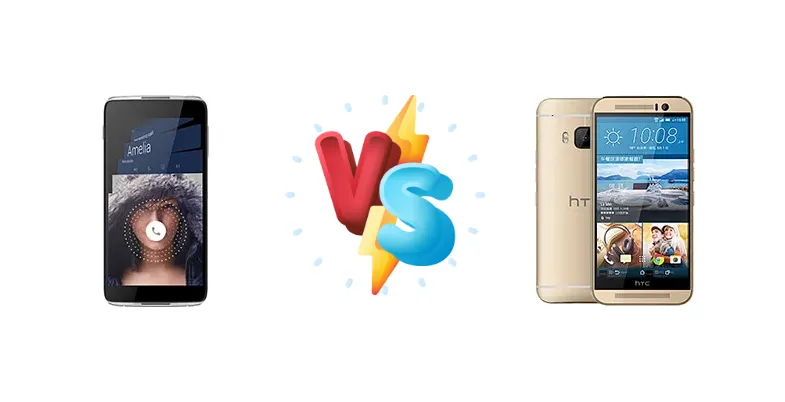
Released in 2016, the Alcatel Idol 4 and HTC One M9 Prime Camera represent a fascinating snapshot of the mid-range smartphone landscape. Both devices aimed to deliver a premium experience without the flagship price tag, but they took different approaches to achieving this goal. This comparison dissects their core components – the Qualcomm Snapdragon 617 and MediaTek Helio X10 – to determine which phone holds up better today.
🏆 Quick Verdict
For the average user in 2024, the Alcatel Idol 4 emerges as the slightly better choice. While the HTC One M9 Prime Camera boasts a higher clocked CPU, the Snapdragon 617’s more efficient architecture and Quick Charge 2.0 support provide a smoother, more reliable experience, especially considering the age of both devices.
| Network |
|---|
| 2G bands | GSM 850 / 900 / 1800 / 1900 - SIM 1 & SIM 2 (optional) | GSM 850 / 900 / 1800 / 1900 |
| 3G bands | HSDPA 850 / 900 / 1900 / 2100 - 6055Y, 6055K, 6055B, 6055I | HSDPA 850 / 900 / 1900 / 2100 |
| 4G bands | 1, 3, 7, 8, 20, 28 - 6055K | 1, 3, 5, 7, 8, 20, 28, 38, 40, 41 |
| Speed | HSPA 42.2/5.76 Mbps, LTE Cat4 150/50 Mbps or LTE (2CA) Cat6 300/50 Mbps | HSPA 42.2/21.1 Mbps, LTE (2CA) Cat6 300/50 Mbps |
| Technology | GSM / HSPA / LTE | GSM / HSPA / LTE |
| | 2, 3, 4, 7, 13, 17, 28 - 6055B, 6055I | - |
| Launch |
|---|
| Announced | 2016, February. Released 2016, June | 2016, May. Released 2016, May |
| Status | Discontinued | Discontinued |
| Body |
|---|
| Dimensions | 147 x 72.5 x 7.1 mm (5.79 x 2.85 x 0.28 in) | 144.6 x 69.7 x 9.6 mm (5.69 x 2.74 x 0.38 in) |
| SIM | Nano-SIM + Nano-SIM (6055K, 6055I) | Nano-SIM |
| Weight | 135 g (4.76 oz) | 158 g (5.57 oz) |
| Display |
|---|
| Protection | - | Corning Gorilla Glass (unspecified version) |
| Resolution | 1080 x 1920 pixels, 16:9 ratio (~424 ppi density) | 1080 x 1920 pixels, 16:9 ratio (~441 ppi density) |
| Size | 5.2 inches, 74.5 cm2 (~69.9% screen-to-body ratio) | 5.0 inches, 68.9 cm2 (~68.4% screen-to-body ratio) |
| Type | IPS LCD | Super LCD3 |
| Platform |
|---|
| CPU | Octa-core (4x1.7 GHz Cortex-A53 & 4x1.2 GHz Cortex-A53) | Octa-core 2.2 GHz Cortex-A53 |
| Chipset | Qualcomm MSM8952 Snapdragon 617 (28 nm) | Mediatek MT6795T Helio X10 (28 nm) |
| GPU | Adreno 405 | PowerVR G6200 |
| OS | Android 6.0.1 (Marshmallow) | Android 5 (Lollipop), Sense UI 7 |
| Memory |
|---|
| Card slot | microSDXC (uses shared SIM slot) | microSDXC (dedicated slot) |
| Internal | 16GB 2GB RAM (6055Y,6055K), 16GB 3GB RAM (6055B,6055H,6055I) | 16GB 2GB RAM |
| | eMMC 5.1 | eMMC 5.0 |
| Main Camera |
|---|
| Features | Dual-LED dual-tone flash, panorama, HDR | Dual-LED dual-tone flash, HDR, panorama |
| Single | 13 MP, f/2.0, PDAF | 13 MP, f/2.0, 28mm (wide), AF, OIS |
| Video | 1080p@30fps | 1080p@30fps |
| Selfie camera |
|---|
| Features | LED flash | HDR |
| Single | 8 MP | 4 MP, f/2.0, 27mm (wide), 1/3", 2µm |
| Video | 1080p@30fps | 1080p@30fps |
| Sound |
|---|
| 3.5mm jack | Yes | Yes |
| 35mm jack | Yes | Yes |
| Loudspeaker | Yes, with stereo speakers | Yes, with stereo speakers |
| | Hi-Fi audio
| 24-bit/192kHz audio |
| Comms |
|---|
| Bluetooth | 4.2, A2DP, LE | 4.1, A2DP, aptX |
| NFC | Yes | Yes |
| Positioning | GPS | GPS, GLONASS, BDS |
| Radio | FM radio, RDS | Stereo FM radio, RDS |
| USB | microUSB 2.0, OTG | microUSB 2.0 (MHL 3.0 TV-out), OTG |
| WLAN | Wi-Fi 802.11 a/b/g/n/ac, dual-band, Wi-Fi Direct | Wi-Fi 802.11 a/b/g/n/ac, dual-band, Wi-Fi Direct, DLNA, hotspot |
| Features |
|---|
| Sensors | Accelerometer, gyro, proximity, compass | Accelerometer, gyro, proximity, compass |
| Battery |
|---|
| Charging | 18W wired, QC2 | - |
| Stand-by | Up to 520 h (2G) / Up to 520 h (3G) | Up to 587 h (2G) / Up to 658 h (3G) |
| Talk time | Up to 15 h (2G) / Up to 15 h (3G) | Up to 22 h (2G) / Up to 13 h (3G) |
| Type | Li-Ion 2610 mAh, non-removable | Li-Po 2840 mAh, non-removable |
| Misc |
|---|
| Colors | Gold, Dark Gray, Rose Gold, Metal Silver | Gunmetal Gray, Gold, Silver/Gold |
| Models | 6055K, 6055P, 6055B, 6055U, 6055I, 6055H, 6055Y | One M9PLUS_Prime Cam |
| Price | About 200 EUR | About 250 EUR |
alcatel Idol 4
- More efficient Snapdragon 617 chipset
- Quick Charge 2.0 support for faster charging
- Potentially better thermal management
- Lower clocked CPU compared to the M9 Prime Camera
- Likely lower camera resolution
HTC One M9 Prime Camera
- Higher clocked CPU for theoretical peak performance
- Potentially higher resolution camera
- Premium HTC build quality (assumed)
- Less efficient Helio X10 chipset
- Potential for thermal throttling
- Likely slower charging speeds
Display Comparison
Neither device boasts a particularly impressive display by modern standards, and detailed display specs are unavailable. However, given their market positioning, both likely utilized IPS LCD panels. The focus here is on the internal hardware impacting display performance. The Snapdragon 617’s ISP likely handles display output with reasonable efficiency, while the Helio X10’s GPU may be slightly more stressed, potentially impacting battery life when rendering complex visuals.
Camera Comparison
The HTC One M9 Prime Camera’s name suggests a focus on photography, but the context data doesn’t reveal specific sensor details. It’s reasonable to assume it featured a higher resolution main sensor than the Idol 4, given the marketing emphasis. However, the Snapdragon 617’s ISP (Image Signal Processor) is a capable performer, and image quality is heavily reliant on software processing. Without detailed sensor information, it’s difficult to definitively declare a winner, but the Idol 4’s ISP is likely more optimized for its sensor, potentially leading to better dynamic range and low-light performance. We can safely ignore any 2MP macro or depth sensors on either device, as their contribution to image quality is minimal.
Performance
The core difference lies in the chipsets: the Alcatel Idol 4 features the Qualcomm MSM8952 Snapdragon 617, an octa-core processor with a split core configuration (4x1.7 GHz Cortex-A53 & 4x1.2 GHz Cortex-A53), while the HTC One M9 Prime Camera utilizes the MediaTek MT6795T Helio X10, an octa-core 2.2 GHz Cortex-A53. While the Helio X10’s higher clock speed suggests superior raw processing power, the Snapdragon 617’s architecture is more refined. The split core design allows for efficient task management, dedicating faster cores to demanding applications and slower cores to background processes. The 28nm fabrication process is shared, meaning thermal concerns are present in both, but the Snapdragon 617 is generally known for better thermal management. This translates to less throttling under sustained load, making the Idol 4 more consistent in performance.
Battery Life
Battery capacity is not specified for either device. However, the Alcatel Idol 4’s 18W wired charging with Quick Charge 2.0 support is a significant advantage. The Helio X10, while powerful, is known to be less power-efficient than the Snapdragon 617. This means the M9 Prime Camera will likely drain its battery faster under similar usage scenarios. Quick Charge 2.0 allows the Idol 4 to replenish its battery more quickly, minimizing downtime and providing a more convenient user experience.
Buying Guide
Buy the Alcatel Idol 4 if you prioritize all-around usability, slightly better battery life, and faster charging. Its Qualcomm chipset offers a more balanced experience for everyday tasks. Buy the HTC One M9 Prime Camera if you absolutely need the theoretical peak performance offered by the Helio X10, understanding that this may come at the cost of thermal throttling and potentially shorter battery life during intensive use.
Frequently Asked Questions
❓ Is the MediaTek Helio X10 prone to overheating during gaming?
Yes, the MediaTek Helio X10 is known to generate significant heat under sustained load, such as during gaming. This can lead to thermal throttling, where the CPU reduces its clock speed to prevent overheating, resulting in reduced performance. The Alcatel Idol 4’s Snapdragon 617 is generally better at managing heat.
❓ Does the Alcatel Idol 4 support software updates in 2024?
It is highly unlikely that the Alcatel Idol 4 receives official software updates in 2024. Both devices are several years old and have likely reached the end of their software support lifecycle. Any functionality relies on community-driven custom ROMs.
❓ Which phone is better for watching videos?
While detailed display specs are unavailable, the Alcatel Idol 4’s more efficient chipset may contribute to slightly longer battery life during video playback. However, the difference is likely minimal, and both phones will provide an adequate viewing experience for casual use.