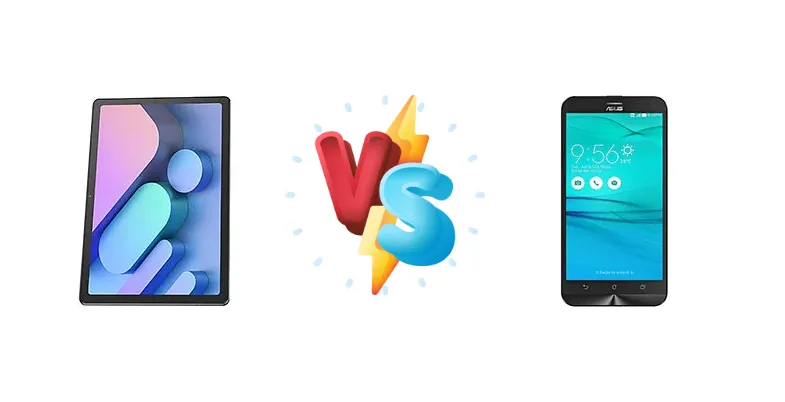
The Acer Iconia V12 and Asus Zenfone Go ZB552KL represent vastly different eras of mobile processing. The Zenfone Go, released with the Snapdragon 410, targets ultra-budget users, while the Iconia V12, powered by the Helio G99, aims for a more capable, though still affordable, experience. This comparison dissects the core differences and reveals where each device excels – or falls short.
🏆 Quick Verdict
For the average user needing a device for more than basic tasks, the Acer Iconia V12 is the clear winner. Its Mediatek Helio G99 chipset offers a substantial performance advantage over the aging Snapdragon 410 in the Zenfone Go, making it suitable for gaming and multitasking. The Zenfone Go remains an option only for those with extremely limited budgets and minimal performance expectations.
| Network |
|---|
| 2G bands | N/A | GSM 850 / 900 / 1800 / 1900 - SIM 1 & SIM 2 |
| 3G bands | N/A | HSDPA 850 / 900 / 1900 / 2100 - Global |
| 4G bands | N/A | 1, 2, 3, 5, 7, 8, 20 - Global |
| EDGE | No | - |
| GPRS | No | - |
| Speed | - | HSPA 42.2/5.76 Mbps, LTE Cat4 150/50 Mbps |
| Technology | No cellular connectivity | GSM / HSPA / LTE |
| | - | 1, 2, 3, 5, 7, 8, 38, 40, 41 - India |
| Launch |
|---|
| Announced | 2025, May 16 | 2017, May. Released 2017, May |
| Status | Available. Released 2025, July | Discontinued |
| Body |
|---|
| Build | Glass front, aluminum alloy frame | - |
| Dimensions | 7.9 mm thickness | 153.4 x 76.4 x 10.9 mm (6.04 x 3.01 x 0.43 in) |
| SIM | No | Dual SIM (Micro-SIM, dual stand-by) |
| Weight | 595 g (1.31 lb) | 168 g (5.93 oz) |
| Display |
|---|
| Resolution | 1200 x 2000 pixels, 5:3 ratio (~195 ppi density) | 720 x 1280 pixels, 16:9 ratio (~267 ppi density) |
| Size | 11.97 inches, 407.8 cm2 | 5.5 inches, 83.4 cm2 (~71.2% screen-to-body ratio) |
| Type | IPS LCD, 90Hz | IPS LCD |
| Platform |
|---|
| CPU | Octa-core (2x2.2 GHz Cortex-A76 & 6x2.0 GHz Cortex-A55) | Quad-core 1.2 GHz Cortex-A53 |
| Chipset | Mediatek Helio G99 (6 nm) | Qualcomm MSM8916 Snapdragon 410 (28 nm) |
| GPU | Mali-G57 MC2 | Adreno 306 |
| OS | Android 15 | Android 6 (Marshmallow), ZenUI 3 |
| Memory |
|---|
| Card slot | microSDXC (dedicated slot) | microSDXC (dedicated slot) |
| Internal | 256GB 8GB RAM | 16GB 2GB RAM, 32GB 2GB RAM |
| | - | eMMC 4.5 |
| Main Camera |
|---|
| Features | LED flash | Dual-LED dual-tone flash, HDR, panorama |
| Single | 8 MP, AF | 13 MP, f/2.0, AF |
| Video | 1080p@30fps | 1080p@30fps |
| Selfie camera |
|---|
| Single | 5 MP | 5 MP, f/2.0, AF |
| Video | Yes | - |
| Sound |
|---|
| 3.5mm jack | - | Yes |
| 35mm jack | Yes | Yes |
| Loudspeaker | Yes, with stereo speakers | Yes |
| Comms |
|---|
| Bluetooth | 5.2, A2DP, LE | 4.0, A2DP, EDR |
| NFC | No | No |
| Positioning | Unspecified | GPS, GLONASS, BDS |
| Radio | No | FM radio |
| USB | USB Type-C 2.0 | microUSB 2.0 |
| WLAN | Wi-Fi 802.11 a/b/g/n/ac/6, dual-band | Wi-Fi 802.11 b/g/n, Wi-Fi Direct |
| Features |
|---|
| Sensors | Unspecified | Accelerometer, proximity, compass |
| Battery |
|---|
| Stand-by | - | Up to 480 h (3G) |
| Talk time | - | Up to 16 h (3G) |
| Type | 8000 mAh | Li-Ion 3000 mAh, non-removable |
| Misc |
|---|
| Colors | Green | Charcoal Black, Pearl White, Glamor Red, Sheer Gold, Glacier Gray, Silver Blue |
| Models | V12-11M | X007D, X007DA |
| Price | About 290 EUR | About 120 EUR |
Acer Iconia V12
- Significantly faster processor for smooth multitasking and gaming.
- More power-efficient chipset leading to potentially longer battery life.
- Likely a larger, higher-resolution display for better media consumption.
- Modern chipset supports newer software features and updates.
- Tablet form factor may be less convenient for some users.
- Price is likely higher than the Zenfone Go.
Asus Zenfone Go ZB552KL
- Extremely affordable price point.
- Compact and portable smartphone form factor.
- Simple and easy-to-use interface.
- Acceptable for basic communication tasks.
- Very slow processor struggles with modern apps.
- Inefficient chipset leads to short battery life.
- Outdated software and limited update support.
- Poor performance for gaming or multitasking.
Display Comparison
Context data lacks display specifics for both devices. However, given the Iconia V12 is a tablet, it likely features a larger display with a higher resolution than the Zenfone Go's smartphone screen. The Zenfone Go, being an older device, likely uses an IPS LCD panel, while the Iconia V12 *could* incorporate a more modern panel technology. The larger screen real estate of the Iconia V12 will be beneficial for media consumption and productivity, but the Zenfone Go's smaller size offers greater portability.
Camera Comparison
Without detailed camera specifications, a direct comparison is difficult. However, given the Zenfone Go’s age and target market, its camera system is likely basic. The Iconia V12, while not a photography powerhouse, likely benefits from the increased processing power of the Helio G99 for image processing. The G99’s ISP (Image Signal Processor) will allow for better noise reduction and dynamic range compared to the Snapdragon 410. It's reasonable to assume the Iconia V12 will produce more detailed and visually appealing photos, even if sensor sizes are similar.
Performance
The performance gap between the Mediatek Helio G99 (6nm) and the Qualcomm Snapdragon 410 (28nm) is immense. The G99’s octa-core CPU, featuring two Cortex-A76 cores clocked at 2.2 GHz, provides significantly more processing power than the Snapdragon 410’s quad-core Cortex-A53 cores at 1.2 GHz. Crucially, the 6nm process node of the G99 results in far greater power efficiency and reduced thermal throttling compared to the 28nm Snapdragon 410. This translates to smoother multitasking, faster app loading times, and a more enjoyable gaming experience on the Iconia V12. The Zenfone Go will struggle with even moderately demanding applications.
Battery Life
Context data lacks battery capacity for both devices. However, the Helio G99’s superior power efficiency (6nm process) will likely result in longer battery life on the Iconia V12, even if the Zenfone Go has a slightly larger battery. The Snapdragon 410’s inefficient 28nm process will drain the battery faster under load. Charging wattage is also unknown, but the Iconia V12 may support faster charging due to its more modern chipset.
Buying Guide
Buy the Acer Iconia V12 if you need a tablet capable of handling modern apps, streaming video smoothly, and even light gaming. Its Helio G99 chipset provides a responsive experience. Buy the Asus Zenfone Go ZB552KL if you prioritize extreme affordability above all else and only require a device for basic communication – calls, texts, and very light web browsing. Be prepared for significant performance limitations.
Frequently Asked Questions
❓ Will the Asus Zenfone Go struggle with popular social media apps like Facebook and Instagram?
Yes, the Snapdragon 410's limited processing power and RAM will likely result in slow loading times, laggy scrolling, and occasional crashes when using demanding social media apps. The Iconia V12, with its Helio G99, will provide a much smoother and more responsive experience.
❓ Can the Acer Iconia V12 handle casual gaming like Candy Crush or Angry Birds?
Absolutely. The Helio G99's integrated GPU is more than capable of handling casual games with ease. You can expect smooth frame rates and minimal lag. The Zenfone Go may struggle even with these less demanding titles.
❓ Is the difference in processor architecture (Cortex-A76 vs Cortex-A53) significant for everyday tasks?
Yes, it's a substantial difference. The Cortex-A76 cores in the Helio G99 are significantly more powerful and efficient than the Cortex-A53 cores in the Snapdragon 410. This translates to faster app launches, smoother multitasking, and a more responsive overall user experience.
❓ Given the age of the Zenfone Go, will it still receive security updates?
It's highly unlikely. Asus has likely ended software support for the Zenfone Go ZB552KL, leaving it vulnerable to security threats. The Iconia V12, being a newer device, will likely receive security updates for a longer period.