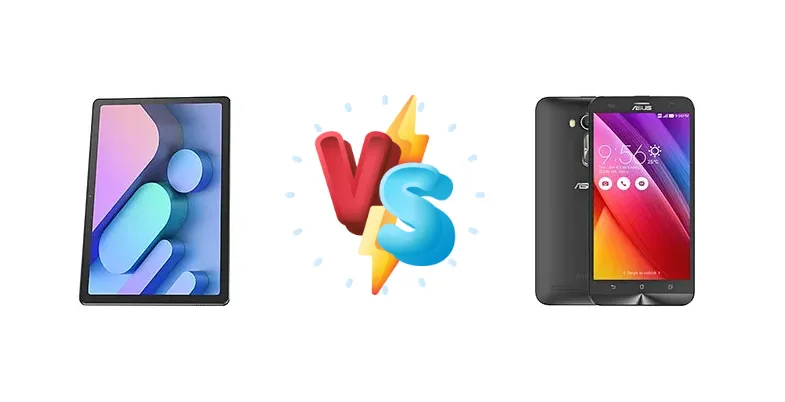
The Acer Iconia V12 and Asus Zenfone 2 Laser represent vastly different eras in mobile computing. The Zenfone 2 Laser, released in 2015, aimed for affordability with a focus on camera features, while the Iconia V12, a more recent offering, leverages newer chipset technology for improved performance and efficiency. This comparison dissects the core differences between these devices, highlighting where each excels and who benefits most.
🏆 Quick Verdict
For the average user in 2024, the Acer Iconia V12 is the clear winner. Its Mediatek Helio G99 chipset delivers significantly superior performance and efficiency compared to the aging Snapdragon 615 in the Zenfone 2 Laser. While the Zenfone 2 Laser may hold nostalgic value, the Iconia V12 provides a far more usable and responsive experience.
| Network |
|---|
| 2G bands | N/A | GSM 850 / 900 / 1800 / 1900 - SIM 1 & SIM 2 |
| 3G bands | N/A | HSDPA 850 / 900 / 1700(AWS) / 1900 / 2100 |
| 4G bands | N/A | 1, 2, 3, 4, 5, 7, 8, 17, 20 |
| EDGE | No | - |
| GPRS | No | - |
| Speed | - | HSPA 42.2/5.76 Mbps, LTE Cat4 150/50 Mbps |
| Technology | No cellular connectivity | GSM / HSPA / LTE |
| Launch |
|---|
| Announced | 2025, May 16 | 2015, November. Released 2015, November |
| Status | Available. Released 2025, July | Discontinued |
| Body |
|---|
| Build | Glass front, aluminum alloy frame | - |
| Dimensions | 7.9 mm thickness | 152.4 x 77.2 x 10.9 mm (6.00 x 3.04 x 0.43 in) |
| SIM | No | Dual SIM (Micro-SIM, dual stand-by) |
| Weight | 595 g (1.31 lb) | 170.1 g (6.00 oz) |
| Display |
|---|
| Protection | - | Corning Gorilla Glass 4 |
| Resolution | 1200 x 2000 pixels, 5:3 ratio (~195 ppi density) | 1080 x 1920 pixels, 16:9 ratio (~401 ppi density) |
| Size | 11.97 inches, 407.8 cm2 | 5.5 inches, 83.4 cm2 (~70.9% screen-to-body ratio) |
| Type | IPS LCD, 90Hz | IPS LCD |
| Platform |
|---|
| CPU | Octa-core (2x2.2 GHz Cortex-A76 & 6x2.0 GHz Cortex-A55) | Octa-core (4x1.7 GHz Cortex-A53 & 4x1.0 GHz Cortex-A53) |
| Chipset | Mediatek Helio G99 (6 nm) | Qualcomm MSM8939 Snapdragon 615 (28 nm) |
| GPU | Mali-G57 MC2 | Adreno 405 |
| OS | Android 15 | Android 5 (Lollipop), upgradable to 6.1 (Marshmallow), ZenUI 2 |
| Memory |
|---|
| Card slot | microSDXC (dedicated slot) | microSDXC (dedicated slot) |
| Internal | 256GB 8GB RAM | 16GB 3GB RAM, 32GB 3GB RAM |
| | - | eMMC 4.5 |
| Main Camera |
|---|
| Features | LED flash | Laser AF, Dual-LED dual-tone flash, panorama, HDR |
| Single | 8 MP, AF | 13 MP, f/2.0 |
| Video | 1080p@30fps | 1080p@30fps |
| Selfie camera |
|---|
| Single | 5 MP | 5 MP, f/2.0 |
| Video | Yes | - |
| Sound |
|---|
| 3.5mm jack | - | Yes |
| 35mm jack | Yes | Yes |
| Loudspeaker | Yes, with stereo speakers | Yes |
| Comms |
|---|
| Bluetooth | 5.2, A2DP, LE | 4.1, A2DP, aptX |
| NFC | No | No |
| Positioning | Unspecified | GPS, GLONASS, BDS |
| Radio | No | FM radio |
| USB | USB Type-C 2.0 | microUSB 2.0, OTG |
| WLAN | Wi-Fi 802.11 a/b/g/n/ac/6, dual-band | Wi-Fi 802.11 b/g/n, Wi-Fi Direct, hotspot |
| Features |
|---|
| Sensors | Unspecified | Accelerometer, gyro, proximity, compass |
| Battery |
|---|
| Type | 8000 mAh | Li-Po 3000 mAh, removable |
| Misc |
|---|
| Colors | Green | Silver |
| Models | V12-11M | Z00TD |
| Price | About 290 EUR | About 180 EUR |
Acer Iconia V12
- Significantly faster processor (Helio G99)
- More power-efficient chipset (6nm process)
- Larger screen size (likely)
- Modern software support (likely)
- Camera quality potentially not as prioritized
- Tablet form factor may not suit all users
Asus Zenfone 2 Laser ZE551KL
- Compact and pocketable form factor
- Laser autofocus (potentially faster focusing in low light)
- Lower price point (likely, due to age)
- Dual SIM support (common for the era)
- Outdated processor (Snapdragon 615)
- Inefficient chipset (28nm process)
- Limited software support
- Slow performance for modern applications
Display Comparison
The context data lacks display specifics for both devices. However, given the Zenfone 2 Laser's smartphone form factor, it likely features a smaller, 720p or 1080p IPS LCD. The Iconia V12, being a tablet, almost certainly boasts a larger display, potentially 10.1 inches or greater, and may utilize an IPS panel as well. The Zenfone 2 Laser's smaller screen size will offer higher pixel density, but the Iconia V12's larger canvas is better suited for multitasking and media viewing. The age difference suggests the Iconia V12 benefits from advancements in display technology, potentially offering better color accuracy and viewing angles.
Camera Comparison
The Zenfone 2 Laser’s name implies a focus on camera technology, but the context data doesn’t provide specifics. It likely features a primary camera with laser autofocus, a feature relatively advanced for its time. The Iconia V12’s camera specifications are unknown, but as a tablet, it’s unlikely to prioritize camera quality to the same extent. Given the age difference, the Iconia V12 likely benefits from improved image processing algorithms, even with a similar sensor. However, without detailed sensor information, a definitive camera comparison is impossible. It's reasonable to assume the Zenfone 2 Laser's laser autofocus provides an advantage in low-light focusing speed.
Performance
The performance gap between these devices is substantial. The Acer Iconia V12’s Mediatek Helio G99 (6nm) utilizes newer Cortex-A76 cores clocked at 2.2 GHz, paired with six Cortex-A55 cores at 2.0 GHz. This contrasts sharply with the Asus Zenfone 2 Laser’s Qualcomm Snapdragon 615 (28nm), featuring four Cortex-A53 cores at 1.7 GHz and another four at 1.0 GHz. The 6nm fabrication process of the Helio G99 is significantly more efficient than the 28nm process of the Snapdragon 615, resulting in lower power consumption and reduced thermal throttling. The architectural improvements in the Cortex-A76 cores provide a considerable performance boost over the older Cortex-A53 cores, making the Iconia V12 far more capable of handling demanding applications and multitasking. The Iconia V12 will offer a smoother, more responsive user experience.
Battery Life
Battery capacity is not specified for either device. However, the Iconia V12, being a tablet, likely has a larger battery than the Zenfone 2 Laser. The Helio G99’s 6nm process contributes to significantly better power efficiency compared to the Snapdragon 615’s 28nm process. This means the Iconia V12 will likely offer longer battery life, even with a similar capacity. While the Zenfone 2 Laser may support fast charging for its time, the Iconia V12 likely benefits from newer charging standards and potentially higher wattage support, leading to faster charging times.
Buying Guide
Buy the Acer Iconia V12 if you need a modern tablet experience for media consumption, light gaming, or productivity tasks. Its newer processor and larger screen make it suitable for everyday use. Buy the Asus Zenfone 2 Laser if you are looking for a very inexpensive, compact smartphone for basic communication and are willing to accept significant performance limitations and potential software compatibility issues.
Frequently Asked Questions
❓ Will the Asus Zenfone 2 Laser struggle with modern apps like TikTok or Instagram?
Yes, the Snapdragon 615 is significantly underpowered for modern applications. Expect noticeable lag, slow loading times, and potential crashes when running demanding apps like TikTok or Instagram on the Zenfone 2 Laser. The Helio G99 in the Iconia V12 handles these apps with ease.
❓ Is the Acer Iconia V12 a good choice for gaming?
The Acer Iconia V12, with its Mediatek Helio G99, is capable of handling many mobile games at medium settings. While it's not a dedicated gaming tablet, it offers a far superior gaming experience compared to the Zenfone 2 Laser, which would struggle with even less demanding titles. Expect playable frame rates in games like PUBG Mobile and Call of Duty Mobile.
❓ What about software updates? Will either device receive future Android updates?
The Asus Zenfone 2 Laser is highly unlikely to receive any further Android updates. It's likely stuck on an older version of Android. The Acer Iconia V12, being a newer device, has a higher chance of receiving at least one or two more Android updates, depending on Acer's support policy.