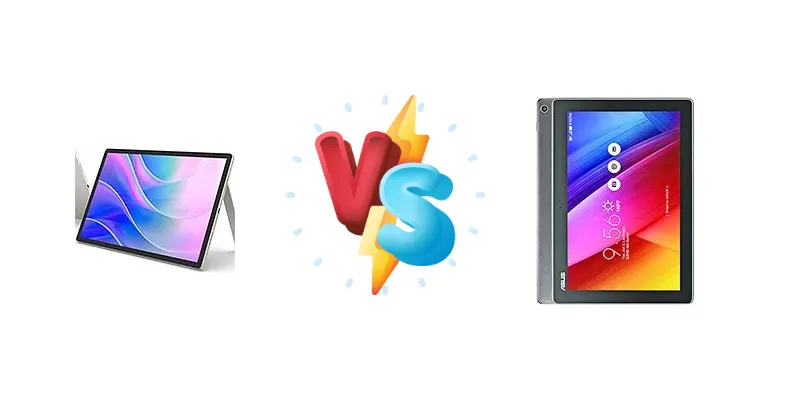
The Acer Iconia A14 and Asus Zenpad 10 Z300M represent distinct approaches to the budget 10-inch Android tablet market. The Iconia A14, leveraging a newer Allwinner A733 chipset, aims for improved performance, while the Zenpad 10 Z300M relies on the older, but established, Mediatek MT8163. This comparison dissects the core differences to determine which tablet delivers the best user experience.
🏆 Quick Verdict
For the average user prioritizing responsiveness and future-proofing, the Acer Iconia A14 is the clear winner. Its Allwinner A733 chipset, built on a 12nm process, offers a substantial performance uplift over the Zenpad 10 Z300M’s 28nm Mediatek MT8163, making it better suited for multitasking and demanding applications.
| Network |
|---|
| 2G bands | N/A | N/A |
| 3G bands | N/A | - |
| 4G bands | N/A | - |
| EDGE | No | No |
| GPRS | No | No |
| Technology | No cellular connectivity | No cellular connectivity |
| Launch |
|---|
| Announced | 2025, September 03 | 2016, May. Released 2016, May |
| Status | Available. Released 2025, November | Discontinued |
| Body |
|---|
| Build | Glass front, aluminum frame | - |
| Dimensions | 324.6 x 211 x 8 mm (12.78 x 8.31 x 0.31 in) | 251.6 x 172 x 7.9 mm (9.91 x 6.77 x 0.31 in) |
| SIM | No | No |
| Weight | 910 g (2.01 lb) | 490 g (1.08 lb) |
| Display |
|---|
| Protection | - | Oleophobic coating |
| Resolution | 1200 x 1920 pixels, 16:10 ratio (~162 ppi density) | 800 x 1280 pixels, 16:10 ratio (~149 ppi density) |
| Size | 14.0 inches, 568.3 cm2 (~83.0% screen-to-body ratio) | 10.1 inches, 295.8 cm2 (~68.4% screen-to-body ratio) |
| Type | IPS LCD | IPS LCD |
| Platform |
|---|
| CPU | Octa-core (2x2.0 GHz Cortex-A76 & 6x1.8 GHz Cortex-A55) | Quad-core 1.5 GHz Cortex-A53 |
| Chipset | Allwinner A733 (12 nm) | Mediatek MT8163 (28 nm) |
| GPU | IMG BXM-4-64 MC01 | Mali-T720MP2 |
| OS | Android 15 | Android 6.0 (Marshmallow) |
| Memory |
|---|
| Card slot | microSDXC (dedicated slot) | microSDXC (dedicated slot) |
| Internal | 256GB 8GB RAM | 16GB 2GB RAM, 32GB 2GB RAM |
| Main Camera |
|---|
| Features | LED flash | - |
| Single | 8 MP, AF | 5 MP, AF |
| Video | 1080p@30fps | Yes |
| Selfie camera |
|---|
| Single | 5 MP | 2 MP |
| Video | Yes | - |
| Sound |
|---|
| 3.5mm jack | - | Yes |
| 35mm jack | Yes | Yes |
| Loudspeaker | Yes, with stereo speakers (4 speakers) | Yes, with stereo speakers |
| Comms |
|---|
| Bluetooth | 5.4, A2DP, LE | 4.0, aptX |
| NFC | No | No |
| Positioning | No | GPS, GLONASS |
| Radio | No | No |
| USB | USB Type-C 2.0 | microUSB 2.0 |
| WLAN | Wi-Fi 802.11 a/b/g/n/ac/6, dual-band | Wi-Fi 802.11 a/b/g/n |
| Features |
|---|
| Sensors | Accelerometer | Accelerometer, compass |
| Battery |
|---|
| Talk time | - | Up to 11 h (multimedia) |
| Type | 8000 mAh | Li-Po 4890 mAh, non-removable (18 Wh) |
| Misc |
|---|
| Colors | Vapor Silver | Dark Gray, Pearl White, Rose Gold |
| Models | A14-M1N | - |
| Price | About 260 EUR | - |
Acer Iconia A14
- Significantly faster processor (Allwinner A733)
- More efficient 12nm process
- Likely better display technology
- Potential for longer battery life
- Specific battery capacity unknown
- Camera performance likely average
Asus Zenpad 10 Z300M
- Potentially lower price point
- Established Mediatek chipset
- Suitable for basic tasks
- May be readily available
- Outdated 28nm process
- Slow processor (Mediatek MT8163)
- Limited multitasking capabilities
- Likely inferior display quality
Display Comparison
Neither device's display specifications are provided, so a direct comparison is limited. However, given the Zenpad 10 Z300M's age, it likely utilizes an older IPS panel with lower brightness and color accuracy compared to what Acer could achieve with the Iconia A14. The Iconia A14, being a more recent release, likely benefits from advancements in display technology, potentially offering wider viewing angles and improved color reproduction. Bezels are also likely to be slimmer on the Iconia A14, reflecting current design trends.
Camera Comparison
Without specific camera specifications, a detailed comparison is impossible. However, given the budget nature of both tablets, it’s safe to assume neither will excel in photography. The Zenpad 10 Z300M, being an older model, likely features a lower-resolution sensor and lacks advanced image processing capabilities. The Iconia A14 may benefit from newer sensor technology and software optimizations, but expectations should remain modest. Any 2MP macro cameras on either device are likely to be of limited practical use.
Performance
The core difference lies in the chipsets. The Acer Iconia A14’s Allwinner A733, fabricated on a 12nm process, features an octa-core configuration (2x2.0 GHz Cortex-A76 & 6x1.8 GHz Cortex-A55). This architecture is significantly more advanced than the Asus Zenpad 10 Z300M’s Mediatek MT8163, a quad-core 1.5 GHz Cortex-A53 processor built on a much older 28nm process. The A76 cores in the Iconia A14 offer a substantial IPC (Instructions Per Clock) improvement over the A53 cores, translating to faster application loading and smoother multitasking. The 12nm process also contributes to better power efficiency, potentially leading to longer battery life under load. The Zenpad 10 Z300M will struggle with demanding tasks and may exhibit noticeable lag when running multiple applications simultaneously.
Battery Life
Battery capacity data is unavailable for both devices. However, the Allwinner A733’s 12nm process in the Iconia A14 offers a significant advantage in power efficiency. This means the Iconia A14 can potentially achieve comparable or even better battery life than the Zenpad 10 Z300M, even with a similar battery capacity. The Zenpad 10 Z300M’s older 28nm chipset will consume more power for the same tasks, leading to shorter runtimes. Charging wattage is also unknown, making a direct comparison of 0-100% charging times impossible.
Buying Guide
Buy the Acer Iconia A14 if you need a tablet capable of handling modern Android apps, light gaming, and multitasking without significant slowdowns. Its newer processor architecture provides a smoother experience. Buy the Asus Zenpad 10 Z300M if your primary use case is basic media consumption – reading ebooks, watching videos – and you prioritize a lower initial cost over performance and longevity.
Frequently Asked Questions
❓ Will the Mediatek MT8163 in the Zenpad 10 Z300M struggle with modern Android updates?
Yes, the Mediatek MT8163 is an older chipset and may not receive future Android updates or may experience significant performance degradation with newer versions of the operating system. The Allwinner A733 in the Iconia A14 is more likely to receive updates and maintain a smoother experience over time.
❓ Is the Allwinner A733 in the Iconia A14 capable of running demanding games like PUBG Mobile?
While the Allwinner A733 is a significant upgrade over the MT8163, it's not a high-end gaming processor. PUBG Mobile may be playable at lower settings, but expect some frame rate drops and potential overheating during extended gaming sessions. It's suitable for casual gaming, but not for demanding titles at high settings.
❓ How much of a real-world performance difference can I expect between these two tablets?
The difference will be noticeable in almost all tasks. The Iconia A14 will launch apps faster, handle multitasking more smoothly, and generally feel more responsive. The Zenpad 10 Z300M will exhibit lag and slowdowns when running multiple apps or demanding software.