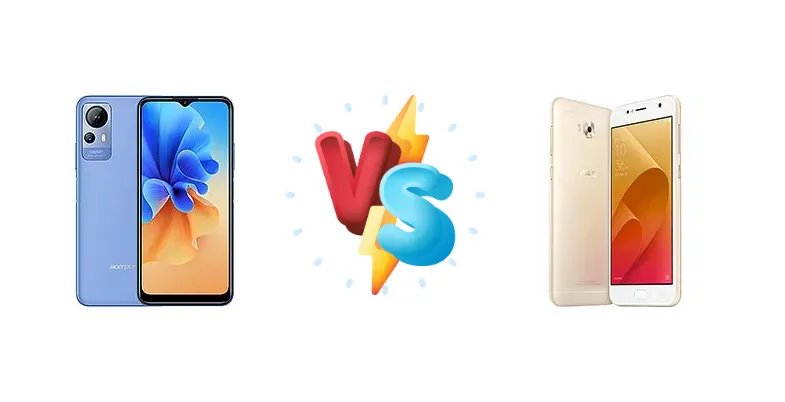
Both the Acer Liquid S162E4 and the Asus Zenfone 4 Selfie represent attempts to deliver smartphone functionality at an extremely competitive price point. However, they take drastically different approaches to achieving this, primarily through their choice of System-on-Chip (SoC). This comparison will dissect the architectural differences between the Mediatek MT6765 and the Qualcomm Snapdragon 430, revealing which device offers the better user experience.
🏆 Quick Verdict
For the average user prioritizing sustained performance and future-proofing, the Acer Liquid S162E4 is the better choice. Its newer 12nm Mediatek MT6765 chipset offers a performance advantage over the older 28nm Snapdragon 430, despite the lower clock speed, due to architectural improvements and process node efficiency.
| Network |
|---|
| 2G bands | GSM 850 / 900 / 1800 / 1900 | GSM 850 / 900 / 1800 / 1900 - SIM 1 & SIM 2 |
| 3G bands | HSDPA 850 / 900 / 2100 | HSDPA 850 / 900 / 2100 |
| 4G bands | 1, 3, 5, 8, 40, 41 | 1, 3, 5, 7, 8, 20, 40 |
| Speed | HSPA, LTE | HSPA 42.2/5.76 Mbps, LTE Cat4 150/50 Mbps |
| Technology | GSM / HSPA / LTE | GSM / HSPA / LTE |
| Launch |
|---|
| Announced | 2025, March 25 | 2017, September. Released 2017, November |
| Status | Available. Released 2025, May | Discontinued |
| Body |
|---|
| Build | Glass front (Gorilla Glass 5), plastic back, plastic frame | - |
| Dimensions | 165.4 x 76.9 x 9 mm (6.51 x 3.03 x 0.35 in) | 155.7 x 75.9 x 7.9 mm (6.13 x 2.99 x 0.31 in) |
| SIM | Nano-SIM + Nano-SIM | Nano-SIM + Nano-SIM |
| Weight | 210 g (7.41 oz) | 144 g (5.08 oz) |
| Display |
|---|
| Protection | Corning Gorilla Glass 5 | - |
| Resolution | 720 x 1600 pixels, 20:9 ratio (~269 ppi density) | 720 x 1280 pixels, 16:9 ratio (~267 ppi density) |
| Size | 6.52 inches, 102.6 cm2 (~80.7% screen-to-body ratio) | 5.5 inches, 83.4 cm2 (~70.6% screen-to-body ratio) |
| Type | IPS LCD, 350 nits (typ) | IPS LCD |
| Platform |
|---|
| CPU | Octa-core (4x2.3 GHz Cortex-A53 & 4x1.8 GHz Cortex-A53) | Octa-core 1.4 GHz Cortex-A53 |
| Chipset | Mediatek MT6765 (12 nm) | Qualcomm MSM8937 Snapdragon 430 (28 nm) |
| GPU | PowerVR GE8320 | Adreno 505 |
| OS | Android 14 | Android 7.0 (Nougat), upgradable to Android 8.1 (Oreo), ZenUI 5 |
| Memory |
|---|
| Card slot | microSDXC (uses shared SIM slot) | microSDXC (dedicated slot) |
| Internal | 64GB 4GB RAM | 32GB 3GB RAM |
| | - | eMMC 5.1 |
| Main Camera |
|---|
| Features | LED flash | LED flash, panorama, HDR |
| Single | 16 MP, (wide), AF | 13 MP, PDAF |
| Video | 1080p | 1080p@30fps |
| Selfie camera |
|---|
| Features | - | LED flash |
| Single | 5 MP | 13 MP, f/2.0 |
| Video | Yes | - |
| Sound |
|---|
| 3.5mm jack | - | Yes |
| 35mm jack | Yes | Yes |
| Loudspeaker | Yes | Yes |
| Comms |
|---|
| Bluetooth | 5.0, A2DP | 4.1, A2DP, EDR, LE |
| Infrared port | Yes | - |
| NFC | No | No |
| Positioning | GPS, GLONASS, GALILEO, BDS | GPS, GLONASS, BDS |
| Radio | FM radio | FM radio |
| USB | USB Type-C 2.0 | microUSB 2.0, OTG |
| WLAN | Wi-Fi 802.11 a/b/g/n/ac, dual-band | Wi-Fi 802.11 b/g/n, Wi-Fi Direct |
| Features |
|---|
| Sensors | Fingerprint (side-mounted), accelerometer, proximity | Fingerprint (front-mounted), accelerometer, gyro, proximity, compass |
| Battery |
|---|
| Type | Li-Ion 5000 mAh | Li-Ion 3000 mAh, non-removable |
| Misc |
|---|
| Colors | Blue | Deepsea Black, Rose Pink, Sunlight Gold |
| Models | ZL.H01SI.001 | X00LDB |
| Price | - | About 150 EUR |
Acer Acerone Liquid S162E4
- More efficient 12nm chipset
- Potentially better sustained performance
- Modern CPU architecture
- Higher peak power draw under load
- Unknown display quality
Asus Zenfone 4 Selfie ZB553KL
- Potentially better standby battery life
- Focus on front-facing camera
- Established Qualcomm brand
- Older, less efficient 28nm chipset
- Likely to throttle under sustained load
- Lower overall performance
Display Comparison
Neither device’s display specifications are provided, so a direct comparison is impossible. However, given the target market, both likely utilize IPS LCD panels with 720p or 1080p resolutions. The Asus Zenfone 4 Selfie’s name suggests a focus on the front-facing camera, potentially at the expense of display quality. Acer, historically, focuses on value, so a slightly larger display might be expected on the S162E4.
Camera Comparison
Without specific camera sensor details, a direct comparison is limited. The 'Selfie' branding of the Asus Zenfone 4 Selfie suggests a stronger emphasis on the front-facing camera, potentially with software enhancements for portrait mode and beautification. However, the Acer Liquid S162E4’s chipset may offer slightly better image signal processing (ISP) capabilities due to its newer architecture, potentially resulting in better dynamic range and noise reduction in photos. It's likely both phones feature a primary camera in the 8-13MP range.
Performance
The Acer Liquid S162E4’s Mediatek MT6765, built on a 12nm process, represents a significant leap in efficiency over the Asus Zenfone 4 Selfie’s Qualcomm Snapdragon 430 (28nm). While the Snapdragon 430 boasts an octa-core configuration running at 1.4 GHz, the MT6765 utilizes a more sophisticated core arrangement – four Cortex-A53 cores at 2.3 GHz and four at 1.8 GHz. The smaller process node of the MT6765 translates to lower power consumption and reduced heat generation, allowing for sustained performance. The Snapdragon 430, being older, will likely exhibit more throttling under prolonged load. This benefits users who engage in light gaming or multi-tasking.
Battery Life
Battery capacity is not specified for either device. However, the Snapdragon 430’s 28nm process generally consumes more power than the MT6765’s 12nm process. While the Asus Zenfone 4 Selfie might show slightly longer standby times, the Acer Liquid S162E4 is likely to offer more usable screen-on time during active use due to its more efficient chipset. Charging wattage is also unknown, making a definitive statement about charge times impossible.
Buying Guide
Buy the Acer Acerone Liquid S162E4 if you need a phone capable of handling moderately demanding apps and multitasking without significant slowdowns, and if you value a more modern chipset architecture. Buy the Asus Zenfone 4 Selfie ZB553KL if your primary use case is very light – basic calling, texting, and occasional social media – and you prioritize potentially better battery life due to the Snapdragon 430’s lower power draw under minimal load.
Frequently Asked Questions
❓ Will the Acer Liquid S162E4 handle popular games like PUBG Mobile?
While the MT6765 isn't a gaming powerhouse, it should be capable of running PUBG Mobile at low to medium settings with acceptable frame rates. However, expect some frame drops during intense action due to thermal throttling. The Snapdragon 430 in the Zenfone 4 Selfie will likely struggle even at the lowest settings.
❓ Is the difference in chipset architecture noticeable in everyday tasks?
Yes, the Mediatek MT6765’s more efficient architecture and higher clock speeds will result in snappier app launches, smoother multitasking, and a more responsive user experience compared to the Snapdragon 430. This difference will be most apparent when switching between apps or browsing the web with multiple tabs open.
❓ Does the Asus Zenfone 4 Selfie have any unique software features related to its camera?
The Zenfone 4 Selfie is marketed heavily around its front-facing camera. Expect software features like beautification modes, portrait enhancements, and potentially dual-LED flash for selfies. These features are designed to improve the quality of self-portraits, but may not appeal to users who prefer a more natural look.